
NEW NORMAL: How Psyops Train a Nation to Choose Man Over God
The great killing spirit that produced the first martyr and so many more after is a part of a spiritual lineage. It is the ancient enmity, the choice between God and man when the time calls for it. That killing spirit is a disordered love that insists on inversion, producing, tragically, a most ordered and murderous network of deception.
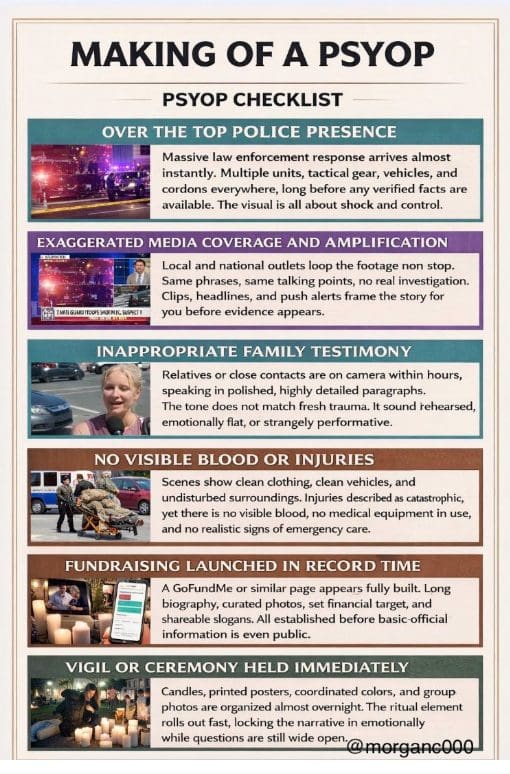
And in our age, it rarely arrives with a sword first. It arrives with a story first, delivered through a glowing rectangle that demands assent before it ever offers proof.
Ordo Amoris, or Ordo Collapse
God Almighty has always commanded an ordo amoris—an order of loves, and He is demanding it of Jeremias at the level of prophet. Jeremias is a prophet of that same collision the first martyr Stephen names:
You stiff-necked people, uncircumcised in heart and ears, you always oppose the Holy Spirit; you are just like your ancestors. Which of the prophets did your ancestors not persecute?
They put to death those who foretold the coming of the Righteous One.
And now you have betrayed and murdered Him.
You received the law as transmitted by angels, but have not obeyed it.
– Acts VII.51-53
Throughout history, the story is the same: truth meets a people who prefer the script written by their own hands. But God Almighty is the one true Author, and He shall not be mocked. He must come first because only when God is first can everything else be loved rightly—or more to the point, correctly. When family, career, nation, or even personal safety is placed above obedience to Christ, those goods cease to be goods at all. They become idols—a mortal sin so few confess to the priest.
Some of us might skim over this point thinking we are in God’s good graces, when most unwittingly substitute the creature over the Creator in a misdirected spirit of the second greatest commandment, which says, “Love thy neighbor as thyself.” We conflate charity with compliance to evil, mercy with tolerance of evil, and prudence with letting the screen and social media reactions do the moral thinking for us.
I mistook loving my neighbor as myself for love of God for most of my life.
But in a seeming contradiction, we see how serious Our Lord is about what it means to love Him:
“If any man come to me, and hate not his father, and mother, and wife, and children, and brethren, and sisters, yea and his own life also, he cannot be my disciple.”
– Luke XIV.26
Doesn’t this break the second commandment?
A potentially innocent oversight is precisely why Christ intensifies His language here. He speaks not merely of loving Him more than others, but of “hating” any competition. The word shocks us precisely because it exposes how easily we excuse compromise when it poses as affection. Christ does this frequently in His teaching—He chooses words that will rattle people enough so the lesson doesn’t fall on deaf ears. There are certain things he makes memorable. He does it on at least two occasions with His own Mother.
The regime of government and media screens does the opposite: it trains forgetfulness, desensitization, and a bystander effect, keeping people comfortably numb while they mistake the moral high ground for whatever trend is loudest today.
Alas, when the memory of loving the Creator first is lost, and that command is rejected long enough under the guise of loving the creature, God’s judgment no longer arrives from only the outside. It simultaneously rises from within. A people can be “informed” all day long and still be spiritually illiterate, which is precisely how propaganda becomes plausible and mob rule begins to feel like not just virtue, but the virtue of God.
In other words, reality itself becomes the judgment. You can reject God, but you cannot reject the consequences. Jeremias is not describing God hurling lightning bolts. He is describing a civilization set ablaze by its own choices, a people described when God laments, “For of old time thou hast broken My yoke, and burst My bands, and thou saidst, I will not serve” (II.20).
Non serviam—it is thebattle cry of Lucifer turned motto of a nation.
It is in this spiritual ecosystem that God calls Jeremias: “the Lord put forth his hand, and touched my mouth: and the Lord said to me: Behold I have given my words in thy mouth: Lo, I have set thee this day over the nations, and over the kingdoms, to root up, and pull down, and to waste, and to destroy, and to build, and to plant” (I.9-).
Alas, so many centuries later, we might find in the teaching of Pope Gregory XVI and Mirari Vos the same image and lamentation that would come to Jeremias:
These and many other serious things, which at present would take too long to list, but which you know well, cause Our intense grief. It is not enough for Us to deplore these innumerable evils unless We strive to uproot them.
This is one reason Jeremias is an Old Testament ‘type’ of Jesus. Both speak with authority, both by the power of God.
And both were rejected—not only by open enemies, but by respectable people, indeed family and friends, who preferred “peace” and “unity” over the Way, the Truth, and the Life, as though the evermore obvious patterns we’re seeing were a harmless civic rhythm instead of an eternal spiritual trap.
Order of the Prophet
Reluctant Jeremias and the saints understood the entire pattern and call, perhaps instinctively. They loved their families and the good gifts of God deeply, of course. Many of them suffered precisely because of that love. Yet when the moment came—when loyalty to Christ demanded sacrifice—they did not negotiate. They did not postpone obedience. They did not sentimentalize their way out of the Cross. They didn’t outsource their God-given discernment either, handing it over to a chorus of talking heads as though their conscience were safest when it’s tucked nicely in the warm comforts of consensus.
This is one of the evils elections impress upon a people. Everyone just assumes they have a voice, and in a democracy, the most numbered voice is equated to truth.
We need only look to the story of Jesus and Barabbas to see how utterly wrong the mob can get it.
No, we must look to the Cross for our truth, and the Cross only. Just see the story of St Rita, who begged God to prevent her sons from committing murder to avenge their father. That’s the ordo amoris when it costs. It is also the clearest rebuke to modern moral theater, where people will “take a stand” online for an hour, standing proud with their flag atop the moral high ground, then refuse the smallest interior sacrifice when God asks for it.
Guilty.
This is the difference between the Church Militant and the Church we have been conditioned to trust, a number that harkens back to an Old Testament people who—time and time again—thought they knew better. Young Mary assuages God’s own lamentation with her fiat after asking how this could be. Young Jeremias, in his own way, does the same.
The Church Militant must rise again and put God first.
Jeremias was the remnant God chose at that moment in time, a pivotal one as it would turn out for the people of Israel. If he wasn’t violent or harsh, he was certainly unflinching. He knew that to be a child of the God of Abraham is not an accessory added to an otherwise comfortable life. It is a reorientation of the entire person towards that life. Jeremias was born with a redeemer personality, and perhaps it is that character type that Satan sets his most pernicious assault on.
If you are a redeemer personality, you will lose loved ones in your life, oftentimes by your own fault, as you simultaneously move forward on and leap back off the path of God’s call. People today might say they would trust a Jeremias teacher, if blameless and pure, but the truth is that the past sins of the redeemer personality simply provide a convenient excuse for the sleeping not even wanting to be awakened in the first place.
People today and people of Jeremias’ time are the same, because the human condition when it rejects God is the same. This is part of the pattern St Paul exhorts his listeners to recognize, the lesson ready for the learning. People who reject God despise Jeremian language. It prefers a loyalty to God without renunciation of self, without obedience to a hierarchy, without offering and sacrifice in worship. It recasts faith as the feels and obedience as oppression. In such a framework, from such a false premise, and to such a stiff-necked people that repeats itself over and over throughout history, Christ’s demand to hate father and mother sounds as unreasonable as the demands of Jeremias clearly did to the people entrusted to him.
Christ makes this plain thousands of years later when He tells us to count the cost—like a builder laying a foundation or a king preparing for war. Following Him is not an emotional impulse that comes and goes with the Sundays. It is a lifelong campaign that will not only be painful—but force us to choose between two treasures at times.
And the enemy knows it, which is why he works so hard to keep the battlefield external, political, and endless, so you never notice the real front line is your soul.
The first commandment is not merely first in the list.
It is first in the architecture.
Get that order wrong, and everything that follows becomes a religious camouflage that kills. And the scariest part is how normal it can feel while it’s happening.
How’s that for a new normal?