Colombia’s coca crop could cost U.S. $10 billion in overdose deaths
Record cocaine production in Colombia could cost thousands of American lives and an estimated $10 billion in annual overdose deaths, according to new research.
In a National Bureau of Economic Research working paper, the four authors found the surge in cocaine supply caused an immediate rise in overdose deaths in the U.S.
President Donald Trump has changed the way the U.S. responds to foreign drug threats. He has used tariffs and the U.S. military to try to reduce the amount of drugs reaching the U.S.
Since re-taking office, Trump has used U.S. military strikes to destroy suspected drug boats in the Pacific and Caribbean. He has also used tariffs to press for drug policy changes in Mexico, Canada, and China.
U.S. officials have not estimated the weight or value of illegal drugs destroyed in recent military strikes. Trump has only used the military against suspected drug operations in international waters, but has said he would consider similar action elsewhere to prevent drug smuggling.
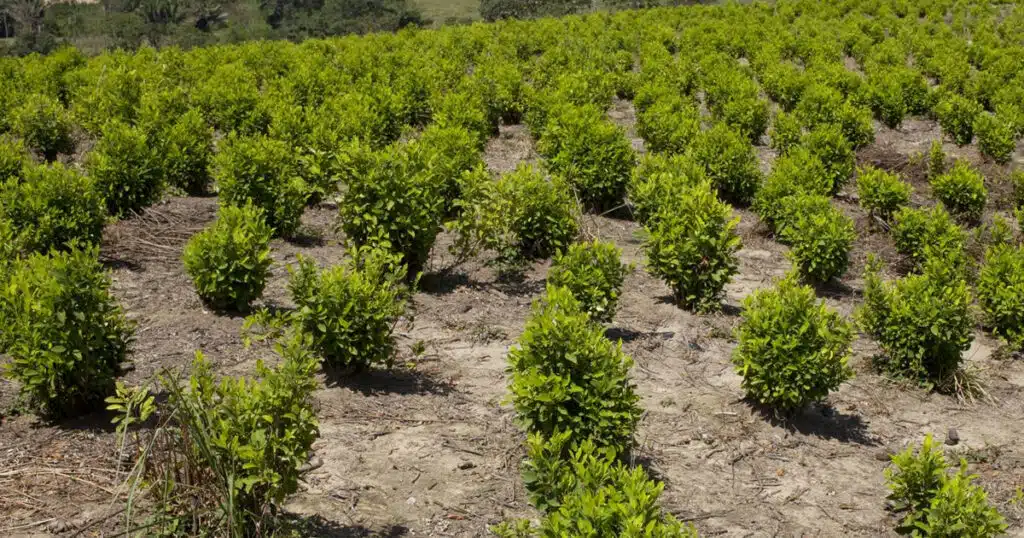
Colombia’s coca fields declined from about 168,000 hectares in 2000 to 48,000 by 2013. However, from 2015 to 2022, they increased to 230,000 hectares, due to two policy changes highlighted by the study in 2015 and 2016.
In May 2015, the Colombian government stopped its U.S.-backed aerial fumigation program for coca crops due to health concerns. Then, in 2016, Colombia signed a peace deal with FARC that introduced a coca crop substitution program, offering stipends to farmers who eradicated their coca crops.
“This well-intentioned plan backfired,” the authors wrote. “Farmers quickly realized they needed to have coca plants in the ground to qualify for compensation, which led many to start new coca plots or expand existing ones in hopes of securing the promised subsidies.”
The study found that overdose deaths in the U.S. increased almost immediately.
“We estimate that Colombia’s current coca boom is inflicting on the order of $10 billion per year in damages to the U.S. in the form of overdose fatalities,” the authors wrote. “In concrete terms, each additional hectare of coca cultivated in Colombia ultimately causes roughly $45,000 per year in harm to the United States when valuing the statistical lives lost to drug overdose.”
The authors of the paper – Xinming Du of the National University of Singapore, Benjamin Hansen of the University of Oregon Department of Economics, Shan Zhang of Old Dominion and Eric Zou of the University of Michigan Ross School of Business – said the U.S. couldn’t stop the damage at home.
“We find that a major surge in drug supply can drive up overdose deaths even without any increase in domestic demand, and that U.S. demand-side interventions alone were unable to counteract the flood of cocaine,” they wrote.
While opioid-related overdoses accounted for the majority of overdose deaths in the U.S. in recent years, deaths from cocaine and other stimulant overdoses also increased during the same time period. Colombia’s cocaine crop accounts for roughly two-thirds of the entire world’s coca supply.
“Our new empirical findings show that supply reductions abroad save lives, even when underlying demand factors remain,” the authors wrote. “… These magnitudes suggest that investments that reduce coca cultivation – or that prevent large enforcement gaps – can yield substantial health benefits for the U.S.”