Moral Currency And The Detachment Of The Revolutionary Karens
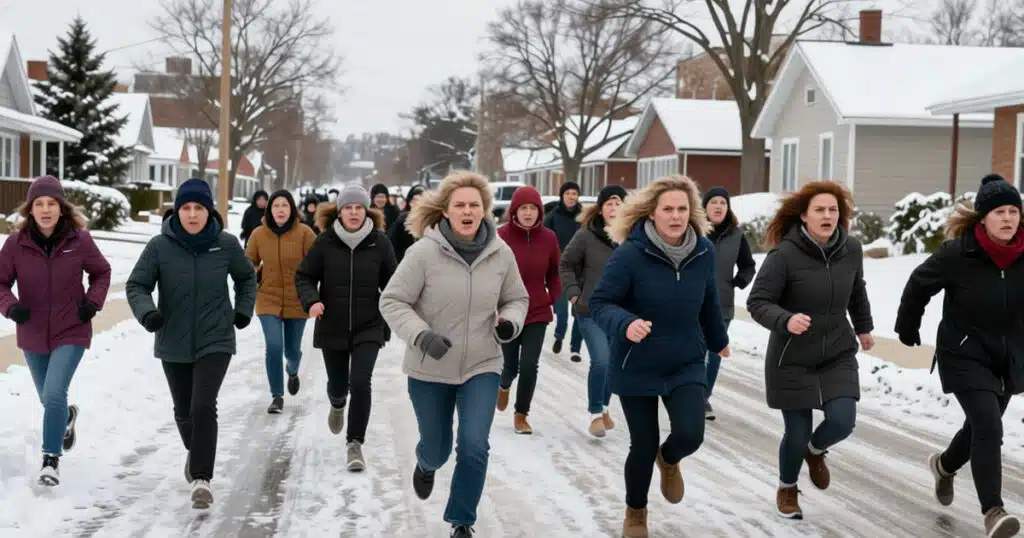
An interesting aspect of the AWFUL culture — including the male Karens — is the heavy involvement of people who are affluent, college-educated, and living in safe suburban environments, yet possess absolutely zero commonality or lived connection with the groups they aggressively champion. They are not merely sympathetic observers. They become rabid foot soldiers, sometimes even risking arrest or physical harm, to demonstrate how much they “care.”
This phenomenon is not new. Many of the white activists of the late 1960s came from wealthy or professionally prominent families. Their parents were often community leaders, executives, professors, or political figures. Yet these young activists aligned themselves with revolutionary Marxists, violent radicals, or black nationalist groups whose goals — and frequently whose stated hatred — did not include them. The connection was emotional and symbolic, not experiential.
What I’ve come to understand is that modern Americans who are anti-ICE, pro-Palestine, or pro-ANTIFA — and who are not illegal migrants, Gazans, or members of those groups themselves — are not actually supporting those causes in the literal sense. They are recontextualizing them. They are repurposing them as instruments for their own social positioning, turning the output of these movements into moral currency.
The activist does not gain material benefit, but they gain status: moral superiority, belonging, and identity. In a society where traditional markers of meaning — religion, community obligation, and civic responsibility — have weakened, political activism fills the vacuum. It becomes a performance of virtue. The cause itself matters less than the signaling attached to it.
In this way they resemble an army of modern Don Quixotes, charging into battle against enemies that largely exist in narrative form. The windmills must be giant dragons because the activist requires epic battles against giant dragons. Without dragons, the urgent moral drama collapses.
Quixotic politics has become the stock-in-trade of the American left during the Trump era. Trump is not without flaws — far from it — but his opponents have elevated him from a political adversary into a mythological villain. The Trump presidency has been rhetorically transformed into Custer’s Last Stand, the Stonewall riots, the killing of George Floyd, and Auschwitz all rolled into one continuous moral emergency because once politics becomes existential theater, proportion disappears.
Every policy disagreement becomes oppression, every enforcement action becomes fascism, and every election becomes the last election. Trump is planning to cancel the 2028 election and simply stay in the White House. Blacks will be returned to slavery, women will live the Handmaid’s Tale, and January 6th will be successful this time. The narrative demands consequences of not acting so disastrous that compromise becomes betrayal, ordinary civic disagreement becomes immoral. One is either with the movement or against the movement, there can be no middle ground.
Trump himself has been converted into a symbolic tyrant — a straw-man Nicolae Ceaușescu, the Romanian dictator who ruled from 1965 until his execution in 1989. The comparison is historically absurd, but emotionally useful. If the villain is a dictator, then any resistance becomes justified. Why, by definition, opposition is positively heroic.
As Hamlet said,” “The play’s the thing wherein I’ll catch the conscience of the king.”
These activists are not reacting to reality; they are constructing a moral stage on which they can play the role of liberator, the causes they attach themselves to function as props. Immigration enforcement becomes apartheid. Foreign conflict becomes personal guilt. Law enforcement becomes occupation. The facts are secondary to the utility of the narrative.
The suburban protester shouting revolutionary slogans is not expressing solidarity so much as seeking meaning and because there is no rational basis for their opposition, it explains why debate or persuasion rarely, if ever, works. Their activism is not about solving a problem; it is about sustaining their identity. If the problem were solved, the identity would disappear with it.
Since one cannot fact-check a psychological reward system, the windmills must become dragons, and the dragons must remain.
Contemporary activists do not want victory in the traditional sense, largely because they can’t define what victory looks like and even worse, success ends the crusade. Instead, they need perpetual crisis, because crisis provides purpose and satisfies their vanity. This mentality has resulted in the “Omnicause”, their use of intersectionality to seamlessly slip from one “cause” to the next, an Alinsky outlined process of discarding one cause when it becomes a drag and adopting another that stokes the fires once again.
Quixotic AWFULS and male Karens will keep charging, convinced they are saving the world when they are primarily saving themselves from the terrifying possibility that their lives might otherwise be wasted or ordinary. To me, it seems as if this is the culturally approved version of having an extramarital affair – it’s all the thrill without the downside of getting caught.