Another Walmart Scam Emerges, This One Is Against Delivery Drivers
Walmart seems to have a dark underbelly that has recently been revealed. It was only a month ago, on February 3rd, that I wrote a column titled, “Scales Of Truth Expose Walmart.” In that column, I wrote that some stores had been mislabeling items, with listed weights higher than the actual weights.
A TikTok regular, Jimmy Wrigg, lives in Georgia, and when he recently visited his local Walmart, he discovered something that had the hair on the back of my neck standing up.
During his visit, he grabbed a “Kentucky Legend Ham” labeled 4.93 pounds, but when he took it to the checkout scale, it only weighed 1.83 pounds. In that case, if you had purchased that ham, you would have paid around $15 more than necessary, paying for weight that didn’t exist.
To make sure the scale was accurate, he placed a 2-pound weight on it; it was only 0.02 pounds off, proving the scale was accurate, but the labeling wasn’t.
To verify that it wasn’t just a fluke, Wrigg weighed several more hams, and all of them were at least half the weight less than the label claimed. In one case, a package was labeled 5.28 pounds but weighed only 2.89 pounds, meaning customers were paying $4.98/pound for nothing.
The deception extended beyond ham. A chicken package labeled as 4.66 pounds actually weighed 2.37 pounds on the scale. Another package marked at 6.39 pounds weighed just over four pounds.
While that scam swindled the customers, this newest infraction harms Walmart’s workers more.
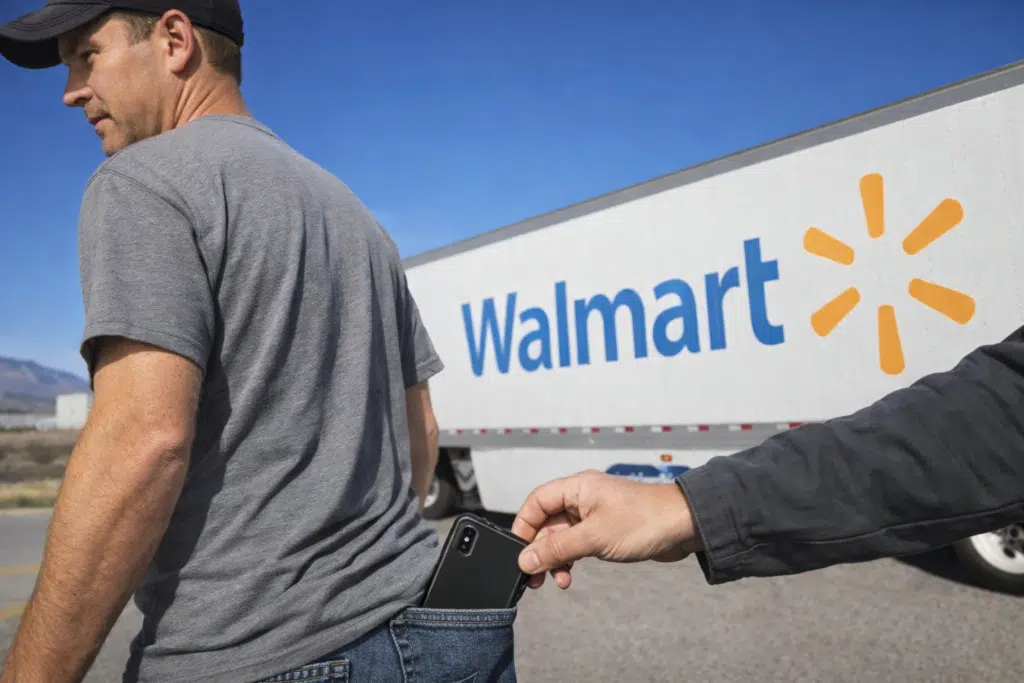
The Federal Trade Commission (FTC) revealed that Walmart was cheating its delivery drivers out of their hard-earned tips.
In 2018, the company started a delivery program called “Spark Driver.” The program utilizes independent contractors, and since its inception, those drivers have made around 272 million deliveries.
Not unlike an Uber driver, A Spark Driver opens an app and accepts a delivery offer. Like anyone, a driver will look for deliveries with the best tip opportunities. For example, let’s say the driver accepts an offer of a $10 tip.
But Walmart splits the order among multiple drivers, which means the tip is split as well. So, the driver who took the delivery, expecting a $10 tip, may only receive $5 or less.
The company was also making quiet changes to “batched” orders—deliveries that involve multiple customers in one trip—after drivers had already accepted them. They would remove stops and reduce base pay, and sometimes drivers wouldn’t be notified of these changes until after they had completed the delivery.
Walmart then added another wing to the scheme when it decided to offer bonuses for referring new drivers. It would then deny bonuses for conditions the drivers were never told about, such as which delivery zone or store the new recruit had to work from.
The FTC stated that Walmart was aware of these issues but failed to take any action to resolve them. The public was also deceived because Walmart told its customers that 100 percent of the tips went to the delivery person.
On some occasions, Walmart collected tips that the drivers never received. On those occasions, the money was simply absorbed by the company, and no refund was issued to the customers who thought they were doing something kind for the drivers.
This settlement results from the Trump-Vance FTC’s Labor Task Force. Chairman Andrew Ferguson established the task force a year ago with the specific goal of investigating corporations that mislead American workers about their pay.
Ferguson was clear in his explanation: “For Republicans of yore, this is a strange thing to hear – but this is the working person’s party now.”
The settlement requires Walmart to implement an earnings verification program, submit annual compliance reports to the FTC for the next ten years, and pay a $100 million fine.
The fine will be distributed as follows: $79 million will be paid to the drivers, $11 million will be allocated to the 11 states involved in the case, and $10 million will go to the FTC for customer refunds.
While this is the largest case result ever, this is not the FTC’s first rodeo dealing with fraud involving the delivery industry.
In 2021, Amazon reimbursed drivers over $60 million for shortchanging them through its Flex program.
In 2024, Grubhub reached a $25 million settlement after misleading drivers about their earnings.
In 2025, DoorDash paid $16.75 million in New York after investigators found that the company had used customer tips to offset guaranteed minimum pay. This meant drivers received the same amount regardless of whether customers tipped.
For the fiscal year ending January 31, 2026, Walmart reported a record revenue of $713.2 billion, reflecting a 4.7 percent increase from the previous year. The net income for the fiscal year was $21.893 billion, marking a 12.6 percent increase. The company’s strong performance was primarily driven by robust e-commerce growth, which rose 27 percent in the U.S. during the final quarter.
When 2026 began, Walmart was the largest company in the world by revenue and was also the largest private employer, with approximately 2.1 to 2.3 million employees. While Walmart held the top position on the Fortune 500 for over 12 years, recent data shows that Amazon has narrowly surpassed Walmart as the top U.S. company by revenue, with $716.9 billion compared to Walmart’s $713.2 billion.
It’s obvious that the largest company in the world, or the second largest, depending on the quarter, that has revenue totaling $713 billion, should not be picking an $8 tip out of a delivery driver’s pocket.
100 million is 0.0140252 percent of 713 billion. Will that minuscule amount be enough to wake up the retail behemoth? Only time will tell, but if the scandals continue, Walmart may find that outward competition is nothing compared to the rot that greed breeds within a company.