Supreme Court Ruling Doesn’t Eliminate or Block Trump Administration Tariffs
I wanted to address the topic of tariffs once more given that the U.S. Supreme Court has now ruled in the tariff case that was before it.
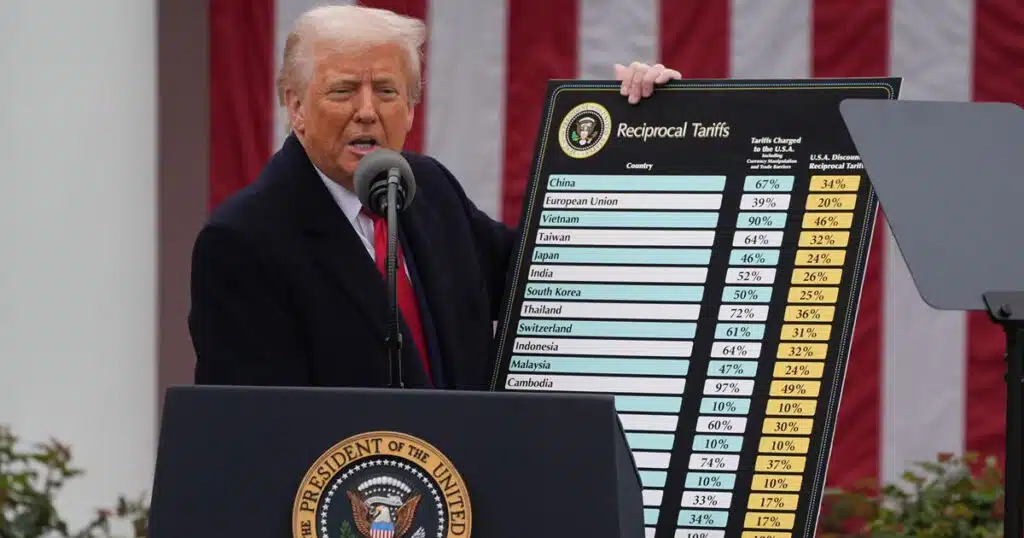
Long and short, while President Trump may not proceed under the economic emergency statute that was at issue in the case, there are several other tariff options still open to him. The issue before the Supreme Court was whether the International Emergency Economic Powers Act (IEEPA) authorizes the President to impose tariffs. The case ended up before the Court because different entities had sued to challenge the broad and unilateral tariff schedule that Trump had imposed under IEEPA’s grant of power to “regulate … importation.”
The 6-3 majority ruled on essentially two bases. One, that the power to tax—which the Court viewed tariffs as being—belongs exclusively to Congress under our Constitution; and two, under the Court’s “major questions” doctrine, because IEEPA, a 50 year old statute, had never been used in the way President Trump was using it, he had gone too far; In other words, if Congress had intended to grant the broad, never-before-used tariff power Trump was claiming under IEEPA, it needed to have clearly said so in the statute itself.
I must say that I felt the dissents in the case, although not prevailing, had the better arguments.
Justice Brett Kavanaugh wrote the main dissent in the case, and he made a couple of legal arguments that I think cannot really be rebutted. I will address those in a moment. Justice Clarence Thomas also dissented, and his legal argument was that the tariffs were legal and constitutional. In his own dissent, Justice Thomas, as he often does, cut right to the issue. He stated that the Court’s position “cannot not be justified as a matter of statutory interpretation. Throughout American history, the authority to ‘regulate importation’ has been understood to include the authority to impose duties on imports.”
Justice Thomas observed that the tariff statute was enacted shortly after President Nixon’s “highly publicized duties on imports were upheld based on identical language,” so the statute also authorizes President Trump to impose these duties on imports.
Justice Kavanaugh, in a lengthy dissent that was joined by Justices Alito and Thomas, arrived at the same conclusion. Kavanaugh framed the issue this way: “The sole legal question here is whether, under IEEPA, tariffs are a means to ‘regulate … importation.’ Statutory text, history, and precedent demonstrate that the answer is clearly yes. Like quotas and embargoes, tariffs are a traditional and common tool to regulate importation.”
Kavanaugh then made the argument that because a President is authorized to completely block some or all imports, it only makes sense that he could also take the less extreme step of imposing tariffs on those same imports. If a president can entirely block imports from China, it must follow that those same imports could have a tariff put on them.
What I also found interesting was that in his dissent, Kavanaugh essentially laid out a roadmap for the Trump administration to follow to go forward with tariffs. “Although I firmly disagree with the Court’s holding today, the decision might not substantially constrain a President’s ability to order tariffs going forward. That is because numerous other federal statutes authorize the President to impose tariffs and might justify most (if not all) of the tariffs at issue in this case …”
Such alternate tariff authority includes the Trade Act of 1974 (Sections 122, 201, and 301), the Trade Expansion Act of 1962 (Section 232), the Tariff Act of 1930 (Section 338), and the Trading with the Enemy Act.
I see the manner in which President Trump has used tariffs—as a tool of foreign policy and an instrument of diplomacy—including to stop several wars, such as India and Pakistan, as much closer to foreign affairs and national security which are clearly the province of the President under our Constitution.
Presidential adviser Stephen Miller best sums up the tariff situation: “President Trump got elected to bring back our supply chains, reshore our manufacturing base, and bring back our jobs from overseas. His historic program of tariffs has done exactly that.”
As always, it is absolutely not the role of the Supreme Court, or any federal court, to legislate policy. So, it’s not the Court’s role to decide if tariffs are a “good idea,” only whether President Trump’s policy choice is legal. In my view, it is.