The Gospel according to James Talarico: why Texas should be wary of progressive virtue
“I’m not a politician. I don’t want to be a politician, because politicians do what is politically expedient. I want to do what’s right.” – Ben Carson
Texas has never had a shortage of politicians eager to tell voters what they believe. What Texans have historically rejected, however, are politicians who try to remake timeless truths in the image of modern ideology. That is precisely the problem with State Representative James Talarico.
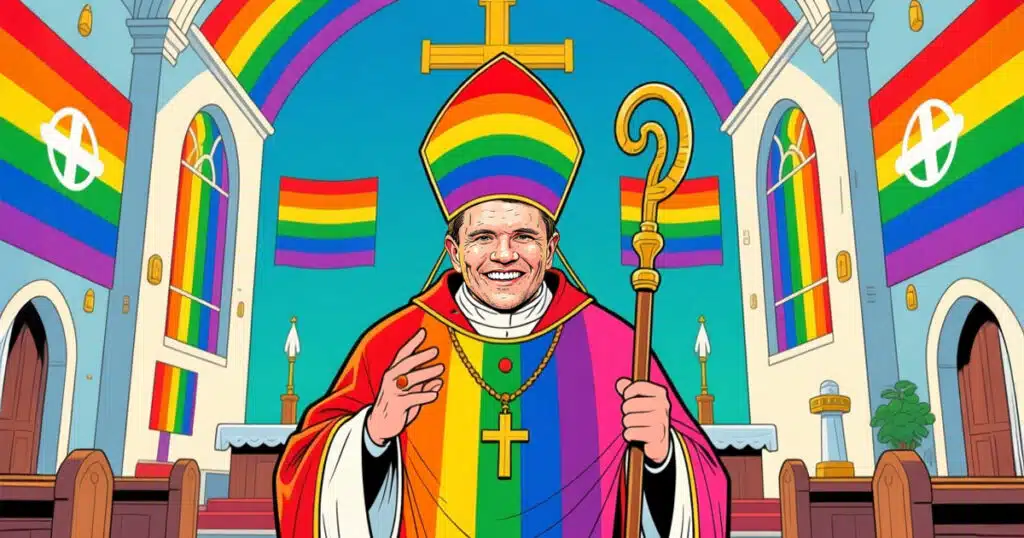
Talarico has built a growing national profile not as a traditional Texas legislator, but as something else entirely: a progressive preacher in political clothing. In viral clips and carefully staged speeches, he often frames his politics through the language of faith, scripture, and moral authority. The performance is compelling, polished, and emotionally appealing.
But beneath the rhetorical flourishes lies something Texans should approach with extreme caution: a willingness to reinterpret both the Bible and American culture in whatever way best advances a progressive political agenda.
And that combination, progressive ideology wrapped in religious language, should make Texans uneasy … extremely uneasy.
Because history shows that when politicians begin rewriting scripture to justify modern political movements, faith usually becomes a prop rather than a guide.
Take Talarico’s public use of the Bible. He frequently presents himself as a kind of theological counterweight to conservative Christians, arguing that modern progressive causes – from abortion access to expansive cultural redefinitions – are actually more faithful interpretations of Christianity than traditional views held by millions of believers.
That argument requires a remarkable amount of theological gymnastics.
For example, Talarico has suggested that the biblical concept of caring for “the least of these” should translate directly into modern progressive policy platforms. Compassion becomes justification for government expansion, charity becomes justification for bureaucratic control, and centuries of Christian teaching on moral questions suddenly become negotiable, depending on the political moment.
That’s not theology. That’s narcissistic manipulation cloaked in religious language, and it’s profoundly offensive.
Christian scripture has survived two thousand years precisely because its core teachings are not supposed to bend with the political winds of a given decade. Yet Talarico treats the Bible almost like a flexible campaign document – something that can be selectively quoted, reframed, and modernized to fit the needs of contemporary progressive politics.
That approach may play well on social media, but it raises a serious question for Texans: if a politician is comfortable reshaping scripture to match ideology, what else is he comfortable reshaping?
The problem doesn’t stop with theology.
Talarico has also positioned himself firmly within the cultural framework currently dominating the progressive left. It’s a worldview that often treats traditional American institutions as problems to be dismantled rather than foundations to be strengthened.
Whether the issue is education policy, cultural debates surrounding gender identity, or the broader movement often described as “woke” politics, Talarico rarely breaks ranks with the most progressive wing of his party. Instead, he often serves as one of its most articulate messengers.
And that messaging is carefully crafted.
Unlike some progressive activists who approach politics with open hostility toward religion, Talarico understands that Texas is still a place where faith matters. So rather than dismissing Christianity outright, he attempts something more subtle: redefining it.
In this, Talarico’s version of politics, Christianity becomes less about timeless moral teachings and more about validating contemporary political positions. Biblical language is used to defend modern progressive frameworks on identity, culture, and social policy. Faith becomes a tool for persuasion rather than a source of moral accountability. That’s not religious leadership; it’s political marketing.
There is also something else happening here that Texans should recognize immediately: the growing national appetite within progressive circles for a new kind of political figure, someone who can speak the language of faith while advancing policies that fundamentally reshape American culture.
James Talarico fits that model perfectly.
To national media outlets, he represents a useful narrative: the progressive Christian who can challenge conservative believers on their own turf. Clips of his speeches circulate widely online because they serve that narrative. They present the image of a thoughtful, faith-driven leader who claims the moral high ground while advancing progressive policies.
But Texans should look beyond the viral moments and examine the underlying philosophy.
Because when you strip away the polished rhetoric, the substance remains deeply aligned with the cultural agenda currently reshaping institutions across the country: expanding the reach of government into areas traditionally governed by families and communities, redefining long-standing cultural norms, and framing disagreement not simply as a policy difference but as a moral failing.
That approach may resonate in academic circles or coastal political commentary shows but it is far less compatible with the Texas tradition of individual responsibility, strong families, and limited government. Texas has always been a place where faith and freedom exist together, not where one is manipulated to justify the expansion of the other.
Most Texans don’t need politicians to reinterpret scripture for them. We attend churches, read our Bibles, and build our communities without political intermediaries explaining what Christianity “really” means. And we certainly don’t need a legislator attempting to repackage progressive ideology as biblical truth.
The danger of figures like Talarico is not that they are openly hostile to faith. Texans know how to respond to that. The danger is that they attempt to redefine faith from the inside out. When politics begins shaping theology rather than the other way around, the result is rarely good for either religion or the republic.
Texas deserves leaders who respect the moral traditions that built this state without attempting to rewrite them for political convenience. Leaders who understand that faith is something to be lived, not leveraged. Leaders who believe scripture should challenge politicians, not the other way around.
James Talarico may be an effective communicator. He may even believe sincerely in the ideas he promotes. But sincerity does not guarantee wisdom. And Texas has always been wise enough to recognize the difference between authentic faith and political theater.
For Texans who value both religious conviction and cultural stability, that distinction matters now more than ever.
God’s word isn’t flexible.