Manufactured Reality, Courtesy Of The Southern Poverty Law Center
The latest round of revelations about Southern Poverty Law Center isn’t shocking so much as it is clarifying. It’s like finally reading the fine print on a contract you were told not to worry about. You don’t discover anything new; you just confirm what you already suspected.
What it does remind you of, though, are two simple truths that explain far more about modern political behavior than any academic paper ever will. First, much of what passes for “reality” among a certain activist class is not observed, it’s intentionally constructed. Second, if you want more of something, you subsidize it. That rule works just as well in politics as it does in agriculture.
Look around and you start to see the pattern. From students chanting “ICE Out” and “No KKK,” to the endlessly recycled Charlottesville narrative, to the slow-motion denial and eventual admission of Hunter Biden’s laptop, you are not dealing with a series of honest misunderstandings. You are watching a system that produces narratives on demand, distributes them widely, and then defends them long after they’ve been exposed as fiction.
Take immigration enforcement. There is no credible evidence that ICE is out there running some kind of racial sorting algorithm before doing its job. None. But you wouldn’t know that if you spent five minutes on a college campus where the chants are delivered with the confidence of revealed truth. It’s not about evidence, it’s about utility. The narrative serves a purpose, so it stays.
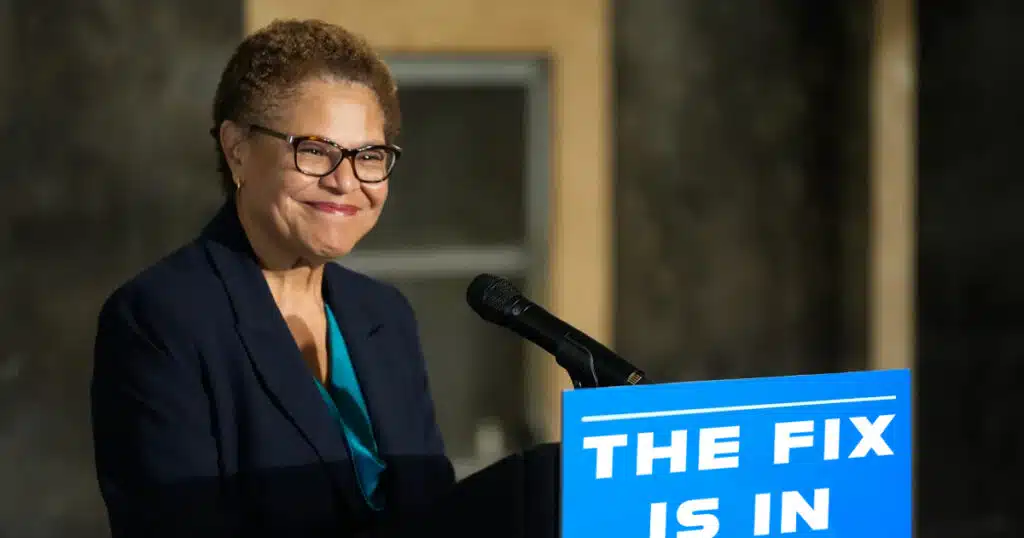
Charlottesville is even more instructive. The “very fine people” hoax was debunked almost immediately for anyone who bothered to read past the headline. That didn’t stop it from becoming a cornerstone of modern political mythology. It was cited, repeated, canonized, and eventually elevated to campaign-launch status. Joe Biden built an entire presidential run on it. Kamala Harris still invokes it like it’s carved into stone tablets somewhere. The fact that it never actually happened as described is treated as a minor inconvenience, like a typo in an otherwise useful document.
Then there’s the laptop. The one that was “Russian disinformation” right up until it wasn’t. The one that required a synchronized media blackout, a parade of former intelligence officials, and a healthy dose of social media censorship to keep the narrative intact long enough to get through an election cycle. Now that it’s acknowledged as real, the same people who dismissed it have simply moved on, no apology, no correction, just a quiet pivot to the next approved outrage.
None of this persists by accident.
Not always subsidized with direct cash, although there’s plenty of that floating around via the intertwined networks of non-profits, NGOs and the checkbooks of left-wing billionaires, but with something often more powerful – things like status, visibility, social validation, and sense of belonging. If repeating a narrative gets you applause, followers, a speaking slot, or just acceptance in the right circles, you’re going to keep repeating it. Truth becomes secondary and, in some cases, it becomes irrelevant—or even harmful—something to be ignored.
What you end up with is a kind of manufactured propagandistic availability heuristic. People believe something is common or true simply because they hear it constantly and over time the repetition creates the illusion of reality , that illusion hardens into something that looks a lot like mass delusion. At the outer edges, it starts to resemble something more serious, something approaching collective psychosis, especially when it is knowingly cultivated by institutions that understand exactly what they are doing.
And here’s the part that makes it worse. You can’t reason people out of it once they’re in. The belief system is like a run-flat tire, it is self-sealing. Every contradictory fact is dismissed as propaganda, every challenge is seen as hostility, and every attempt at correction is treated as an attack.
Savanah Hernandez, political commentator and reporter for TPUSA’s Frontlines, was mobbed and assaulted by Minnesota Antifa activists while filming their protest outside the Whipple Federal Building in Hennepin County on Saturday.
I related a few days ago that I had the song “Tarzan Boy” by Baltimora stuck in a loop in my brain. This heuristic is like a subsidized ear worm. These heuristics are so deeply embedded that people start seeing confirmation everywhere, even where none exists and to even suggest they might be wrong doesn’t result in a reasoned debate, you get anger and sometimes even violence. At some point, you come to accept an uncomfortable reality, that “unreality” is their reality.
Not everyone wants to be convinced. Some people prefer the narrative because it gives them purpose, identity, and community. And when a system is built to reward that preference, you don’t just get more of it, you get an entire culture organized around maintaining it.
As Alfred J. Pennyworth said to Bruce Wayne about the Joker, “Some men aren’t looking for anything logical, like money. They can’t be bought, bullied, reasoned, or negotiated with. Some men just want to watch the world burn.”