Why Regime Change in Iran is Likely the Best Option for the US
The current conflict in Iran has created an inflection point in the Make America Great Movement. While the true meaning and definition of America First was not tested during President Trump’s less eventful first term. His decisions to depose Maduro and attack the Iranian regime have forced both MAGA and the broader Republican party to have a deeper and more nuanced conversation about what the best role of the US military is in the world today. President Trump campaigned against endless wars and regime change in 2015, and some mistakenly conflated these core ideals with an isolationist foreign policy that individuals such as Tucker Carlson espouse.
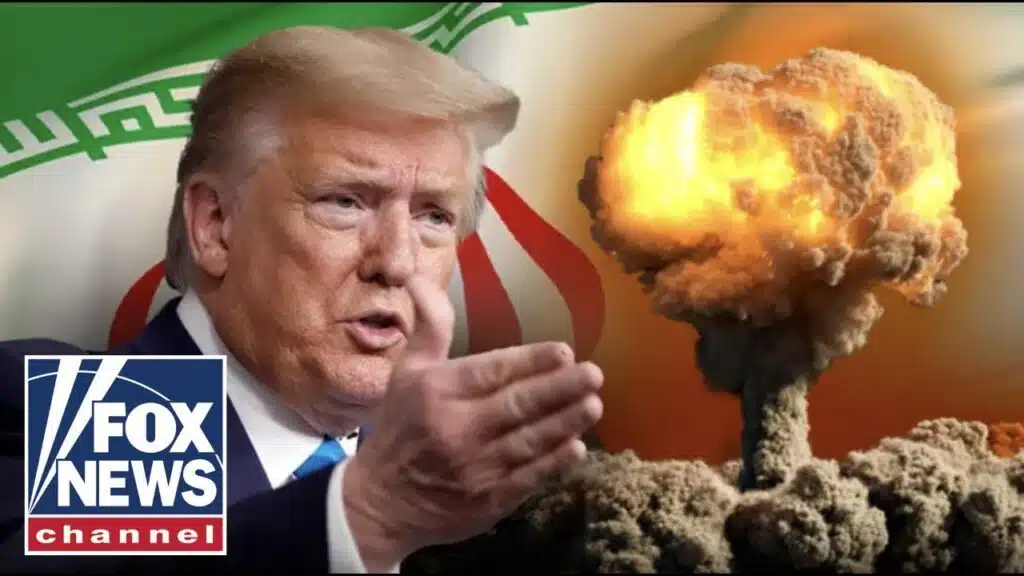
The true reality is that Trump’s actions in both Iran and Venezuela are clearly within the purview of what the President has always talked about in defining what an America First foreign policy looks like. Trump has made clear the US should not seek to enter endless conflicts or to try to basically socially engineer governments with regime change policies without knowing all the facts. Still, while the President has clearly stated his primary goal is to make a deal with the Iranian regime, Trump has also indicated that if regime change fits within his primary objective of dismantling the rogue nation’s nuclear program, he may pursue that end goal.
Trying to define the best approach to foreign policy in overly simplistic and broad strokes doesn’t make sense historically or in today’s world. When the Allies won World War II, America replaced Hitler and engaged in regime change. More recently, the US also deposed a corrupt Venezuelan dictatorship that was enabling both China and Russia to gain a foothold throughout South America. While the current actions the President is taking against Iran are obviously very different than the more limited actions Trump took against Maduro, there are also reasons why regime change should be successful if achieved with the Persian nation.
The demographics of Iran strongly also suggest a new and more Democratic government would be much more friendly to both the US and the West in general. Nearly 65 percent of the Iranian people do not identify as being religious, more than half the country’s population is under the age of 40, and the nation is also majority women. Iran has a history of being a pro-Western nation, and most policy analysts also believe the current brutal regime has less than 20 percent support across the country overall. There was also a popular uprising in Iran prior to the recent military action taken by the United States, as well, and multiple signs point to the country’s economy being on the verge of collapse.
While obviously the exact nature of regime changes in any country, including Iran, can be unpredictable, there is a very basic reason to believe a new and more Democratic government in this Persian government would best serve both the Iranian people and the international community as a whole. The nation has a history of being pro-Western. The evidence also suggests this result could likely be achieved without a larger-scale invasion of Iran. Trump has multiple options to pursue regime change without a wider-scale invasion of the mainland of the country. The US can continue to arm groups such as the Kurds and the Iranian people as a whole. America can also take Kharg Island and cut off Iran’s oil distribution network, and Trump can also use special forces and limited amounts of troops combined with an aerial bombing campaign to prevent the Iranian government from being able to slaughter the people of the nation in the streets. Iran relies on Kharg Island to sell nearly 90 percent of the nation’s oil to support the country’s fragile and collapsing economy.
The President campaigned against endless wars and open-ended conflicts that served no one but the military industrial complex, but Trump’s America First doctrine is still predicated on peace through strength, and that philosophy obviously requires the use of occasional force, even when the best choice of military action may involve regime change. Iran is also not Iraq. While the Persian nation has a notably larger population than its neighbor, Iran is an almost 90 percent Shia nation, the risk of a wider-scale sectarian conflict is much lower than what was seen in Iraq, a country where the Shia, Sunni, and Kurdish groups had a history of violence against each other. Iran is also a much more secular and younger nation than Iraq was as well. President Trump’s actions in Iran have been both successful and fully in line with his America First doctrine, and if he decides to remove an Iranian government that is unwilling to negotiate the kind of deal that is in the best interest, regime change will likely become a wise additional goal of the current military action the United States is currently undertaking.