A Hump Day Brain Dump
Today’s contribution to our national discussion is more or less a brain dump. Sometimes I wake up uninspired and unfocused, it usually happens when my idea and observation bearing neurons haven’t stretched enough to connect yet.
Hopefully this makes a little sense anyway.
What follows is purely observational and my personal viewpoint. I am simply an observer of human behavior and profess no special knowledge or training in psychology or any of the social sciences, I just watch, think, and deduce.
I’ve been watching politics and different political and social movements for my entire life. I learned early on in life to not just to listen to what people say but to pay attention to what they do because the alignment (or disorder) between the “say” and the “do” and how they manage to synthesize or reconcile those two things is the key to understanding their true goals and motivations.
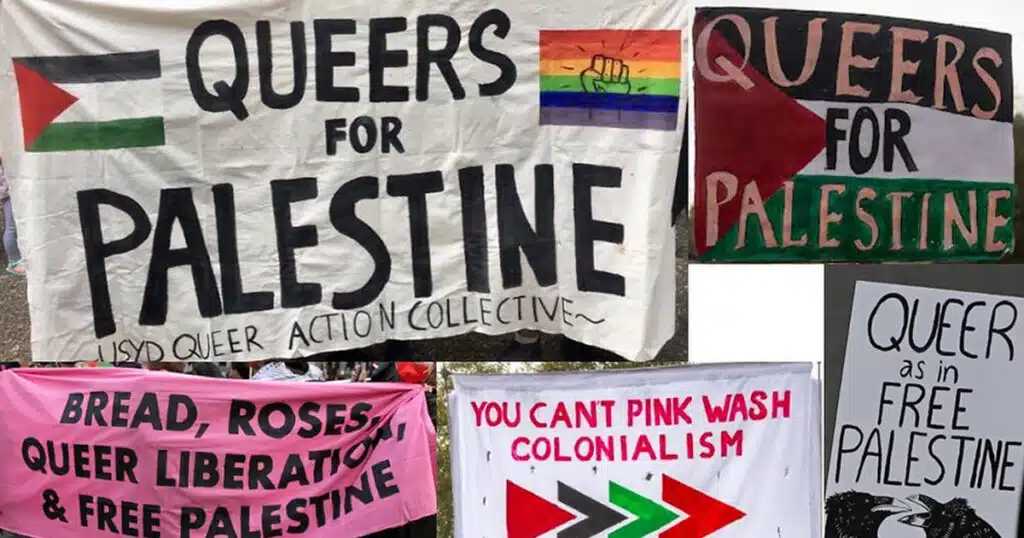
I marvel when the alliances between groups with diametrically opposed beliefs develop to support or protest some common goal or grievance. Logically, groups like Queers for Palestine shouldn’t exist, but they do.
It certainly appears that shared identity can become more psychologically powerful than shared principles. When belonging to a coalition becomes central, consistency between all its members’ beliefs becomes secondary. The coalition’s narrative and its designated opponents become the primary organizing force.
I’ve been fascinated this political cycle to see how many people have joined a communist/Islamist alliance, which is not that illogical because both rest on authoritarianism but looking deeper, the majority of this coalition is a union of dhimmis (non-Muslim subjects of a state governed in accordance to sharia law) and people who, during the Cold War era, were called “useful idiots” (naive or credulous individuals who are manipulated or exploited to advance a political cause or agenda that is contrary to their own interests).
Most movements are made up of about 1% total radical bomb throwing nutjobs, about 10% true believers (who are totally down with the movement but draw the line at the use of exploding ordnance), and the remaining 89% are simply followers, doing what they are told without really knowing that much about what or why they are doing it (almost every protest features a “man on the street” interview with some of these characters, who profess strong beliefs in things that simply aren’t true or happening or they have no sense of why they are there other than some rehearsed mantra).
Sooner or later, you begin to wonder if a need for belonging and/or a fear of independence (which I will define for the purpose of this writing to be wanting to be in a told what to do in a highly structured environment to reduce uncertainty) drive a lot of these behaviors.
There is a substantial body of research suggesting that two powerful and often competing human motivations are the need to belong and the need to reduce uncertainty. For many people, highly structured groups satisfy both needs simultaneously. This does not mean everyone prefers being told what to do, but it does help explain why some individuals gravitate toward organizations, ideologies, religions, corporations, militaries, or political movements that provide clear rules and a strong group identity.
There is also an important difference between discipline and dependence.
Many successful people voluntarily place themselves in highly structured environments—such as the military, demanding professions, or rigorous religious communities—not because they fear independence, but because they see structure as a tool for achieving self-chosen goals. In contrast, dependence involves surrendering one’s own judgment because making independent decisions feels threatening or overwhelming.
That distinction echoes a long-standing observation in political philosophy.
Thinkers from Alexis de Tocqueville to Friedrich Hayek warned that a free society requires citizens who are willing to accept the burdens of personal responsibility. Psychology suggests they identify a real tension: humans generally crave both freedom and security, and different individuals resolve that tension in different ways.
Ben Franklin wrote, “Those who would give up essential Liberty, to purchase a little temporary Safety, deserve neither Liberty nor Safety.”
Personally, I think Franklin’s statement extends to support and affiliation with political and social factions. I read it as a warning that constitutional liberties should not be casually bargained away, especially when the promised security is limited or temporary and offered by some movement, political party, or group that clearly wishes that certain constitutional liberties didn’t exist.