A Lesson – And A Warning – From Spain
Every now and then, history clears its throat.
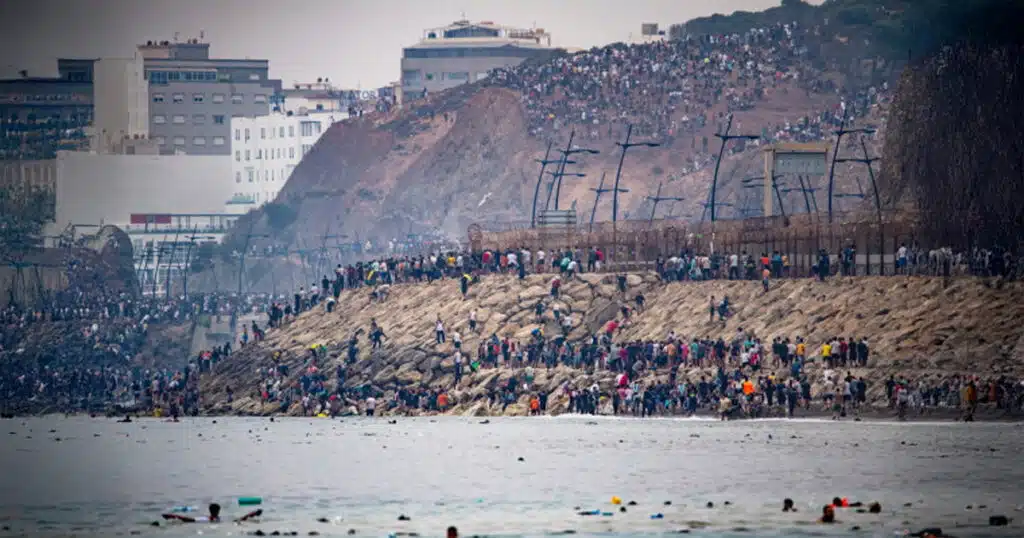
It doesn’t always come with trumpets or armies. Sometimes it arrives on a television screen, in the form of frightened people climbing fences, swimming through dark water, pressing against a border that has suddenly become little more than a suggestion.
That’s what happened in Spain.
Thousands crossed from Morocco into the Spanish territory of Ceuta. The guards were overwhelmed. The facilities filled. People drowned. Others were crushed in the terrible confusion that follows when law gives way to sheer numbers.
President Donald Trump looked at what happened and sounded the alarm. He warned that America had better pay attention.
He’s right.
There’ll be plenty of explanations for what happened in Spain. Politicians will blame poverty, war, smugglers, foreign governments, colonial history, economic desperation and one another. Some of those explanations may be true.
But beneath all of them lies a truth so plain that modern leaders have nearly lost the courage to say it.
When people believe a border won’t be enforced, they’ll cross it.
They’ll come because they’re desperate. They’ll come because somebody promised they could stay. They’ll come because smugglers sold them a story. They’ll come because they watched others cross and disappear into the country beyond.
Once the word spreads that the gate is open, more will follow.
It’s human nature.
But a border is more than a fence, a river or a line drawn across a map. It’s where a nation says, “This is ours, and we have the right to decide who enters.”
Without that right, there’s no sovereignty. There’s only geography.
Spain eventually sent military forces to restore order. Its leaders spoke solemnly about territorial integrity. They said the border had to be defended.
Of course it did.
But borders aren’t supposed to be defended only after they’ve collapsed. A government shouldn’t wait until thousands have crossed, people have died and panic has taken hold before remembering that sovereignty matters.
The first duty of government isn’t to explain disorder. It’s to prevent it.
America ought to understand this better than most.
For years, we watched our southern border become a symbol of political cowardice. We watched millions cross while Washington officials stood behind microphones and assured us everything was under control.
It wasn’t. It never was.
Local communities were left to absorb the consequences. Schools took in new students. Hospitals treated new patients. Police departments faced new burdens. Taxpayers were handed the bill.
Whenever ordinary Americans raised a concern, they were told they lacked compassion.
That accusation has become one of the great dishonesties of our age.
There’s nothing compassionate about encouraging people to make a dangerous journey. There’s nothing humane about allowing cartels and smugglers to control the road into a nation. There’s nothing merciful about creating chaos and asking working families to carry the cost.
Compassion without order soon becomes negligence.
A nation can welcome immigrants and still enforce its laws. In fact, it must.
Legal immigration means something only when illegal entry means something too. Every person who waits, applies, follows the rules and enters through the lawful process is mocked when government treats unlawful entry as merely another road to the same destination.
The question isn’t whether those crossing want a better life. Most surely do.
The question is whether Spain, America or any other nation has the right to decide who may enter, how many may enter and under what conditions.
If the answer is no, citizenship itself begins to lose its meaning.
There was a time when this wasn’t controversial. Democrats believed in borders. Republicans believed in borders. Working people believed in borders because they understood that laws, wages, schools, neighborhoods and public order depended upon them.
Nobody had to apologize for saying a country belonged first to its citizens.
Now we’re told borders are outdated. Enforcement is called cruel. Deportation is treated as some strange moral offense. A nation’s desire to preserve itself is condemned as fear.
The people who preach these doctrines usually live far from the consequences.
They don’t walk the border country at night. They don’t run the small hospitals or crowded classrooms. They don’t see what happens when distant leaders make grand promises with somebody else’s money and somebody else’s peace of mind.
They speak in simple theories.
The people living with the results don’t have that luxury.
Spain’s crisis should remind us how quickly theory gives way to reality.
When thousands begin moving at once, speeches won’t stop them. Good intentions won’t stop them. International conferences won’t stop them. A government either has the will to defend its border, or it doesn’t.
That’s why elections matter.
The people we send to office will decide whether the law is enforced or merely discussed. They’ll decide whether a border is guarded or simply watched. They’ll decide whether America remains a nation capable of governing itself.
A nation that can’t control its border can’t protect its people, preserve its laws or shape its own future.
Spain has given us a warning.
We’d better listen.