In Wake of Arday Scandal, European Elite Institutions Turn on Free Speech Instead of Reforming
The Western value of free speech appears to be hitting a terminal phase outside the United States, especially in the Anglosphere where censorship in the name of political correctness now runs rampant.
That’s my takeaway from the ongoing “Arday affair” which, if anything, solidifies just how pathological and ultimately tyrannical the DEI obsession has become in elite institutions in Europe and the United States.
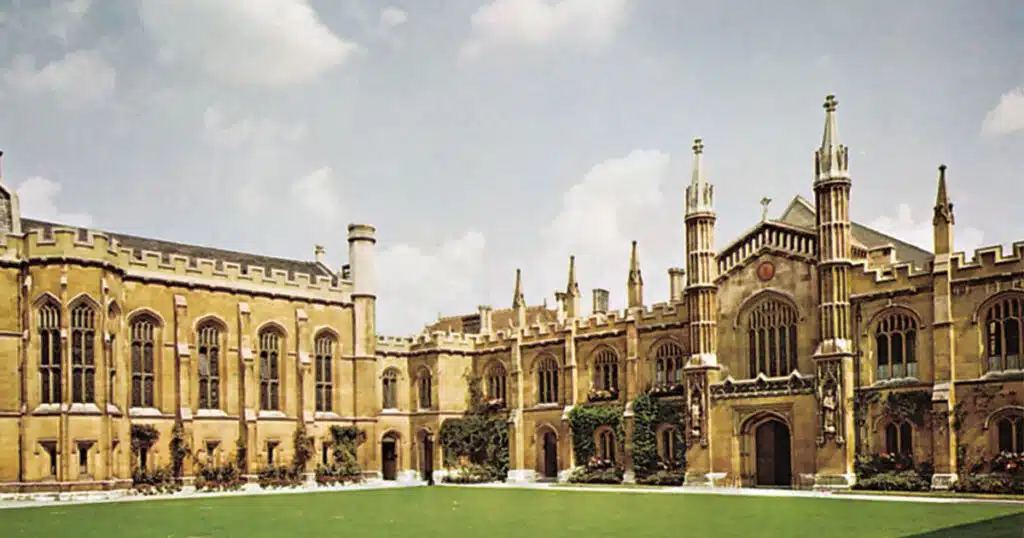
In case you haven’t been following, this story revolves around Cambridge University professor Jason Arday.
Arday was considered a star black studies scholar at Cambridge and was touted by the media in glowing profile after glowing profile. His inspirational biography of overcoming illiteracy and autism while accomplishing countless incredible feats and ascending to a professorship was widely touted.
Unfortunately, much of his biography appears to have been fabricated and a good chunk of his scholarship was outed for being plagiarized.
I keep saying “was” because his story has become quite tragic.
When he got exposed and the accusations piled up, Arday killed himself.
It’s a terrible end to this whole ugly affair. But none of it would have happened if Cambridge hadn’t elevated a con man.
You’d think that the British academe would be eager to fix the process that made an obvious fraud a “star” professor at a university that once produced Sir Isaac Newton. They set a man up to fail, and now he is dead by his own hand.
Nope. They looked at what happened and decided it was best to shoot the messenger and threaten any future messengers with punishments and censorship.
Nathan Cofnas, who originally exposed Arday’s plagiarized work, wrote on X Thursday that he’d been suspended by Ghent University in Belgium. Cofnas noted that he would likely be fired.
The day before the before, the school rector, Petra De Sutter—who is a member of the Green Party—put out a statement on Arday and Cofnas saying that the freedom of speech is nice and all that but “that freedom is not unlimited. It goes hand in hand with responsibility and may be restricted in order to protect the rights of others.”
Interestingly, De Sutter was at one point in a bit of a scandal of his own involving fake AI quotes.
De Sutter, who is transgender, then said that what happened to Arday “should prompt reflection. We hope that lessons will be learnt from what has happened regarding the way we treat one another both within and outside the academic world, particularly when people become the subject of public controversy.”
The statement was then updated to note the suspension of Cofnas. The school said this was done “as a precautionary measure.”
It’s important to note that the accusations against Arday, of plagiarism, fabulism, and straight up fabrication of a personal biography, were never disputed. Nobody debunked Cofnas, who was merely dogged in his efforts to point out Arday’s plagiarism.
Even Arday admitted that mistakes were made and he blamed them on having autism.
What Cofnas became hated for is that he dared to tell the truth about a man whom Cambridge and the media put on a pedestal as a great, meritorious, scholar. He was hated for telling the truth and exposing the lies of the DEI regime. For that, he needed to be destroyed.
And the wrath of Arday’s institutional supporters goes beyond just destroying the career of one man.
A nonprofit group in the UK is now pushing for an inquiry by the prime minister into media coverage of the Arday affair. This inquiry has been endorsed by many members of Parliament who apparently think that a major story about a fraud professor at the nation’s top university shouldn’t be covered by the press.
Another petition signed by over 100,000 people calls for “legislative action to impose limitations on the number of news articles published about a single individual within a defined time frame” to “ … work towards creating a framework that balances the public’s right to information with an individual’s right to privacy and mental well-being.”
That right to free speech isn’t something to be “balanced” by a government agency. It either is or it isn’t.
What they are essentially proposing is that if anyone, including a public figure, claims that they are suffering “mental anguish,” this sort of law could essentially stop all media coverage of even the worst kind of scandal.
The want power to smother truth when the truth is uncomfortable.
I’m sure King George III would love to have used that kind of law on Samuel Adams. Stop all criticism of the king over his draconian laws, he has mental health issues!
Fortunately, our forefathers here in the United States would have had none of it. And they made sure we too would have none of it thanks to the First Amendment.
But across the pond the attacks on free speech are getting worse, not better. Their institutions are even more resistant to criticism and are ruthlessly punitive. Their only hope is to return to the free-speech norms that we collectively celebrated not long ago.