Trump officials celebrate Supreme Court wins, discuss future
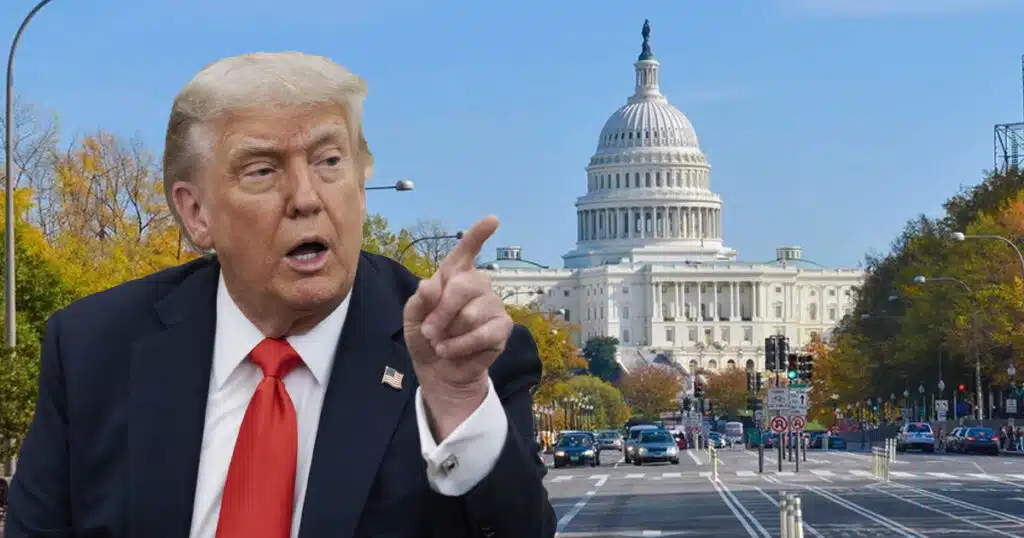
Trump administration officials celebrated legal wins at the U.S. Supreme Court over the past year and looked ahead to the court’s upcoming term.
Solicitor General John Sauer spoke at an event hosted by the Federalist Society and America First Legal in Washington, D.C., Thursday to discuss the administration’s prominent wins and what he has learned from his time before the highest court in the nation.
Sauer said the high court’s decision in Trump v. Slaughter, a case that upheld the president’s power to fire members of executive boards, was one of the most memorable over the last year.
“It’s hard to overstate the importance of Slaughter,” Sauer said. “Slaughter is an enormous historic decision. It matters for the structure of our government and it matters for the preservation of our liberties going forward.”
In the 6-3 decision, justices on the high court allowed the president to fire Rebecca Slaughter, a member of the Federal Trade Commission. The justices affirmed the president’s authority to maintain individuals on executive boards.
Chief Justice John Roberts said members of executive agencies are meant to be accountable to the President, overruling a legal precedent established under President Franklin Delano Roosevelt.
“The fact that the court got to the point where it said after 90 years of wrestling with this issue, that is unconstitutional, that I think maintains these lines of political accountability and therefore democratic accountability,” Sauer said.
Sarah Harris, a principal deputy solicitor general, also highlighted the importance of the high court’s decision in Trump v. Slaughter. She said challenges to the power of executive board members have been a prominent issue throughout her tenure as a legal professional.
Members on the panel also discussed the importance of Trump v. CASA, a case that limited federal judges from issuing nationwide injunctions to prevent federal policies from going into effect.
Panelists said the case was especially important because of the large amount of injunctions against Trump administration policies in the beginning of 2025. Harris said the pursuit of the case was extremely important because the court had not fully addressed legal concerns with injunctions before.
“The Supreme Court had previously said no to many, many previous applications from the Solicitor General’s office to take up nationwide injunctions, the justices had written about it, but no one had actually decided to do anything about it,” Harris said.
Justices on the high court, in a 6-3 decision, supported the Trump administration’s right to withdraw temporary protected status for immigrants from Haiti and Syria in the United States. Sauer said his office’s strategy relied on the plain interpretation of statutes that allowed the executive branch to strip the protections.
“The stronger your plain text argument is, the better,” Sauer said. “I thought that was a picture for the government in that particular case.”
Hashim Mooppan, a principal deputy solicitor, praised the court’s decision in Louisiana v. Callais, a case that struck down Louisiana’s congressional map on the basis of unconstitutional racial gerrymandering under the Voting Rights Act.
Several states across the country have moved to redraw congressional districts following the high court’s weakening of the Voting Rights Act.
“The Voting Rights Act transformed affirmative race discrimination rather than the tool to prevent race discrimination in voting,” Mooppan said.
The panelists also addressed criticisms of the Supreme Court’s emergency docket, where justices take cases without requiring oral arguments or typical briefing. Harris said it is important to have the emergency docket as an immediate legal resource for consequential national policies.
Justices on the high court recently weighed in on two issues from the emergency docket. The court temporarily allowed further construction of the White House ballroom and allowed an order limiting mail-in voting as legal challenges continue to both orders.
“Normally in our federal system, of course it should be the supreme court that has the least the discretion to decide whether it’s going to make the rule,” Harris said.