Can AI Bypass Your Doctors And Write Prescriptions? One State Says Yes
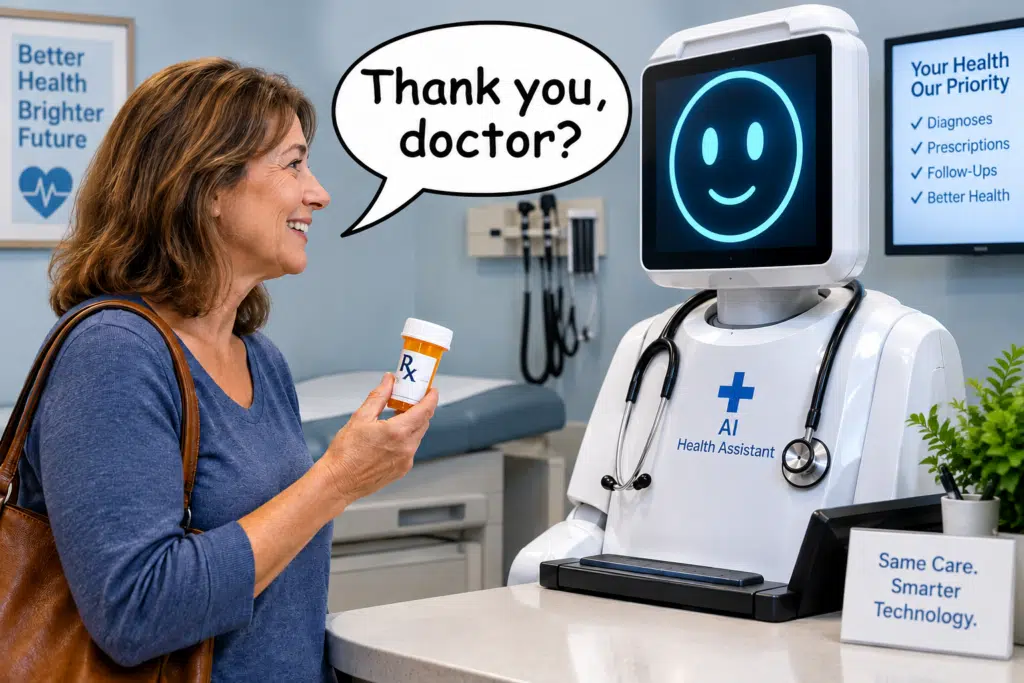
I can see a world where an AI system is given a patient’s information and is utilized as an unbiased third set of eyes. Then a trained physician reviews the outcome before administering any medication or undertaking any procedure. That is how AI should be used in human health.
Nolla Health’s AI began prescribing acne medication to Utah patients on October 5, marking a historic first approval in the United States. We’re not talking about automatic prescription refills of a doctor-ordered medication. This is AI by itself making the prescribing decision and executing it without a doctor’s review.
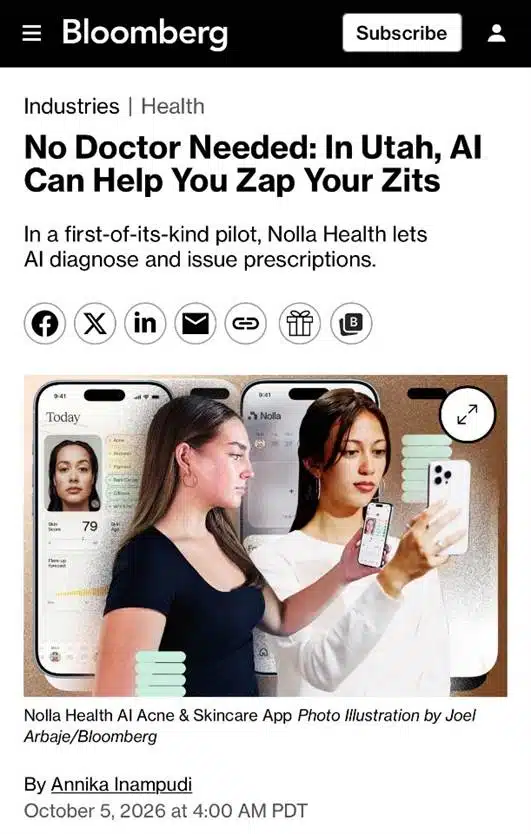
Luis Wenus, the founder of Nolla, stated in a demonstration video that, “Until now, a licensed clinician signed every single prescription before it went out, our AI can now make that prescribing decision itself.”
Which is exactly what you would expect the founder of a new company to say, but that egotistical approach is dangerous when it comes down to prescribing medication without a doctor’s review.
Wenus’s background doesn’t exactly inspire great confidence. Before this, he worked for World, formerly known as Worldcoin and the World Network. Sam Altman’s project that scans people’s irises. The goal is to create a universal verification layer to differentiate humans from artificial intelligence, as AI-generated content and bots become more prevalent online. It also examines concepts related to digital economic distribution and universal basic income.
Now that scanning people’s eyes is in the rearview mirror, he’s scanning faces and writing prescriptions. He claims to have built the “first end-to-end AI doctor,” or as his profile on X states, “Building personal doctors.”
Inexplicably, Utah’s Office of Artificial Intelligence Policy and the Division of Professional Licensing co-signed the agreement permitting this. The question is why? This system eliminates a physician’s input entirely, and somehow Utah took the bait and allowed it.
The state added a disclaimer on its authorized-pilots page that makes no sense.
“Taking part in our AI sandbox does not mean the State of Utah has approved, endorsed, certified, or vouched for the product.”
Really, then, how is this system operational, and how can you make that claim when the state’s Office of Artificial Intelligence Policy and the Division of Professional Licensing co-signed the agreement permitting it?
In January of this year, Utah approved a startup called “Doctronic.” That decision allows AI to process prescription renewals across around 190 drugs – covering chronic conditions like hypertension, diabetes, and thyroid disease – with physician review required only for the first 250 prescriptions in each drug class before full automation took over.
Utah’s Medical Licensing Board was never consulted. They learned of it only when reporters called to ask about it.
They raised red flags, and yet regulators allowed the program to proceed.
An AI sandbox is a secure, isolated environment designed to run AI models, test prompts, or safely execute code generated by artificial intelligence systems, such as large language models and autonomous agents. This setup ensures that these activities do not harm your main computer, network, or production data.
Utah’s sandbox is getting crowded. Beyond Nolla’s excursion into prescribing without a physician’s consent, the sandbox now includes behavioral health prescriptions through Legion Health and pelvic floor therapy AI.
Congress is on the sidelines with this issue. The Healthy Technology Act of 2025 would officially define AI systems as licensed prescribers if a state authorizes them and the FDA approves them as a device. However, that bill is still on the shelf, awaiting passage.
In the meantime, more and more of these situations are being queued up to be squeezed through the system. Utah jumped the gun, but more are sure to follow.
AI has a place, but when it comes to human health, a disclaimer shouldn’t be the Band-Aid a state applies to something this serious.