The Perfect President Who Never Existed
I’ve noted that I think Thomas Sowell is a national treasure and one of the most underrated public intellectuals of modern times. He has a wonderfully effective way of exposing the foolishness of arguments built around unrealistic expectations.
He simply asks, “Compared to what?”
That is a question that ought to be permanently displayed above the entrance to every political discussion in America, particularly those involving Donald Trump. There are a lot of things I don’t like about President Trump and I have not been shy about talking about them. I’m not a fan of his “not my fault” responses to our crash and burn of this election cycle but unfortunately for all of us, much of our political discourse has become an exercise in comparing imperfect reality to an imaginary perfection that has never existed, cannot exist, and conveniently requires no explanation of how it might actually work.
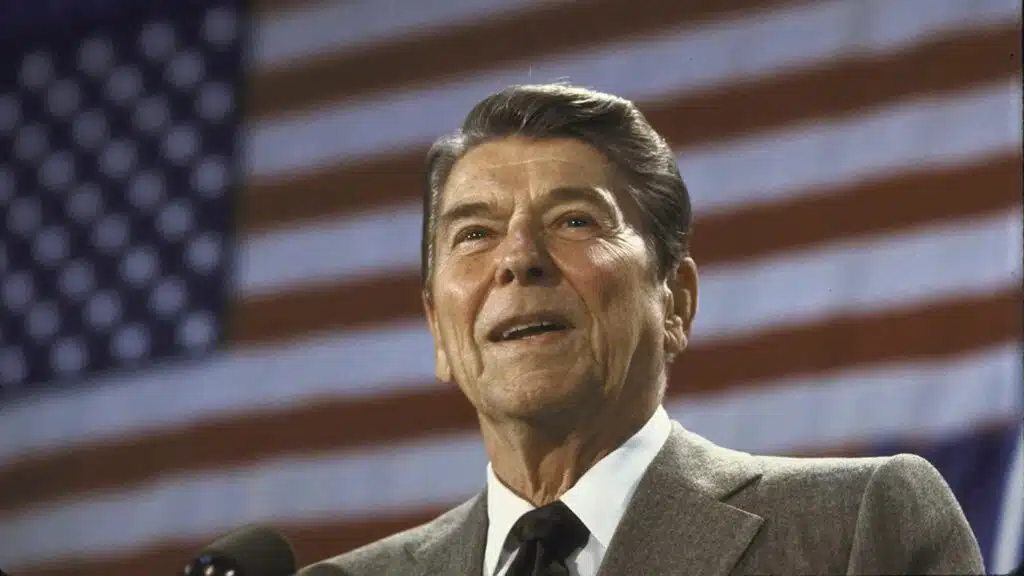
I love Ronald Reagan. I think he is the greatest president of my lifetime and at the age of 21, I cast my first ever national vote for him in 1980, and I also know that Reagan operated in an environment very, very different than we have today.
President Reagan is considered by many to be the patron saint of modern American conservatism. Reagan believed in limited government, individual liberty, free enterprise, and a strong national defense. He also raised taxes, signed an immigration amnesty (he believed the Democrats were honorable), negotiated compromises on Social Security, presided over substantial increases in the national debt, and accepted government policies that would send some of today’s self-described constitutional conservatives into fits of apoplexy.
By the standards of ideological purity some demand of Trump, Reagan himself might be dismissed as insufficiently conservative. Apparently, the only acceptable conservative president is one who has never occupied the Oval Office.
Reagan also enjoyed a political advantage that no longer exists in any meaningful form. During the 1980s, conservative Democrats, particularly those from the South and rural America, frequently crossed party lines to support his agenda. Reagan never had a Republican majority in the House of Representatives, yet he accomplished much of his legislative program through coalitions with Democrats who shared enough of his principles to recognize common objectives.
Those Reagan era conservative Democrats have largely disappeared from Congress, victims of the ideological sorting that has transformed both parties into increasingly homogeneous political organizations. Reagan governed in a political environment where disagreement did not automatically constitute treason against one’s party.
This brings us to Trump and the curious phenomenon of conservatives who appear to measure him against a president assembled entirely from their own political preferences. This imaginary president never compromises, never makes an unfortunate appointment, never says anything embarrassing, never signs imperfect legislation, and never exercises executive authority in a manner that offends their particular interpretation of constitutional government. He also never has to negotiate with Congress, deal with an entrenched bureaucracy, confront hostile courts, or win an election. Governing is remarkably easy when your presidency exists entirely between your ears.
Supporters of Trump are routinely accused of belonging to a MAGA cult of personality, as though supporting a politician necessarily means believing him incapable of error. Certainly, there are people whose devotion to Trump approaches that description, but the accusation conveniently ignores the millions who support his policies while recognizing his shortcomings. They are not necessarily worshipping the man. I am one of many Trump supporters who simply have applied Sowell’s question and concluded that, compared with the available alternatives, Trump’s policies better reflect achievable versions of my priorities.
There is also something resembling an anti-Trump cult, including among people who identify as conservatives. For some, opposition to Trump appears to have become an identity rather than a political judgment. His failures are celebrated, his successes discounted (or completely ignored), and every controversy becomes further confirmation of a conclusion they reached long ago. The same intellectual dishonesty that excuses every shortcoming in a favored politician can condemn every action of a despised one. Neither disposition should be mistaken for principled political analysis.
This team ignores the nature of not only the current Democrat Party but also the nature of Congressional leadership. The fact is that for one reason or the other as of November 2026, approximately 650 bills passed by the Republican-controlled House had not passed the Senate. Some received Senate consideration, but many remained stalled in the legislative process or were never brought up at all – including, by my count, about 60 that would have significantly aided President Trump’s agenda (including the SAVE Act).
Maybe if some of those had passed, we wouldn’t have a blue Texas, and Senators Talarico, El-Sayed and Flanagan.
The Anti-Trump Conservative Cult ignores this fact as they complain about his rhetoric, his use of Executive Orders and other actions that deviate from their preferred solutions.
None of this means that constitutional principles are negotiable or that political outcomes excuse genuine abuses of authority. Some boundaries must remain absolute, but there is an enormous difference between compromising a principle and accepting an imperfect means of advancing it. Reagan understood that distinction, and his legislative record reflects it. The question is whether today’s conservatives can distinguish between fidelity to constitutional government and an insistence upon political perfection.
Sowell’s other questions, “At what cost?” and “What hard evidence do you have?”, complete the exercise. Political choices have consequences, alternatives have costs, and actual accomplishments matter more than imaginary possibilities. The proper measure of a president is neither personal affection nor personal contempt, but his conduct, policies, results, and the realistic alternatives available. Reagan addressed this directly in his 1990 autobiography, An American Life, writing:
“If you got seventy-five or eighty percent of what you were asking for, I say, you take it and fight for the rest later.”
The perfect conservative president has never existed – and likely never will – but he remains extraordinarily popular among people who would rather lose with their principles perfectly preserved than accomplish anything by accepting the imperfections of the real world.
It is easy to remain ideologically pure when the only government you are responsible for running exists in your imagination.