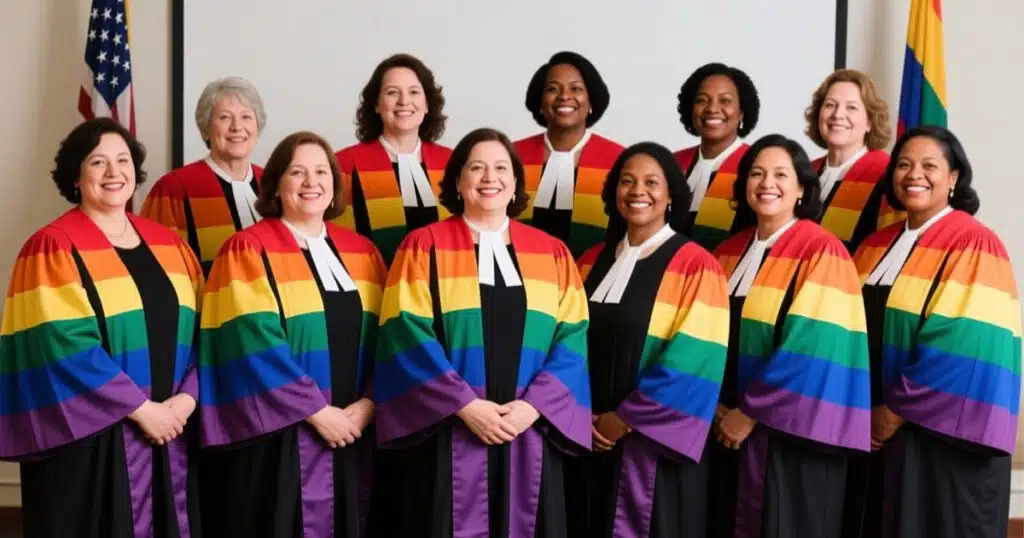
Feminism, Feminization Of Institutions, And Cultural Collapse
Just finished Helen Andrews’ Great Feminization piece in Compact and I’m going to be thinking about it for a long time—not because it’s full of shocking revelations, but because it finally connected all the dots in this blurry portrait of cultural collapse we’ve been staring at for the last two decades.
Remember when Larry Summers got kicked out of Harvard for suggesting, gasp, that men and women might have different aptitudes at the high end of scientific ability? That was 2005. He didn’t call for a new patriarchy, didn’t advocate chaining women to the stove. He just said the quiet part out loud in an academic setting, and within a month the faculty had sharpened their pitchforks and run him out like he’d exposed himself during freshman orientation.
Andrews argues that this moment—the cancellation of Summers—wasn’t just a skirmish in the culture war. It was a regime change. Not because women were present, but because the method of his downfall was distinctly feminine. Not open conflict, not factual rebuttal—just an overwhelming tide of emotional offense, vibe-check politics, and collective shunning. “I couldn’t breathe,” said one biologist who walked out. And thus began the sacred tradition of treating every intellectual disagreement like a panic attack in progress.
According to Andrews, wokeness isn’t Marxism 2.0 or some clever new ideology. It’s what happens when institutions once dominated by men are slowly overrun by HR culture, emotional arbitration, and a pathological fear of conflict. In short: feminization. The NYT, academia, the courts, medicine, even the sciences—everywhere you look, feelings now outrank facts, cohesion trumps confrontation, and disagreement is mistaken for violence.
This isn’t about individual women. Andrews herself is one. So is Bari Weiss, who found out the hard way that even moderate wrongthink will get you ghosted by the Slack mob. It’s about group dynamics. Once women hit a critical mass in an institution, it stops operating on the traditional masculine logic of “what’s true” and starts shifting toward “how does everyone feel about this?” And once that shift happens, there’s no going back.
Want to see the future of the legal system? Look at how Title IX courts operate on college campuses: accusations without evidence, guilt determined by how believably someone cries during testimony, no due process, no defense. Now fast forward 20 years, when most judges are going to be trained in law schools that already lean 60/40 female. Does anyone actually think the rule of law survives that?
We were told this shift was “progress.” Women just outcompeted men, fair and square. But as Andrews points out, that’s nonsense. It was engineered. Anti-discrimination law basically requires workplaces to feminize. A single woman who feels uncomfortable in a male-dominated field can bring a lawsuit that costs a company $200 million. A man who feels alienated by a culture of forced consensus and DEI struggle sessions? Good luck with that, bro.
What’s wild is how quickly things snowball once the tipping point is hit. First you get parity. Then, because men start checking out (who wants to spend 30 years being tone-policed by HR?), the whole thing slides into female-majority territory. Psychology, journalism, academia, HR itself—they’re already there. Medicine, law, and politics are close behind.
And the scariest part? Wokeness is just the beginning. If you think 2020 was nuts, wait until the entire federal bench is staffed by people trained to believe that “empathy” is a legal argument and the “lived experience” of a crying witness outweighs surveillance footage. At that point, it’s not a justice system anymore—it’s just the longhouse in black robes.
And here’s the kicker. If you dare point this out—not even with anger, just basic observation—you’re treated like a war criminal. Even in right-of-center circles, saying “maybe women in large numbers change the character of institutions” gets you labeled a relic, or worse. And yet everyone knows it’s true. They’ve seen it happen. They’ve lived it.
Andrews isn’t saying women are worse. She’s saying they’re different—and that difference, when scaled up across entire professions, fundamentally changes how those institutions function. And not always for the better.
So no, the solution isn’t barring women from work or dragging society back to 1952. It’s pulling our heads out of the sand and asking: how much of this “progress” was rigged? How much was driven by law, by liability, by fear? And what happens if we just let go of the thumb on the scale?
I don’t think we need a patriarchy revival. But maybe we could make it legal to have a masculine workplace again. Maybe we could stop pretending that “safety” is more important than truth, that “inclusivity” is more important than competence, and that our best institutions can run forever on tears, hashtags, and passive-aggressive Slack messages.
There’s still time to fix this. But not much.
If you’ve ever wondered why every institution feels like it’s run by a college RA, read this essay. And ask yourself: what happens when the last few men left finally age out, and there’s no one left to say, “This is insane”? Because that’s not a vibe. That’s a warning.