It’s Time for Strategic Clarity on Taiwan
For five decades, U.S. policy toward Taiwan has rested on strategic ambiguity, meaning intentionally fuzzy signals about whether Washington would come to Taipei’s defense in the event of a Chinese attack. The doctrine had two primary objectives: deter Beijing from using force while discouraging Taipei from declaring formal independence. That strategy made sense in an era when China lacked the reach, integrated capabilities, and sophisticated covert electronic capabilities it now possesses. Today, however, a far stronger and more assertive People’s Liberation Army (PLA), a growing grey-zone coercion apparatus, and repeated provocative exercises in and above the Taiwan Strait all suggest there is a pressing need to reevaluate whether strategic ambiguity is doing more harm than good.
The Ever-Growing Threat from China
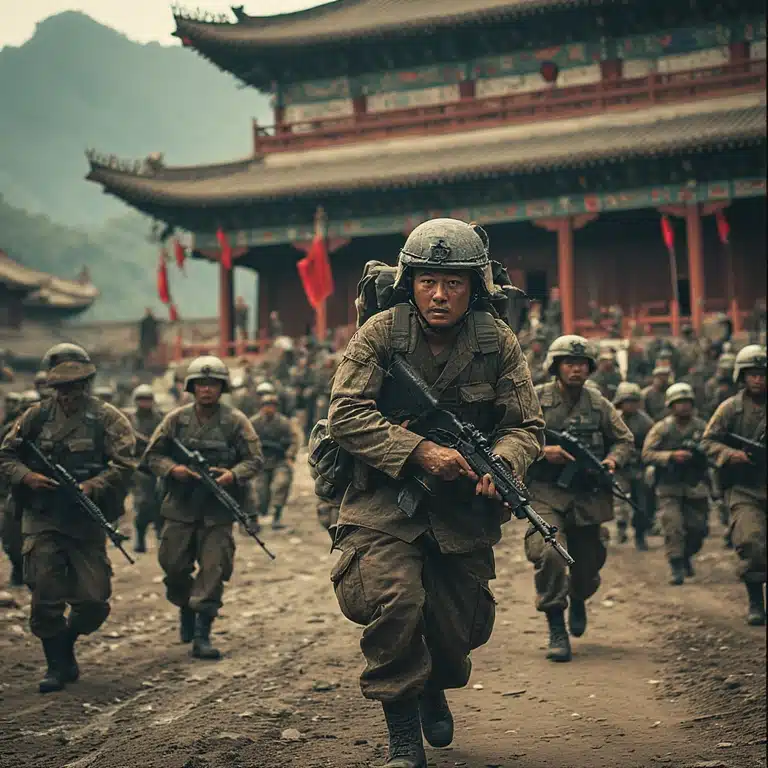
China’s military buildup around Taiwan is real and measurable. Beijing has steadily expanded its show of force by modernizing the PLA Navy and Air Force. This includes fielding large numbers of long-range missiles and improving joint logistics and amphibious capabilities that would be essential in any blockade or invasion scenario. The U.S. Department of Defense’s annual report catalogued these trends and warned that China’s military modernization is raising its ability to project power across the entire South China Sea.
These modernization steps are not hypothetical. China’s pace of developing and deploying increasingly sophisticated weapons systems has spiked. Taiwan’s Ministry of Defense, and independent analysts, recorded a sharp rise in PLA sorties and naval activity near the island over recent years. Multiple sources documented record numbers of Chinese warplanes operating in Taiwan’s Air Defense Identification Zone and crossing the once-respected Taiwan Strait median line, with 2024 and early 2025 seeing some of the most intensive activity on record. These sorties, often launched with drones and electronic-attack assets, are exactly the kind of operations that both harass Taiwan and train PLA forces for wartime operations.
China’s Grey Zone Tactics
China also uses a spectrum of intimidation tactics below the threshold of open war. These so-called “grey-zone” operations blend coast guard harassment, fishing militia operations, targeted economic and diplomatic pressure, disinformation, and shows of military force timed to political events in Taipei or visits by foreign officials. Policy institutes and think tanks have documented repeated instances where China exerted pressure to exhaust Taiwan’s defenses, test international responses, and shift the political narrative without triggering a large-scale conflict. Those measures are effective precisely because they exploit the U.S. strategic ambiguity policy since they leave rivals guessing how far the United States will go to respond.
Recent large-scale exercises and patrols illustrate how ambiguity can invite risk. In 2024–2025, Beijing staged multi-directional drills, sent dozens of warplanes and ships in coordinated deployments, and sometimes crossed previously implicit boundaries. These actions increased the chance of miscalculation: close encounters at sea and in the air can rapidly escalate, especially as each side scrambles assets and tests rules of engagement. Reporting from multiple outlets on exercises such as “Joint Sword” and the larger 2025 war games shows how Beijing is willing to combine law-enforcement rhetoric (coast guard) with PLA presence to impose political pressure.
Why Strategic Ambiguity Is a Dangerous Policy in 2025
Why does this make strategic ambiguity dangerous now? First, credibility matters. Ambiguity depends on adversaries believing U.S. deterrence is sufficiently dependable in raising the political and military costs of aggression to unacceptable levels for the enemy. But when one side invests heavily in the means to seize or blockade a target, and repeatedly practices the very operations needed to do so, ambiguous threats risk being discounted or ignored. Analysts increasingly warn that incremental coercion and rising operational capacity could create an unsolvable dilemma. By the time Washington clarifies its intent, Beijing might have imposed conditions on the ground in Taiwan that make a counter-use of force virtually impossible.
Perhaps more importantly, ambiguity reduces allied coordination. U.S. partners and regional democracies need clear signals to posture, plan logistics, and invest in deterrent capabilities. Without clarity, allies may hedge, scale back contributions, or pursue other options that fragment a cohesive regional response. The net effect is to weaken collective deterrence precisely when coordinated defense and integrated responses are most needed. Scholarly debate has grown in recent years about whether strategic clarity (explicit commitments) would strengthen deterrence by removing doubt from allies and adversaries alike.
Ultimately, policy must be judged on which posture better minimizes the likelihood of catastrophic war. Given China’s expanding capabilities, sustained grey-zone harassment, and the increased pace of provocative exercises, many experts now conclude that the balance of risk has shifted. The fog of ambiguity may no longer deter effectively and instead raises the probability of miscalculation that spirals into conflict.
Future U.S. Policy with Regard to Taiwan
The practical implications for Washington are straightforward. U.S. policy should prioritize measures that restore credible deterrence while reducing incentives for coercion. This can be accomplished by providing clearer signaling paired with stepped-up allied coordination, enhanced maritime sovereignty awareness, and investments in Taiwan’s asymmetric defenses. Simultaneously, diplomatic channels that reduce the risk of miscommunication must be maintained. In short, ambiguity as a strategy made sense in a different era, but today’s facts on the water and in the air suggest the United States must adapt its posture to preserve peace in the Indo-Pacific.
It’s worth noting that in President Trump’s recent meeting with Chinese President Xi Jinping, there was purportedly no discussion of Taiwan. In a sense, this could be considered a small victory for China since the U.S. did not take the opportunity to protest over China’s increasingly aggressive moves toward Taiwan and other nations with claims in the South China Sea.
It’s time to clearly and decisively declare that the U.S. military will defend Taiwan in the event of an unprovoked attack from China.