Diego Garcia: What Would Teddy Roosevelt Do?
The current U.K./Mauritius settlement over the Chagos Islands — including the critical U.K./U.S. base at Diego Garcia — fails to provide the Chagossians with the viable independent state they deserve and the U.S. with the secure power-projection platform in the Indian Ocean its global strategy requires. Rather than accept this flawed deal, the U.S. should: i) recognize an independent Chagossian government; and ii) negotiate with this government a Compact of Free Association (COFA) on the model of the U.S./Palau COFA. That approach would both secure Chagossian independence and put U.S. basing rights on a sound, durable foundation.
Mauritius has no just or natural claim to the Chagos Islands. Its claim rests entirely on the fact that Britain grouped Mauritius and the Chagos Islands into a single colony after the Napoleonic Wars for administrative convenience. Yet, it is nonetheless true that Mauritius and the Chagos Islands were technically part of the same territory during the U.K./Mauritius negotiations that led to Mauritian independence in 1968.
This administrative link gave Mauritius an opening to advance its own colonial ambitions by exploiting the international law of decolonization. Pursuing this opening, Mauritius persuaded the International Court of Justice (ICJ) to issue an advisory opinion in 2019 finding that “the territorial integrity of a non-self-governing territory must be respected” when it is granted independence. The opinion called upon the U.K. to end its administration of the Chagos Islands “as rapidly as possible.” In response, the U.K. entered into negotiations with Mauritius (and not with the Chagossians themselves) that culminated in a draft treaty transferring sovereignty over the islands to Mauritius.
Mauritius’s successful weaponization of international law has not gone unnoticed. On 8 December the UN Committee on the Elimination of Racial Discrimination (CERD) called upon the U.K. and Mauritius to suspend ratification of the treaty in order to engage in a dialogue with the Chagossians about their desires for the future. Despite this development, the U.K. government is pushing ahead with the ratification of the original treaty (perhaps with a bit of additional window-dressing to respond to the CERD’s findings).
The manifest unjustness of the current treaty combined with the growing opinion that the Chagossians must be consulted on their fate create an opening for a very different resolution of the Chagos Island dispute.
London knows that transferring sovereignty over Diego Garcia to Mauritius puts the U.K./U.S. base at risk, so the draft treaty contains provisions to protect it. In practice, though, these apparently strong provisions are unenforceable. As international law expert Philippe Sands told the House of Lords, the treaty’s mechanisms fall short of “binding dispute resolution”. Consequently, the only recourse the U.K. would have against meddling by a Mauritius with deepening ties to China is to protest.
Worse, the proposed treaty does not protect the U.S. against meddling by the U.K. either.
Diego Garcia would remain U.K.-operated under the treaty, and this means that the U.S. must obtain British consent to use the base for combat operations. The U.K. will grant that permission only if the proposed attack is legal under international law. However, the U.K. has a much narrower understanding of what international law allows than does the U.S.. To illustrate: the U.K. reportedly paused intelligence-sharing with the U.S. over concerns about the legality of U.S. strikes on drug-running boats off Venezuela, and U.S. planners kept Diego Garcia out of the operation against Iran’s nuclear facilities to avoid asking for permission that would almost certainly have been denied.
This matters. There is a growing class of contingencies — preemptive or preventive strikes, operations against non-state actors, grey-zone self-defense — where Washington believes it is acting lawfully and London believes it is not. So long as U.S. use of Diego Garcia remains subject to a British veto, any operation in that grey zone is hostage to British lawyers.
In short, the Chagossians need a viable independent state, and the U.S. needs a base under its complete control.
Washington can midwife an independent Chagossian state by recognizing a Chagossian government-in-exile and negotiating directly with it over the islands’ future. Working with that government and ideally with the U.K., the U.S. should propose a binding referendum among Chagossians on three options for their future: i) association with Mauritius; ii) continued British sovereignty; or iii) a COFA with the U.S..
Of these options, a U.S./Chagossian COFA is by far the best. The COFA could be modelled on the highly successful U.S. agreement with Palau, a fully independent and strategically located micro-state with UN membership. Under the U.S./Palau COFA, Washington provides Palau with deep, long-term economic support while Palau grants the U.S. full authority for defence and unhindered use of U.S. bases in Palau’s territory.
A U.S./Chagossian COFA along the same lines would enable the Chagossians to build a prosperous and independent future while putting the critical U.S. base at Diego Garcia on a secure and stable legal footing.
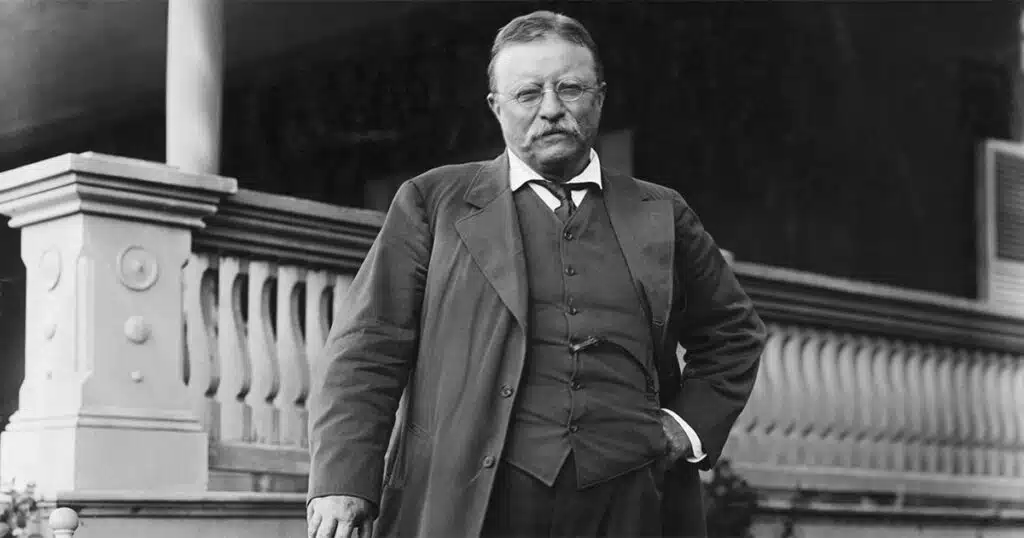
This course of action will undoubtedly carry diplomatic costs. But just as President Teddy Roosevelt did not let the prospect of diplomatic fallout stop him from securing the immense strategic benefits of the Panama Canal, so too President Trump should not let it stop the U.S. from securing the immense strategic benefits of a secure U.S. base at Diego Garcia.
Kevin R. James (@kevinrogerjames) is an economist in the Systemic Risk Centre at the London School of Economics.
This article was originally published by RealClearDefense and made available via RealClearWire.