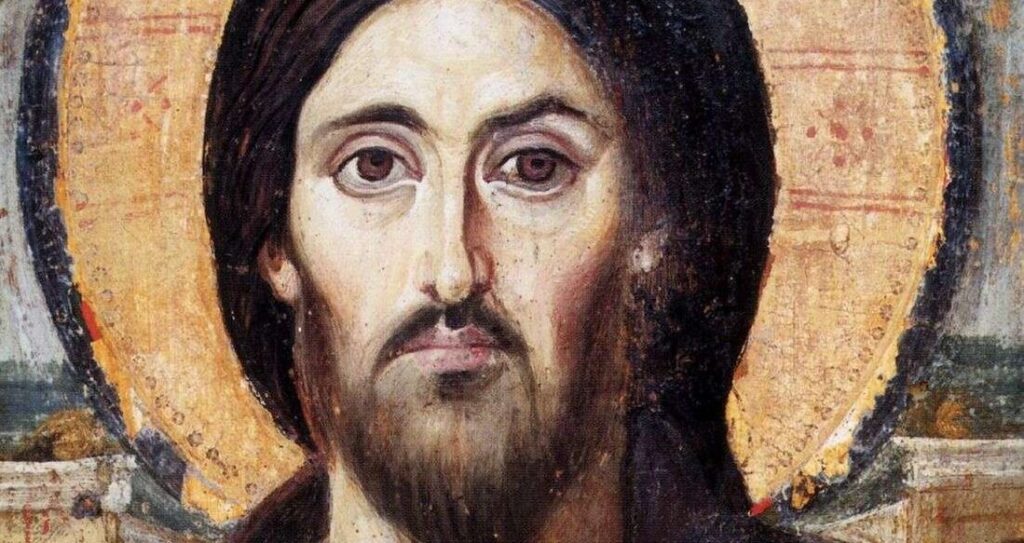
A Kinder Look at ‘He Gets Us’ — and Why It Still Misses the Point
My original plan for this piece was to fire away at the theme of the “He Gets Us” campaign, basing my caution on previous pseudo-Jesus commercials. I knew a fresh take had run last night based on a last-second glimpse I caught on television, but I had missed the commercial itself. I’m glad I located the video online this morning before I wrote.
This latest ad is not the same mark of the beast as those that have come before it.
But.
Previous Illustrations
First, before we bend backwards to offer benefit amidst doubt, let us look at a snapshot of the spirit behind the campaign. The Biblical, shepherdly, truly Christian understanding of the non-commercialized “[Jesus] Gets Us” is that he “gets” our human nature, our proclivity to sin, and has gotten it since the fall of Adam and Eve. It is precisely because he “gets” us that he was born specifically to die for that sin and the ones we continue to commit. Both Sacred Scripture and the Chair of St Peter have always taught—at least in less recent exhortations—that anything those commercials promote risks becoming just one more addition to the religion of the modern world—just do whatever you want to do—you do you—and you’ll be living the life of religious immanence welling up from within.
It’s the “speak your truth” heresy.
Two initial objections would come to mind immediately at the sight of one of these past ads. As Scott McKay wrote two years ago at the time as I recall, one is that they are set up to demoralize Christians—is there anything more demoralizing than seeing your King and Savior strawmanned to such a ridiculous degree as what we’ve seen in these commercials in the past? Secondly, and more stealthily, there is the undercurrent of the antichristic plan to eradicate Christianity altogether, a plan that post-conciliar dynamics within the Church appear to echo at times. (I say “appear” deliberately, because it also seems—very directly, according to the longer version of Leo XIII’s St Michael prayer—that something hidden is assaulting the Chair of Peter. That question, however, is too far afield for this piece).
The point of it all? To shift the Overton Window on the Person and Lordship of Jesus Christ. The true Christian message, not the commercial one, is simple: if we want to make it into the kingdom of heaven, we’d better stop revising Jesus in order for him to get us, and we’d better start working to “get him” instead. Anything else is not just the work of Godless antichrists working to institute their new world order, it is the work of their master, the father of lies, the prince of this world, Satan himself—an all-out war against mankind in rebellion against its Creator.
The 2026 Illustration
Know that I say this in charity and in an attempt to find positive common ground with previous work—there are still subtle (and not-so-subtle) problems with the choice of people and props in this 2026 ad that I think people are noticing on their own.
Unlike these earlier installments that leaned heavily into what amounts to billboards for Modernism—that perversion of the eternal concept of truth and the true meaning of religion, as Pope Pius X describes in Pascendi—this one actually nods toward something we have been discussing at length for a long time: escape from the bread and circuses, the glowing electronic screens, the never-ending rumble of outrage. In that sense, it echoes the warnings against the occult world that has, over time, moved from the underground to those very dangerous screens.
On that point alone, the ad is not wrong.
But there is still a danger, and when paired with previous “He Gets Us” efforts, the new ad absolutely falls in line with the synodal church’s emphasis on unity without the hierarchy and sentimental truth without the sacraments.
Without the history of Christendom attached, this expensive effort to paint Christ devolves into the gooey personal god railed against by warrior popes of the past.
WATCH IT HERE: ‘He Gets Us’ returns with 2026 Super Bowl commercial for Jesus
Here is a pull from the USA Today article:
This is the fourth year He Gets Us has entered the Super Bowl commercial fray, a marriage that came with some controversy given He Gets Us’ initial affiliation with Servant Foundation, which was also the main funding source for the Alliance Defending Freedom. The ADF has denied allegations it is an anti-LGBTQ hate group.
The non-profit Come Near took over management of He Gets Us from the Servant Foundation in 2024.
As that controversy simmered, He Gets Us steered into conflict and understanding in its spots, closing divides through more Christlike behavior. This year’s version is more an appeal to self, according to Come Near’s array of c-suite executives.
“What we heard constantly is that people feel inundated by noise. And that they’re seeking peace, joy, healing, and hope,” Come Near chief creative officer Simon Armour said in an email. “We evolved our storytelling and creative approach this year to better invite people to explore these themes and the authentic Jesus, from wherever they are.”
Indeed, the bolded quotation is true, to some degree. But what is not said is that, while I understand the personal journey everyone is on—”wherever they are”—it is paramount that Christ’s teachers attach the end goal to each baby step in getting there.
Modernism does exactly the opposite—it tells you to keep taking steps that make you feel good without ever naming an objective finish line. And that is what hierarchy, history, and sacrament brings. It is what only the priesthood can bring.
Dare I say it, Modernism’s false teaching resembles, or is, the great delusion, the operation of error, of which God speaks in 2 Thessalonians and Romans, among other places more indirectly. Brotherhood, unity, togetherness—all things the Chair (or the powers behind it) have emphasized over traditional magisterial teaching. It is the Masonic religion. It is the religion of antichrist.
It is a belief system that orders souls toward hell, regardless of who is pulling the strings.
Russian philosopher Vladimir Solovyov expressed the importance of exiting the false promises and glitter of the world:
In order to realize the Kingdom of God on earth, it is necessary first to recede from the earth…. Only he who is free from the world can benefit it. A captive spirit cannot rebuild its prison into a temple of light; he must first free himself from it.”1
That woman in the clip’s final scene needs to be going into the desert, sure. Perhaps they should have juxtaposed it with a man doing the same in his own desert. But she needs to be praying to St Antony of Egypt, for Christ’s guidance and strength. She needs to be trusting the great Christian heroes of mortification past to know exactly how to give ourselves over to Christ in a way that will not only get us on the right path, but keep us there.
Inspiration Approaches
Silence alone does not save.
Christ “gets us” because he understands our exhaustion, our distraction, our cultural overload, yes. He understands the crux of these bread and circuses: they are forms of idolatry. They are sins. Yes, he gets us, precisely because he understands why the spectacle of it all enslaves us while it flatters vain desire and darkens the intellect.
Detaching from the spectacle is not conversion. Without naming sin, without repentance, without obedience, without the sacraments and the Church, it is empty—or will collapse back into the void soon enough. Yes, at best—and this is how I am choosing to write on it today—it is preparatory silence. With Lent approaching, it can serve as preparation for the preparation. Let us detach now before Lent in order to maximize its power in Christ.
Scripture is clear about what happens when silence is not coupled with obedience, in one of many applications to the following teaching:
Not everyone that saith to me, Lord, Lord, shall enter into the kingdom of heaven: but he that doth the will of my Father (Mt VII.21).
The risk here is subtle but real. A man can walk away from the spectacle at the end of a commercial, and it feels so uplifting, yet still refuse the life of the Church. He can unplug and yet remain unrepentant of his many sins. He can reject the bread and circuses while still clinging to this idol here or this idol there.
This is why the Church has always insisted that interior reform must be oriented correctly, or it will invariably collapse into secular psychology and self-therapy.
Pope Pius X is perhaps the most cited but is just one of many to sit in the Chair of St Peter who condemned mankind’s penchant for reshaping God’s commands and designs to suit modern sensibilities. And the only first step to mortify that tendency is through the metaphorical desert.
Christ’s withdrawal there after his baptism in the Jordan was not an escape from his responsibility and call—it was an integral part of it. It was preparation for his mission. His forty days chiseled him, or perhaps better said gave us the model for how to chisel ourselves in him, followed by his public teaching, his war against the synagogue, and his embrace of Crucifixion for us.
That is the Lenten pattern, challenge, and inspiration, and that is what St Antony of the Desert illustrates, which Dr Douglas Haugen shows in his Saints of the Apocalypse:
Saint Anthony’s [sic] three temptations—lust for spectacle, spiritual illusion, and psychic chaos—trace the very contours of our modern captivity under the Empire of Spectacle. His victory, won through prayer, ascetic simplicity, inner stillness, and humble vigilance, offers us the same path of escape: from seduction to discernment, from deception to truth, from enslavement to freedom.
In an age of mass distraction and collective psychic manipulation, Anthony’s desert becomes both warning and beacon. The wilderness of his solitude is not emptiness but purification—a place where the heart, stripped of illusions, regains its vision. There, the words of Christ are fulfilled: “If thine eye be single, thy whole body shall be full of light” (Matthew 6:22).
The desert is where memory is healed, where clarity returns, where the soul learns to fight again…. For in the crucible, as in Anthony’s cave, we confront the real apocalyptic question: To whom does the soul belong? Will we worship the Lamb who was slain, or bow before the Beast of spectacle and consensus?
If this commercial is received within a Lenten spirit — fasting from noise, renouncing distraction, quieting the interior chaos so that one may more clearly hear God — then it can indeed function as a prompt toward something better.2
St Antony once said, and I hat-tip Dr Haugen one final time today, “A time is coming when men will go mad, and when they see someone who is not mad, they will attack him, saying, ‘You are mad; you are not like us.’”
Hm.
Christ did not die only to help us develop a healthier relationship with screentime.
He died to make us not even dependent on it, to reconcile us to the Father for our multitude of vices and idols. The Church’s task, then, is not to mock every cultural gesture, no, but it also isn’t to celebrate them without testing the spirits.
This ad indeed may serve as inspiration toward these (w)holly good things.
But inspirations must go beyond our emotions. That is the challenge this Lent.
Without the history and the order that traditional Christianity provides, Christ becomes once again a ghost inside other men on an electronic screen forever understanding how we feel but never commanding us to change.
That Christ, however nice, is still not the Christ of the Gospels, and we would do well to work on getting the real Christ instead of hoping some imposter gets us instead.