The Revolution Will Be Cosplayed
A commenter on my essay about weaponized excess empathy raised a couple of points that made me reconsider some additional aspects of the recent “protests” in Minneapolis. What struck me first was the disparity between the two people who were killed while confronting ICE: one a lesbian mother of three with no known violent background (who reportedly attempted to run over an agent with her car), the other a male VA nurse with a history of aggressive encounters with ICE. I believe the latter was shot in a terrible error—but also a tragically rational one, given the chaos of the moment. What possible commonality could have tied these two people to the same fate?
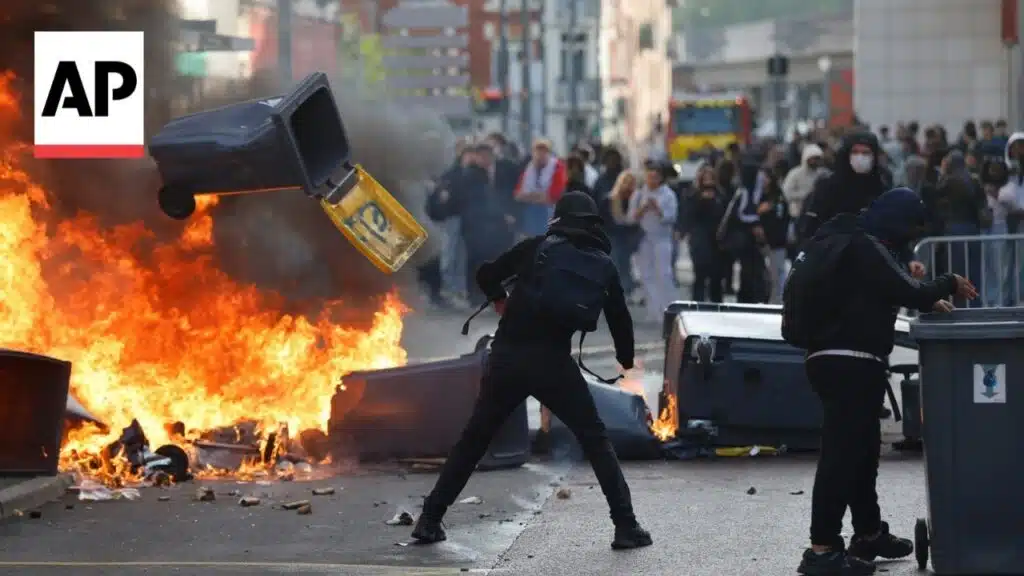
The second thing that stood out was how performative all of it felt. Contrived. Scripted. If reason and law are not driving these protests, what is?
I’ve observed demonstrations for decades—from the civil rights and anti-war marches of the 1960s, through ANTIFA, BLM, George Floyd, and now Anti-ICE actions. Looking across that historical arc, I see a psychological shift in protest culture that has less to do with politics than with human nature.
Humans evolved to navigate danger, status, and belonging in small tribal groups. Those instincts never vanished; they were merely displaced. In a society where most people rarely face existential threats, the appetite for intensity finds substitutes—extreme sports, competitive hobbies, or, increasingly, moral struggle.
When people operate inside environments they instinctively know are safe—bounded by laws, media attention, and predictable institutional responses—behavior changes. Outrage becomes ritualized. What starts as protest gradually drifts into performance. Contemporary demonstrations offer a kind of safe danger: confrontation without war, rebellion without revolution. Everyone subconsciously understands there is a line that will not be crossed. That knowledge transforms the experience into controlled play.
The old saying goes that the revolution will not be televised. Today’s “revolution” is closer to scripted reality TV.
The anger we see is real, but what people are angry about often has little to do with what they are ostensibly protesting. You cannot truly reproduce another person’s pain unless you’ve lived something closely analogous—and even then, suffering is too personal to transfer cleanly from one nervous system to another. When individuals realize they aren’t feeling the rage or empathy they think they should, they become angry at that inability itself.
What usually passes for empathy in mass movements is something closer to emotional simulation. People imagine what pain might feel like, then act accordingly. But imagination is shaped by narratives, symbols, and social cues. Over time, emotional expression becomes less about understanding another’s lived experience and more about performing an expected role. At that point, empathy becomes imitation.
And empathy-as-performance is highly visible. It generates eyeballs and clicks—the currency of modern activism.
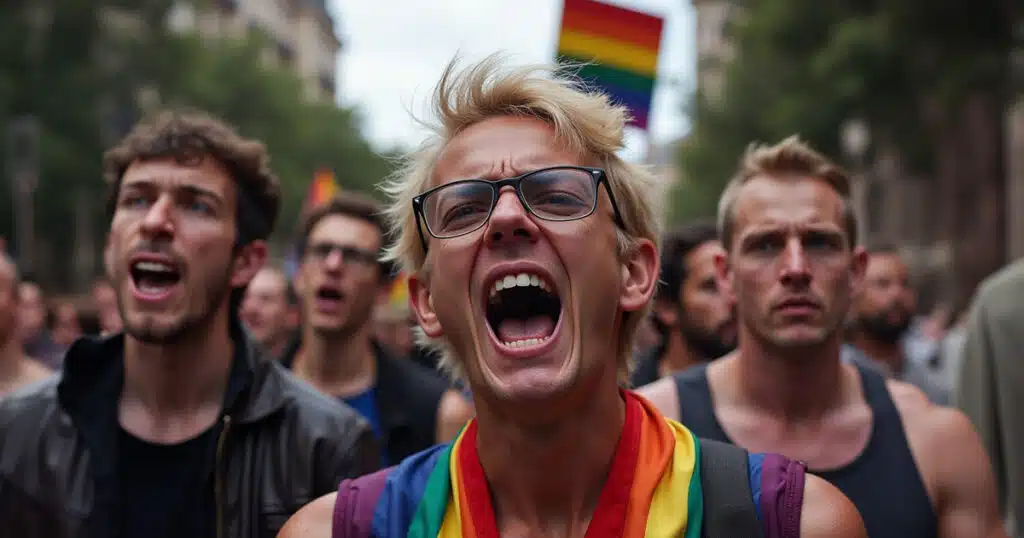
People chant, cry, rage, and posture because those behaviors signal moral alignment to the group. Signs, slogans, and gestures become props in a shared drama. The original grievance fades into the background while participation itself moves center stage. Protest stops being primarily about outcomes and starts being about identity—being seen, belonging, and occupying a righteous place in a public narrative.
Participants become actors on a civic stage, playing parts absorbed from social media, cable news, and prior events. The rhythms are familiar, scripted, and repetitive. Real risk is replaced by amplified rhetoric. Conflict becomes stylized and predictable—more like a corporate outing to play laser tag than genuine confrontation. While the emotional intensity feels authentic to the players, it is sustained by performance rather than proximity to actual danger or suffering.
This dynamic reveals a profound asymmetry in how society distributes emotional concern. Law enforcement operates in environments of genuine, unpredictable danger. ICE officers and their families endure sustained stress, moral injury, and exposure to violence that most civilians will never experience. It doesn’t photograph well, so it receives little empathy—and we know from experience that what is quiet and routine is ignored; what can be dramatized commands attention.
Once protest becomes ritualized, it becomes easily manipulated. Organizers don’t need to persuade people with complex arguments. They only need to supply a moral frame, a villain, and a stage. Participants provide the energy themselves, drawn by promises of meaning and belonging. What emerges is an army of true believers assembled at virtually no cost, animated less by concrete goals than by emotional rewards.
The process follows a familiar arc: grievance becomes simulation, simulation becomes performance, and performance hardens into identity. When that happens, the cause becomes secondary. The ritual becomes primary. People are no longer trying to alleviate suffering. They are trying to inhabit a role.
This is why demonstrations feel disconnected from practicality—and why so much of it just seems pointless. In the grand scheme of things, these events aren’t designed to solve problems. They are designed to satisfy psychological needs: connection, moral affirmation, and controlled intensity.
In a society that has grown materially safe but spiritually restless, protest becomes a substitute for purpose. When real hardship recedes, people begin to simulate catastrophe. They moralize boredom, ritualize grievance, and replace consequence with choreography.
Empathy becomes a costume and outrage becomes set dressing. When that happens, protest becomes performance art—played out on Minneapolis’ subfreezing streets and its church sanctuaries as if it were an off-Broadway play, not because it changes the world, but because it makes participants feel alive and part of a tribe.