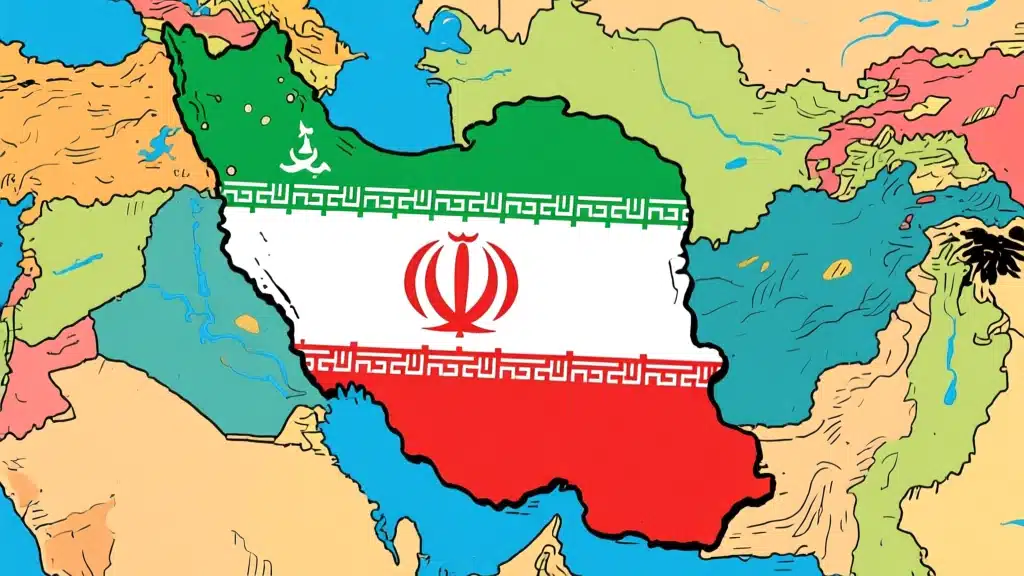
No, Iran Is Not Collapsing. It Is Consolidating.
Twelve days ago I predicted the IRGC hardening, not fracturing. Nothing since has changed that assessment.
So I respectfully disagree with President Trump’s latest public remarks.
The regime is not collapsing under pressure. It is compressing. The pragmatists have been sidelined. The technocrats have no running room. What remains is an ideologically hardened core that has never required popular legitimacy to operate and does not negotiate on the things that matter.
The original forecast was equally direct: the only viable conclusion to this conflict is military action. That assessment is now more likely, not less.
The only surprise is that the Trump administration has not reached the same conclusion yet.
Economic Pressure and Oil Field Costs
The working theory appears to be that oil field capping will produce cascading economic failure. That is a reasonable hypothesis, and the numbers are real. Iran’s own central bank is warning of a 12-year rebuild timeline, the rial is near 1.6 million to the dollar in unofficial markets, and the blockade is running roughly $13 billion per month in combined losses.
The oil field dimension is being underreported. Iranian fields were already declining at 5 to 8 percent annually before the strikes. By some estimates, forced shutdowns are now permanently destroying an estimated 300,000 to 500,000 barrels per day of production capacity, representing $9 to $15 billion in annual revenue that is not deferred but gone.
Why Even the Best Siege Case Does Not Guarantee Success
But economic siege does not generate the required outcome at this stage. Not yet. The IRGC does not stand down because the civilian economy is suffering. It stands down when its own forces stop showing up because they have not been paid, when institutional cohesion inside the corps itself begins to fracture, and when the average Iranian on the street can rise up without calculating the probability of being mowed down before the week is out. None of those conditions exist today.
The Fall Scenario
The sequence in which regime eventually collapses matters.
First the general economy fails. Imports collapse, the rial craters, food and fuel become scarce. Civilians suffer but they cannot act. The IRGC still controls the streets and the guns and every Iranian doing the math knows it.
The Artesh goes next. The regular army is paid from the general treasury, not from IRGC parallel funding streams. When the treasury runs dry the paychecks stop. Artesh soldiers are conscripts and career military with families to feed. They do not defect. They do not revolt. They go home. The regime loses its conventional military buffer without a shot being fired.
The Basij fractures after that. The true believers stay. The opportunists and the coerced, the ones who showed up for a paycheck or to stay out of trouble, they disappear. Street enforcement capacity hollows out from the inside. That is the first moment ordinary Iranians can move without a near-certain death sentence.
The IRGC is last and it is the hardest. It has separate funding mechanisms, an ideologically committed core, and no institutional memory of standing down. It does not fall because the economy failed. It does not fall because the Artesh went home. It falls only when the population is already in motion, the Basij can no longer hold the streets, and the IRGC itself has finally run out of money and bullets.
Before any of that sequence runs to completion, the regime continues doing what it has always done. It suppresses. It shoots. It disappears people. The machinery of control does not stop because the economy is failing. It runs harder.
When collapse becomes imminent and the crowds are no longer containable, the IRGC does not surrender. It negotiates. It trades a signature on paper for protection from the people it spent decades brutalizing. The deal gets signed. The international community declares progress. The inspectors arrive.
And the sprint toward the bomb begins anyway. Partial access. Missing facilities. Bureaucratic delays. Documents under review. The regime has run this play before. It knows exactly how much time a signed agreement buys and it intends to use every day of it.
Boots on the Ground
A successful resolution to this conflict requires regime change. It always has.
Economic pressure is a tool. Airstrikes are a tool. Neither is a strategy without a plan for what comes after the IRGC runs out of money and bullets.
The first requirement is resumed strikes. Offensive capabilities and IRGC military infrastructure have to be kept degraded. Every week of delay allows reconstruction, resupply, and hardening. The damage window is not permanent and the administration is burning it.
The second requirement is enabling the Artesh. When the treasury fails and the regular army walks, those soldiers need somewhere to go besides home. A flipped Artesh is not a threat to a post-regime transition. It is the backbone of one. That means back-channel groundwork now, before the paychecks stop.
The third requirement is arming the separatists. The Kurds in the northwest and the Baluch in Sistan-Baluchestan represent organized, motivated, and geographically positioned forces that have been fighting this regime for decades. They do not need to be invented. They need weapons, intelligence support, and a credible signal that the United States is not going to abandon them when the diplomats get nervous.
This is the boots on the ground phase. It takes Special Operations forces on the ground supplying and guiding the people.
The second element of boots on the ground is the substantial high risk removal of the nuclear material, the processed uranium, and total destruction of their program. If they don’t surrender and hand it over. We have to take it. This would be a large and costly operation.
The timing on the broader population matters. Iranians in the streets are not a resource to be spent against an unwavering wall of IRGC firepower. They are the final phase, not the opening move. The conditions have to be set first. When the IRGC is militarily broken, when the Basij can no longer hold the streets, when the separatists are bleeding the periphery and the Artesh has walked, that is when the population becomes an unstoppable force rather than a massacre waiting to happen.
Sequence is everything. Get the sequence wrong and you spend the Iranian people. Get it right and the regime has nothing left to hold the country with.
At the current pace, regime change is months away at minimum, with meaningful risk of dragging into the midterm cycle.
A hardline government that survives this conflict with a martyrdom narrative and partial nuclear reconstitution capability is a materially worse outcome than the situation on February 27th. That is the current trajectory without resumed strikes.
The Trump administration cannot back out of this with a partial agreement that smells a lot like the one we had before the conflict. We need complete nuclear concessions and abandonment of their proxies. For me anyway, I don’t trust them. So I would like to see the IRGC eliminated and a new constitution.
In the short term time is on our side, in the long term it is not.