The Pressure Ledger: It’s Not Close
The diplomatic picture tonight is a picture of chaos that is actually the last gasps of a desperate failing government: Araghchi flying from Islamabad to Muscat to Moscow, Trump canceling the Witkoff and Kushner trip and telling Iran to use a telephone, and a Situation Room meeting that happened today and produced no deal. Secretary of State Marco Rubio went on Fox News this afternoon and said publicly what the Situation Room concluded privately. I have covered the geopolitical and military frame extensively in prior essays. Tonight I want to do something more focused.
I want to show you the pressure ledger. Who is actually bleeding. How badly. And why the diplomatic confusion you are watching is a symptom of internal collapse rather than strategic maneuvering.
I. Rubio Kills the Proposal: What He Actually Said
Iran submitted a three phase proposal to the United States through Pakistani mediators over the weekend. Phase one was a full ceasefire. Phase two was Hormuz management and security. Phase three, and this is the tell, was the nuclear agreement. Tehran stated explicitly it would not engage in nuclear talks until progress was made in the earlier stages.
That is not a peace proposal. It is a mechanism to decouple the primary American interest, the nuclear weapon pursuit, from the only Iranian revenue stream currently operating, toll collection at the Strait of Hormuz. Give us the blockade relief first, then we will talk about the thing you actually went to war over. After you have no leverage left.
Rubio named it precisely on Fox News this afternoon. Asked about Iran’s offer to reopen the strait, he said: “What they mean by opening the straits is, yes, the straits are open, as long as you coordinate with Iran, get our permission, or we will blow you up, and you pay us. That is not opening the straits. They cannot normalize, nor can we tolerate them trying to normalize, a system in which the Iranians decide who gets to use an international waterway and how much you have to pay them to use it.”
Rubio then used the word denuclearization. He said Iran’s nuclear program is the reason we are in this in the first place and that everything else will be peanuts compared to that if they ever get a nuclear weapon. Neither that sentence nor Trump’s posture on Saturday, when he told reporters that Iran can call us anytime but otherwise there is no reason to meet, is compatible with accepting a framework that defers nuclear questions to a hypothetical phase three that Iran can drag out indefinitely once the pressure is gone.
The proposal is dead. Rubio killed it publicly this afternoon. Trump has not commented, which in this context means he agrees.
II. Iran’s President Is Asking People to Conserve Energy
Start with this fact and hold it in your mind.
Iran sits on the fourth largest proven oil reserves in the world. It has the second largest natural gas reserves on earth. It has more energy under its soil than almost any nation in human history.
Its president is asking residents to conserve energy.
The Iranian energy crisis predates this war and runs deep. Iran was unable to generate even a third of the additional power capacity needed to meet demand heading into this year. Power plants have gone offline for lack of fuel. Iranians have endured widespread blackouts in schools, government buildings, and homes. The government had to choose, in the words of one official, between keeping offices open or preventing people from freezing.
The war has compounded every one of those preexisting failures. But tonight we know something more specific about why Iran submitted this weekend’s proposal when it did.
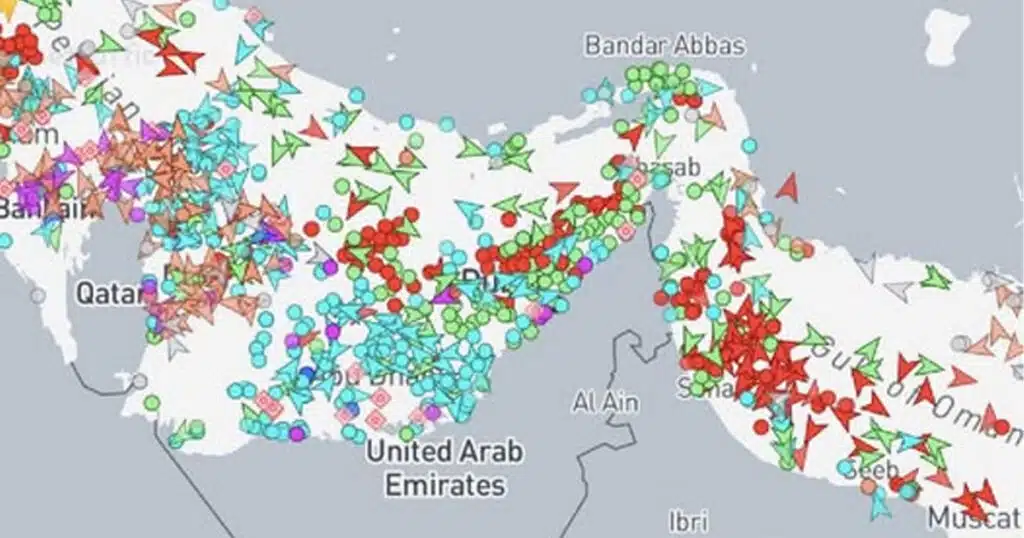
The Wall Street Journal reported today that the U.S. blockade on Iranian ports has forced Iran to store oil in disused tanks in poor condition and in containers in the cities of Ahvaz in Khuzestan Province and Asaluyeh in Bushehr Province, according to current and former Iranian officials. The spokesperson for Iran’s oil exporting union told the Journal that Iran is trying to send its oil to China by rail. Most exporters avoid transporting oil by rail because rail shipments are less efficient and less profitable than seaborne shipments. Iran has no good option. It is shipping crude in repurposed containers and hoping a railroad can save its economy.
A U.S. sanctions analyst estimated on April 12 that Iran had roughly 13 days of onshore storage capacity remaining before it would be forced to shut down oil production entirely. Shutting down oil wells can cause permanent reservoir damage. That is not a temporary inconvenience. That is a structural wound to the most valuable asset the Iranian state has left.
That storage crisis, not diplomatic sophistication, is why the proposal arrived this weekend. Iran is not maneuvering from strength. It is trying to escape a closing box.
III. The Russia Question: What Araghchi Is Actually Doing in Moscow
Araghchi met with Putin in Saint Petersburg today. Russian state media reported that Putin told him Russia intends to continue their strategic relationship and that he had received a message from Iran’s supreme leader Mojtaba Khamenei, who has not been seen or heard publicly since being appointed last month.
The instinct is to read this as Iran finding a lifeline. Read it instead as Iran finding a dead end dressed up as a corridor.
Russia’s interest in this conflict is not Iranian survival. Russia’s interest is American distraction and global energy market disruption. Every week the strait stays closed is a week that Russian oil, which bypasses Hormuz entirely, sells at premium prices to energy desperate buyers. The closure of the Strait of Hormuz has produced the largest oil supply disruption in the history of the global oil market. Russia is the beneficiary of every day that disruption continues.
Russia is not going to pressure Iran to take a deal. It benefits from the deal not happening. Putin offered Araghchi warm words and a photograph. He offered nothing that changes the military and economic reality on the ground. Russia’s UN ambassador went to the Security Council today and argued that Iran has every right to limit traffic in the Strait of Hormuz. That is not mediation. That is advocacy for continued closure.
Araghchi told Pakistani, Egyptian, Turkish, and Qatari mediators over the weekend that there is no consensus inside the Iranian leadership on how to address U.S. nuclear demands. He is going to Moscow not because Moscow has answers but because he has nowhere else to go. When you have nothing to offer at the negotiating table, you go find a friend to stand next to you in the photograph.
The ISW also reported today that Russia has been facilitating Iranian strikes throughout this war by providing Iran with satellite imagery of U.S., Gulf, and Turkish military assets in the Middle East. Russia is not a neutral party. It is an active participant in extending the conflict.
IV. Japan Buys Oil from Texas for the First Time
This is the sentence that should appear in every economics textbook written about this period.
Yesterday, a Suezmax class tanker arrived at an offshore jetty in Tokyo Bay delivering approximately 910,000 barrels of Texas light crude oil to a refinery in Chiba Prefecture. Japan historically sourced more than 90 to 95 percent of its crude oil from the Middle East, with most shipments passing through the Strait of Hormuz. That dependence created a structural vulnerability that Iran just demonstrated it could exploit.
U.S. crude imports to Japan are expected to quadruple year on year in May. Refiners are chartering midsize Aframax and Suezmax tankers capable of navigating the Panama Canal, routing that reduces transit time to approximately 30 to 35 days compared with 50 days for the alternative route around Africa. Traffic through the Panama Canal has increased to between 36 and 38 ships per day reflecting the growth in American energy exports to Asian markets.
What you are watching in that single shipment is a possible permanent reorientation of global energy trade. Japanese refiners are not going to forget this. Energy ministries across Asia are not going to forget this. The decadeslong assumption that Gulf oil was safe and stable has been shattered, and the beneficiary of the restructuring that follows is American energy production.
Trump’s call to increase American oil and gas investment was not rhetorical. The market is answering it with tankers bound for Tokyo.
V. The China Variable: What I Think Is Happening (This Is My Speculation)
The blockade data tells an interesting story that deserves honest labeling as my own analysis rather than confirmed reporting.
Twenty minutes after the U.S. naval blockade of Iranian ports took effect, a Chinese owned tanker called the MV Rich Starry pulled out of anchorage and headed for the Strait of Hormuz. It was flying a Malawian flag, with its AIS transponder having spoofed its position for 11 days. It turned back initially, then slipped through. BBC Verify identified four Iran linked and three sanctioned vessels that emerged from the strait after enforcement began. A pattern of ships hugging the Iranian coastline to get out has been documented through shipping data.
Here is my speculation, stated clearly as such: I believe Trump is allowing a calculated leak in the blockade for Chinese connected vessels as a deliberate pressure valve ahead of the May summit with Xi Jinping. Trump is scheduled to visit China in mid May. With roughly 98 percent of Iranian oil exports bound for China, a total blockade that cuts China off entirely is a potentially summit killing provocation. A blockade with a visible but quiet exception for certain Chinese connected vessels gives Xi something to point to domestically while keeping him at the table.
The Washington Post reported this week that ahead of the Trump-Xi summit, Washington has simultaneously widened its crackdown on the shadow trade between Beijing and Tehran, sanctioning Chinese entities involved in the Iran oil trade. That apparent contradiction, letting some ships through while sanctioning the broader network, is consistent with a two-track approach: protecting the summit relationship at the leadership level while continuing to squeeze the shadow fleet infrastructure underneath it.
I could be wrong. The leaks may simply be enforcement gaps in a complex operation. But the pattern is notable and the timing relative to the May summit is not nothing.
VI. The Hezbollah Development
The ceasefire in Lebanon is holding in name only, and a military development emerged in the ISW reporting today that deserves more attention than it is getting.
Hezbollah has used first-person view drones in 12 of its 18 claimed attacks on Israeli forces since the April 16 ceasefire. It has now shifted to fiber optic FPV drones as its main strike platform. These drones killed one IDF soldier and wounded six others in Taybeh on April 26. Hezbollah then launched a second drone at the same unit while it was conducting casualty evacuation from the same location. The drone was shot down several meters from the evacuation site. That is a tactically sophisticated double tap on a medical evacuation, which is either a war crime or the act of an organization that has decided ceasefire terms do not apply to it.
Hezbollah’s Secretary General Naim Qassem said today that the outcomes of Israel-Lebanon talks do not exist for Hezbollah and do not concern them in the slightest. He said Hezbollah will not give up its weapons. A senior Hezbollah military commander told Al Jazeera that Hezbollah will return to suicide attacks and tactics from the 1980s to prevent Israel from stabilizing its buffer zone. Lebanon’s President Aoun responded on X that the real traitors are those who dragged Lebanon into war, and that negotiating with Israel is not treason.
The Lebanon front is not resolved. It is reorganizing around a new weapons system that poses a different and harder problem for Israeli forces than rockets do.
VII. Who This Is Actually Hurting: The Global Ledger
The global economic damage is documented and severe. The IEA has characterized this as the greatest global energy security challenge in history. Brent crude surged past $120 per barrel. The European Central Bank has postponed planned interest rate reductions, warning that energy intensive economies including Germany and Italy face high risks of technical recession if the blockade persists through the summer refill season.
QatarEnergy declared force majeure on all exports. Iran’s attack on Qatar’s Ras Laffan LNG complex on March 18 caused a 17 percent reduction in Qatar’s LNG production capacity, with damage estimated to require 3 to 5 years to fully repair. Kuwait, Iraq, Saudi Arabia, and UAE oil production collectively dropped by at least 10 million barrels per day. The Philippines declared a state of national energy emergency. Bangladesh is approaching recession level conditions. New Zealand released strategic petroleum reserves.
Now stack that against what Iran has tonight: oil stored in containers and on rail cars, a president asking citizens to conserve energy in one of the most energy rich nations on earth, a foreign minister who flew from Islamabad to Muscat to Moscow in three days and came home with nothing, a supreme leader communicating through handwritten notes that might as well be sent by pigeons, and a proposal that the United States rejected publicly on national television this afternoon.
Rubio summarized it tonight as well as it can be summarized: “All the problems that Iran had before the start of this conflict are still in place and most of them are worse. Price inflation is worse. They still have a drought. They still have trouble making payroll. Their economy has flattened. And now they have half the missiles, none of the factories, and no navy and no air force. So they are worse off and weaker.”
The global pain is real and I do not minimize it. But Iran is not winning this. Iran is a government that turned off the lights on its own people before the war started, and the war has now cut off the revenue that would have let it turn them back on.
VIII. The Honest Frame Tonight
I have another essay in this series on refinery capacity, aviation fuel, and the Singapore market that I will link when it is ready, because that piece of the picture deserves its own treatment.
Tonight the summary is this.
Iran submitted a proposal designed to trade away American leverage in exchange for blockade relief. Rubio killed it publicly this afternoon. The Situation Room met and produced no concession. Trump has not commented, which means he agrees with Rubio. The proposal is a dead document.
Iran’s oil is sitting in containers and on rail cars. Its foreign minister is in Moscow collecting warm words and photographs. Its storage capacity was down to days of runway as of two weeks ago and has not gotten better. Its supreme leader is alive or not alive, and nobody outside a tight circle knows which.
Russia is not a mediator. It is a beneficiary. Every day this continues, Russian oil sells at prices the pre war market would not have supported. Putin’s interest is in prolonging the crisis, not resolving it.
Japan bought oil from Texas yesterday for the first time in its history. That sentence is the strategic outcome in miniature. The energy supply chains of Asia are being redrawn around American production. That reorientation may outlast this war by decades.
The Iranian people who burned their hijabs in the street and stood in front of Khomeini statues with protest signs are watching all of this from a country with no internet and rolling blackouts. They deserve better than a deal that saves the IRGC’s institutional survival at the cost of the nuclear leverage that is the whole point.
Hold the line. The pressure ledger is not close.
Watch and pray.