Something Good? Something Bad? Maybe A Bit Of Both.
Ironically, I was switching channels the day Operation Epic Fury began, looking for something to provide background noise while I worked, and I tuned in to the 1996 Independence Day movie at the exact moment the President was proposing that there could be a truce between the aliens and humans. The alien said there could be no peace and when the President asked what the aliens wanted humans to do, the alien answered with one word, “Die!”
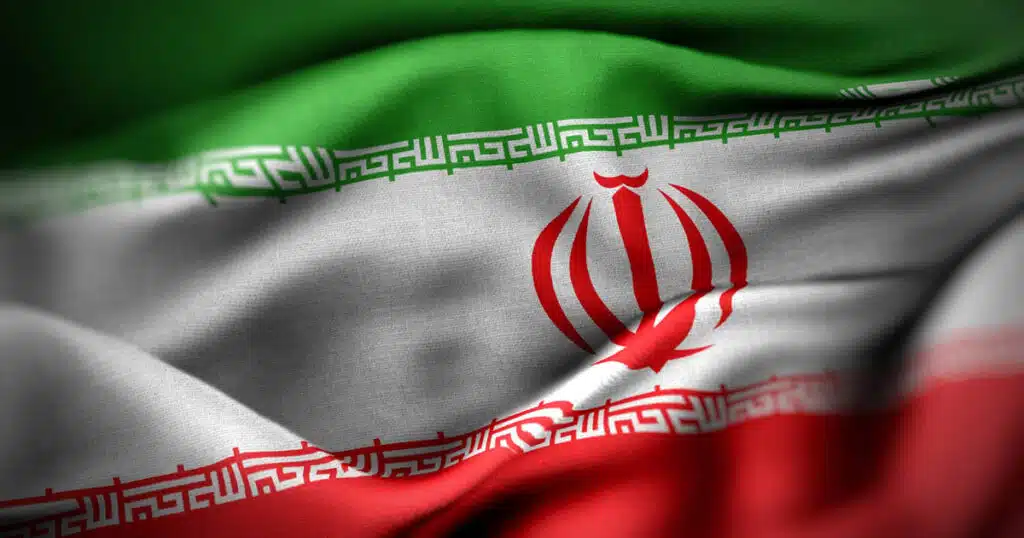
Needless to say, I immediately saw a parallel between that movie dialog and the situation in Iran because that is essentially the same answer Iran and its proxies been giving America (and Israel) for almost 50 years.
This action brought out the pacificists, the magical thinkers who believed the Obama Iran deal was working, the anti-Americans who demand we must always believe the Mad Mullah regime, along with the lying political opportunists who never miss an opportunity to be wrong.
I’ve read and thought a lot about the concept of a “Just War” for several years and lately took up that line of thought in the context of a preventative strike like President Trump has taken in Iran.
It has taken me a couple of months to sort through and condense my thoughts into something that approaches cogent reasoning and even then, I kept turning to the contrasts between the worlds of the Old Testament and the New Testament of Christianity. I’m certainly no Christian theologian or accomplished apologist, merely just a believer who often struggles to understand, so I certainly am open to criticism of what follows but I thought I would go ahead and toss it into the arena and see what stands up—or doesn’t.
When I look at both the Old and New Testaments, there seems a stark difference between the two. It almost seems like contemporary Christian belief is anchored in the New Testament while the world is reverting to Old Testament mode. That is an oversimplification and not entirely accurate, and I have been working through how best to phrase it. The root of the thought is that Christianity appears to be facing challenges that look far more like Old Testament conditions than those of the New Testament.
I do think many Christians fail to recognize the existential risk represented by more radical actors, such as those found in fundamentalist strands of Islam, because we are spiritually immersed and intellectually bound in New Testament thinking. There seems to be a pattern restarting, driven by a climate that feels far more Old than New Testament. Even that framing is not quite right. What I am sensing is not a simple return to Old Testament times, but a recurring dilemma. A belief system rooted in moral restraint must adapt when the surrounding environment becomes less predictable and less reciprocal. The real question is not which testament applies, it is how to hold onto New Testament principles while navigating realities that increasingly resemble those described in the Old Testament.
This tension is not new, even if it feels newly urgent because Christianity itself was born into it. The teachings of Jesus Christ were delivered in a world where His followers had no power, no army, and no realistic path to either. The instruction to turn the other cheek was not only a moral command, but it also functioned as a survival posture within an empire that crushed rebellion without hesitation. The early Church did not conquer Rome through force. It endured, persuaded, and outlasted, relying on moral clarity rather than physical dominance.
The Old Testament reflects a completely different set of conditions. Faith was tied to a people, a land, and a lineage that could be extinguished. The threats were immediate and physical, not theoretical. Survival required not only belief, but defense. The world described in those pages does not assume reciprocity or shared norms. It assumes danger, instability, war, and the constant possibility of annihilation.
The modern West, shaped heavily by New Testament ethics, has grown accustomed to a world where moral appeals carry weight, where rules are broadly accepted, and where even adversaries operate within some shared framework. That assumption has become so embedded that it often goes unnoticed. When actors enter the equation who do not share those assumptions, who reject reciprocity and operate without the same constraints, the gap between moral expectation and lived reality becomes more visible.
This is where the concept of “Just War” becomes relevant again, not as a rejection of Christian teaching, but as an effort to reconcile it with the world as it exists. Thinkers like Augustine of Hippo and Thomas Aquinas recognized that personal moral obligations do not erase the responsibility to confront real threats. Their work was an attempt to place boundaries on force rather than deny its necessity entirely, preserving moral accountability while acknowledging the existence of danger.
What we are confronting now is not a need to abandon the New Testament in favor of the Old. The challenge is more demanding than that. It requires holding fast to the moral discipline of restraint, dignity, and accountability while recognizing that not every adversary will respond to those same principles. The internal command to love one’s enemy remains intact even though the external reality is that some enemies are not interested in being persuaded, restrained, or reconciled.
If that tension feels uncomfortable, that’s because it is. The discomfort reflects the distance between what we are called to be and the world as it is.
The solution is not to collapse into one testament or the other. It is to carry both forward with clarity, understanding that moral conviction without realism becomes naïveté, and realism without moral constraint becomes something far worse.