Farmer Gifts Land For A Park, City Has Different Plans
In the ultimate case of betrayal, in 1999, the Bland family gifted approximately 88 acres to the parks department in Taylor, Texas, for $10, which did nothing with it. They gave it to a park foundation nonprofit, which did nothing with it. They gave it to the city, and the city did nothing with it. The city then sold it to economic developers who have spent 18 years doing nothing with it.
Then last year, the City of Taylor, Texas, sold it to a data center developer for $10 million.
As 404 media reported:
“The City of Taylor, Texas, paid a paltry $10 in 1999 to accept a donation of almost 88 acres from the Bland family farm. According to documents reviewed by 404, the conditional language in the original deed granted the land to the ‘Texas Parks and Recreation Foundation, a Texas non-profit corporation, to be held in trust for future use as parkland by Williamson County, Texas.’”
“But in the years since, ownership of the property kept changing hands. Texas Parks and Recreation Foundation granted it over to a different non-profit called the Williamson County Park Foundation in 2003, before they gave it to the City of Taylor outright a month later. So far, so good. But in 2008, the city sold the land for $15,000 to the Taylor Economic Development Corporation (TEDC). It sat unused until last year, when the TEDC sold the plot to the company currently developing the data center, Blueprint, for a cool $10 million.”
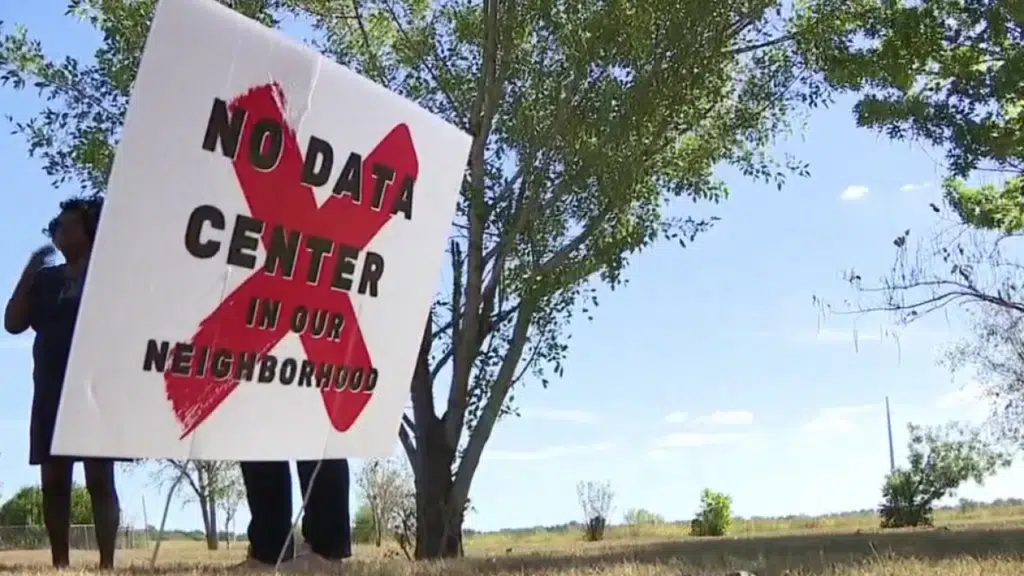
“When news of the sale broke, locals were initially concerned for the usual reasons one might have when learning that a 135,000-square-foot facility — the sort now known to wreak havoc on small towns — is being built next door without their approval or input. But thanks to the sharp memory of Pamela Griffin, a City of Taylor resident who grew up playing in a lot next to the contested land, data center opponents were clued in to the deed’s park clause and the legal leverage that might afford their fight.”
“’I keep trying to tell everybody,’ Griffin explained, ‘if they start messing with deeds in Texas? Allowing deeds not to be upheld? What’s going to happen to all of us’”?
According to the Texas Tribune, Texas is already home to more than 300 operating data centers, with more than 100 additional projects in planning or development, and 142 currently under construction.
Texas cities, including San Marcos, Amarillo, College Station, Waco, and Harlingen, have seen the rise of grassroots movements urging local officials to stop data center projects, the Tribune reported.
Data centers pose multiple problems. Among the most common are:
Grid Strain: Large facilities can consume as much energy as small cities. This increases local electricity rates and forces utilities to rely on fossil fuel power plants.
Water Scarcity: Data centers consume millions of gallons of water daily for server cooling. This practice can deplete local drinking water supplies and reduce water pressure for residents.
Pollution: Consistent operations require reliable power, raising concerns over air pollution from on-site gas turbines and health risks associated with diesel backup generators.
Noise and Light: Facilities produce disruptive, continuous low-frequency humming and require all-night exterior lighting, which disturbs nearby communities and local wildlife.
Economic Imbalance: Data centers require significant investments but create relatively few local jobs compared to the tax breaks and resources they consume.
In addition to those issues, the original deed’s terms are being ignored, which is a big deal in Texas. Meanwhile, the council appears to have taken a big gulp of the data center Kool-Aid. It asserts that stopping this kind of development in the city zone where it is situated is beyond its scope, and the millions in tax raised will benefit residents.
Data centers are a modern-day plague, and what they are used to create still has an extremely uncertain future. We have yet to see if the juice is worth the squeeze. However, one thing is clear: the communities where these facilities are located are unhappy with their presence.