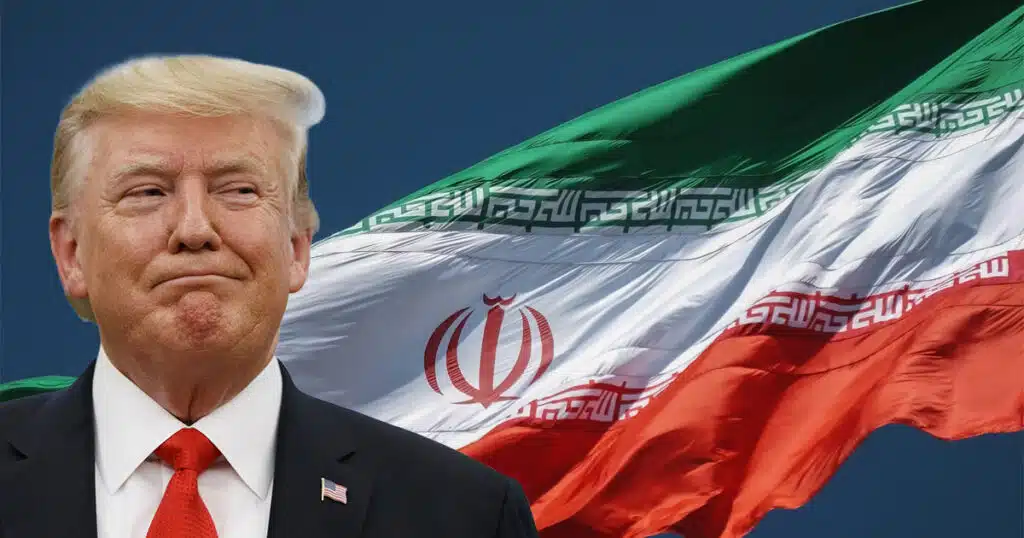
Why Iran’s So-Called Trump Card is Slowly Becoming a Losing Hand
If there is one lesson of capitalism a person should remember, that concept is that he who underestimates markets does so at his or her peril. While many people were rightly concerned about past monopolies that companies such as phone operator AT&T and online companies such as America Online had, competition eventually leveled the playing field in both circumstances. The free market is powerful, and while some industries occasionally benefit from minimal government intervention, usually innovation destroys most monopolies in countries such as the United States. The profit incentive, as Adam Smith so artfully detailed in his book Wealth of Nations, remains one of the most powerful motivations of humankind.
Iran has run out of options as the US has destroyed most of the regime’s military strength in addition to crippling the Persian nation’s economy with sanctions that date back to Trump’s first term. Indeed, the Ayatollah’s last card has been to close the Strait of Hormuz, through which nearly 23 percent of the world’s oil supply flows. The US military obviously planned for the closure of this key waterway before the recent war began, but still, Brent Crude Oil prices rose nearly 50 percent, from the 60s to almost 100 a barrel, after the war broke out in late February. This, of course, resulted in gas prices rising almost a full $1 a barrel, which was a substantive but not overly significant move.
The situation is very different today. Even as both Trump and the Iranians try to maneuver for leverage ahead of the upcoming negotiations in Europe, the impact of the Strait of Hormuz once again being closed has been very different over the last week. Indeed, even as oil prices have again predictably risen slightly since the recent blockade of this waterway, the price of oil today sits at just around $80 a barrel, a far cry from the $100 level seen several months ago when the current war first broke out. There is a reason for this new and more muted move in energy markets. Oil-producing nations and many energy producers have adjusted to what for now is the new normal in the Middle East. Saudi Arabia and the United Arab Emirates have diverted 5.5 million barrels of oil a day through pipelines outside of Iran’s control. Multiple nations not as reliant on this passage point, such as Brazil, Russia, and the United States, have also accelerated production. Several new pipeline projects that would enable oil producers to bypass the Strait of Hormuz have also been accelerated, which is still important since the oil futures markets go out well over a year. Markets have made significant adjustments, and the much more constrained movement in energy markets shows this fact to be true.
President Trump would obviously never compromise national security for economic or political reasons, the leader of the free world still has to be aware of how rising oil prices impact both individuals and the US and global economy as a whole. While Iran could try to interfere with other energy shipment routes such as the Red Sea, the country would be forced to rely on proxies such as the Houthis to do this, and the US has responses to deal with that threat as well. The President wrote The Art of the Deal, and he understands better than almost anyone the importance of leverage in the critical upcoming negotiations that should enable the US to finally enter into a real and lasting agreement that accomplishes what Obama’s failed nuclear deal could not, ridding the world of a concern that the Iranian regime would develop nuclear weapons. As Iran’s final so-called ace-in-the-hole is slowly losing the power this previous point of leverage had, Trump is once again gaining the upper hand against a regime that only seems to respond to the kind of strength the 47th leader of the US is an expert at projecting.