A Wilted Rose By Any Other Name
Democrats often try to hide their true purpose by labeling things with pleasant-sounding names. Diversity, Equity, and Inclusion is a great example of something that sounds well-intentioned but is basically nothing more than a quota system.
DEI eliminates merit from the equation. Its sole goal is to bring more minorities and LGBTQ people into the workforce, yet if you bypass more qualified white workers, then there is nothing equitable or inclusive about it.
The reality of this program is that it is flat-out discrimination against white workers. Yet the real danger is that if you hire someone just because of their skin color or their sexual preference and ignore their qualifications, the quality of the workforce of that company can be diminished.
Let’s face it, these hiring practices are always inappropriate, but in some situations they can be outright dangerous when public safety is involved.
President Trump began cracking down on these illegal and unethical hiring practices in corporate America, and many companies changed how they bring on new employees. Not all did it voluntarily; some had to be persuaded with threats of federal funds being eliminated if they did not comply.
Some companies have kept aspects of those programs by disguising the program under different names like “belonging” or “talent and culture.” Proving the idiom that a rose by any other name is still a rose.
Nick Barry, senior counsel at America First Legal, said these practices are illegal and unethical, and a new “toolkit” has been developed to help those who believe they have been wronged. In a statement first obtained by the Daily Signal
“Employers are counting on workers to stay quiet while unlawful discrimination continues under new branding. This toolkit gives everyday Americans the practical tools to protect themselves through America’s robust anti-discrimination laws.”
He added that the America First Legal toolkit “allows individuals to hold companies accountable for discrimination. Equal treatment under the law is not optional.”
America First Legal attorney Rachel Jambor put it this way:
“Discrimination does not become lawful simply because an employer disguises it as equity, inclusion, or belonging. Federal law is clear: workers must be judged as individuals, not favored or disadvantaged because of their race, sex, or national origin.”
The toolkit specifies:
“Every American is protected by our civil rights laws. No employer or labor union may discriminate against a person who is white, Asian, male, a citizen, Christian, or Jewish, nor favor one who is ‘BIPOC,’ ‘gay,’ here on an H-1B visa, or Muslim.”
The document advises workers who believe they have experienced unlawful discrimination to file a charge with the Equal Employment Opportunity Commission (EEOC). This process is essential to protect your rights and begin fighting illegal discrimination.
Employees typically must file a charge with the Equal Employment Opportunity Commission (EEOC) before they can initiate a federal employment discrimination lawsuit. This process is known as “exhausting administrative remedies.” The EEOC deadlines can be strict. Generally, applicants must file a charge within 180 days of the alleged discrimination; however, in certain situations, this deadline may be extended to 300 days.
The document addresses ongoing legal challenges related to discrimination claims stemming from corporate and government diversity policies. The U.S. Court of Appeals for the 9th Circuit has revived the case of two Christian flight attendants from Alaska Airlines. They allege the airline and its union discriminated against them because they opposed the Equality Act.
Additionally, 20 states have asked the Supreme Court to hear a former Colorado prison guard’s challenge to a diversity, equity, and inclusion (DEI) training program.
The toolkit outlines seven federal anti-discrimination laws, with Title VII of the Civil Rights Act of 1964 being the most significant, as it prohibits employment discrimination based on race, color, religion, sex, and national origin.
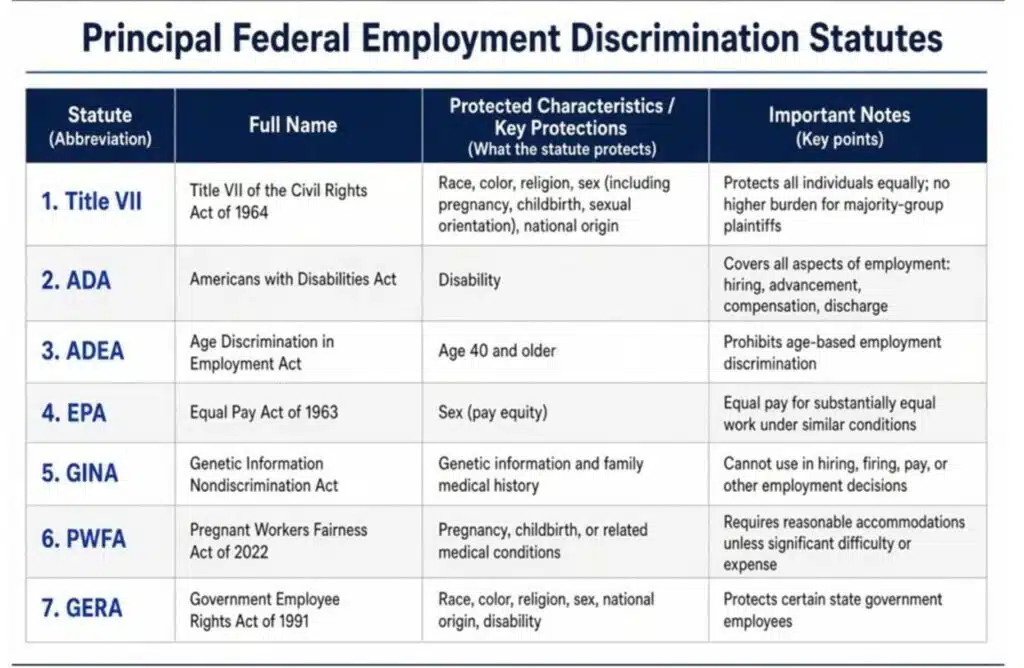
These laws apply to most employers, unions, and labor organizations; however, they do not apply to independent contractors.
America First Legal advises potential complainants to act quickly. They should document names and dates, preserve relevant emails and DEI materials, and keep copies of internal complaints while adhering to their employer’s document-retention policies. Additionally, they urge complainants to identify all applicable protected categories, warning that omitting any category from an EEOC charge could impact a future claim.
The toolkit also includes steps to file as a federal or non-federal employee or applicant.
Democrats and those on the left know that these hiring practices target white individuals specifically. They also know these actions are illegal, yet instead of doing the right thing, they try to pull the wool over federal regulators’ eyes by deceptively changing program names.
A company’s goal should always be to hire the best employee for the task at hand. Failing to do that, for no other reason than to meet a quota, violates the more qualified candidates’ rights and also damages the company’s future.
If nothing else, this toolkit may motivate those who were victimized to file a complaint properly, so firms still using this ridiculous excuse of inclusion can be stopped.