10 Persons of Interest You Need to Know Now
DataRepublican has spent the past week releasing primary-source material that maps how a cluster of organizations intends to treat a 2026 Democratic midterm sweep as the opening phase of a sustained campaign against the Trump administration. The documents and recordings do not describe routine political opposition. They describe coordinated red-line triggers, street mobilization paired with legal and media pressure, and contingency planning for declaring the federal government illegitimate if the administration responds with force. The people who designed and now operate the connective tissue for that effort are not household names. They are the persons of interest who sit at the junctions between research institutes, former national-security credentials, ex-USAID operators, and the protest groups that will be told they are acting spontaneously.
Here are the ten POIs whose roles and relationships the archive has made visible.
Erica Chenoweth
Harvard Kennedy School and Radcliffe Institute professor. Co-author of Why Civil Resistance Works and originator of the widely cited “3.5 percent rule.” Public writings and Horizons Project materials credit Chenoweth with the intellectual framework that became the United Democracy Alliance’s big-tent concept. Her work supplies the academic justification for sustained nonviolent campaigns aimed at forcing institutional concessions once a participation threshold is reached. Current affiliation: Harvard Kennedy School / Horizons Project intellectual core.

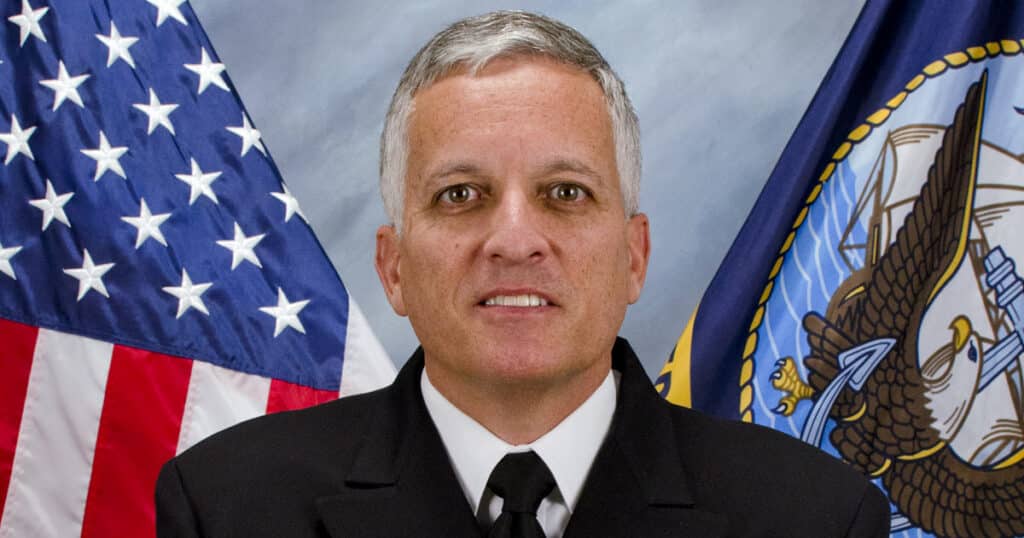
Rear Admiral Michael E. Smith (Ret.)
Founder and public face of National Security Leaders for America, a network of roughly 1,600 retired flag officers, intelligence officials, and diplomats. Materials show Smith operationalizing the United Democracy Alliance and leading its Insurrection Act working group, including role-play exercises. NSL4A also supplied the “illegal orders” messaging directed at the Secretary of Defense. Smith’s value is the uniformed credibility and the roster of former senior officers who can be activated for public statements or quiet coordination. Current organization: National Security Leaders for America.

Danielle M. Reiff
Retired U.S. diplomat with two decades of USAID and State Department experience supporting democratic transitions abroad. Co-founder of the Democracy Renewal Group, Renew American Democracy, and Renew to Thrive. Strategy documents and recordings describe preparation for “election meltdown” or Insurrection Act scenarios, with the goal of locking in structural reforms by 2028. She has convened foreign practitioners experienced in externally assisted transitions and applied their recommendations inside the United States. Current organizations: Renew to Thrive / Renew American Democracy / Democracy Renewal Group.

Dr. Paul Zeitz
Physician, epidemiologist, and co-founder of UnifyUSA. Partner with Reiff on the Renew to Thrive platform and a member of NSL4A. Zeitz’s public work centers on cohesion organizing and Citizens’ Assemblies as vehicles for rewriting the social contract. In the materials he appears as the relational half of the R2T effort, moving between the former USAID cadre and the broader protest-coordination umbrella. Current organizations: UnifyUSA / Renew to Thrive / National Security Leaders for America.

Maria J. Stephan
Co-author with Chenoweth of Why Civil Resistance Works and co-lead and chief organizer of the Horizons Project. Stephan spent years at the U.S. Institute of Peace and the State Department translating nonviolent-action research into field practice. She now functions as the bridge between the academic framework and the domestic organizing ecosystem. Current organization: Horizons Project.

Julia Roig
Founder and chief network weaver of the Horizons Project. Roig’s published role is ecosystem coordination rather than public agitation. She describes the work as building relational infrastructure so that disparate groups can act in concert without a single hierarchical command. Horizons, under her weaving function, is the parent structure that generated the United Democracy Alliance concept. Current organization: Horizons Project.

Walt Roberts
Core member of the Renew to Thrive team, linked to the Mediators Foundation and the Inter-Movement Impact Project. Roberts works the mapping and convening side of the effort, identifying which organizations hold which functions and pulling them into shared planning sessions. He appears as one of the operators who translate high-level strategy into concrete roles for participating NGOs. Current affiliations: Renew to Thrive / Mediators Foundation / Inter-Movement Impact Project.

Brendan Halloran
Former USAID anti-corruption technical integration advisor now listed on the Renew to Thrive core team. Halloran’s contribution is technical and strategic: accountability ecosystems, overcoming fragmentation among groups, and long-term sequencing of reforms. He brings the same toolkit previously used overseas into the domestic planning documents. Current organization: Renew to Thrive.

Laura Adams
Former USAID officer now associated with PACT and identified in the Renew to Thrive core team alongside Reiff, Zeitz, Halloran, and Roberts. Adams functions as part of the implementation layer that turns strategy papers into operational plans for the post-2026 period. Public biographical detail is limited; her significance is the documented role inside the R2T planning cell. Current affiliations: Renew to Thrive / PACT.

Zoe Marks
Harvard Kennedy School lecturer who co-authored with Chenoweth the 2022 strategic assessment on pro-democracy organizing against autocracy. Marks supplies scenario planning and analytical support that feeds the Horizons and United Democracy Alliance frameworks. Her work focuses on how left and center-left forces can maintain pressure and contest power even after an opposing administration consolidates. Current organization: Harvard Kennedy School.

These ten are not the people who will appear on the evening news holding signs. They are the ones who wrote the strategy, built the connective tissue, and positioned the larger organizations (Indivisible, 50501, No Kings elements, and DSA foot-soldier roles) to execute once the midterms produce the conditions they have planned for. The archive shows a clear division of labor: research and doctrine at the top, former national-security and diplomatic operators in the middle, and the street and legal machinery ready to be activated below. Knowing the names and the organizations they currently control is the first step in watching how the plan unfolds after November.