What Capitalism Is, What It Isn’t, And Why People Can’t See The Difference.
To every young person in the West.
You’re angry. You have every reason to be. You work harder than your parents did and own less. Rent eats half your paycheck. A house is a fantasy. You graduated into debt. And everyone keeps telling you who to blame: capitalism.
Here’s something strange. In the US, only 43% of 18 to 34 year olds have a positive view of capitalism. But ask the same country about “free enterprise” and 81% like it. Ask about “small business” and it’s 95%.
Read that again. You don’t hate free markets. You love the bakery on your corner, the friend who launched a brand from her bedroom, the kid who shipped an app at 19. What you hate is something else, wearing capitalism’s name.
Let me show you what it is.
You can’t afford a home. Not because the market failed, but because in the cities that talk the most about housing justice, it takes years and a wall of permits to build anything. The people who already own vote to block the people who don’t. That’s not a market. That’s a gate.
Your medicine costs a fortune. Not because the pill is expensive to make, but because a patent got stretched and extended until no competitor could touch it. Your neighbor needs a license and a thousand hours of training to braid hair. And now some of the most powerful companies on earth are asking governments for a license regime on AI, the one tool that could let you compete with them from your bedroom.
See the pattern? Every time, the rules protect whoever is already inside. Every time, the ladder gets pulled up right after the people at the top have climbed it.
This has a name. Two, actually. Crony capitalism. Regulatory capture.
Capture is simple. A big player can’t beat you on product, so he stops trying. He goes to the people who write the rules. He funds the study, the think tank, the NGO, the campaign. He sits on the committee. He helps draft the “safety standard.” The rule gets passed. And the rule happens to cost him a rounding error and cost you everything. No law broken. No one goes to jail. Just a door that quietly closes on you.
That is the cancer. And like a real cancer, it’s dangerous precisely because it grows from inside the body. It uses the state’s own organs. It wears the uniform of the regulator, the expert, the protector. The immune system doesn’t recognize it as foreign. So it keeps growing.
Now let me tell you what real capitalism is. Because nobody ever did.
Real capitalism is the most moral economic idea humans have ever had. It says: you can only get rich by making someone else’s life better, and only if that person chooses you freely. No one is forced to buy your product. No one is forced to work for you. Every dollar you earn is a vote someone cast for you, voluntarily. You don’t get to take. You have to give first.
It’s the immigrant who opens a shop and outworks everyone. The engineer who quits her job to build something nobody believes in. It’s Elon Musk tearing down Tesla’s patent wall and telling the world: copy me if you can. That’s the spirit. Win by being better, or lose and learn. No permits. No favors. No protection.
That game is noble. It’s hard. It’s brutal sometimes. But it’s fair, because anyone can play.
Crony capitalism is the opposite. It’s what happens when the winners decide they’d rather stop playing.
And here’s the part nobody wants you to see.
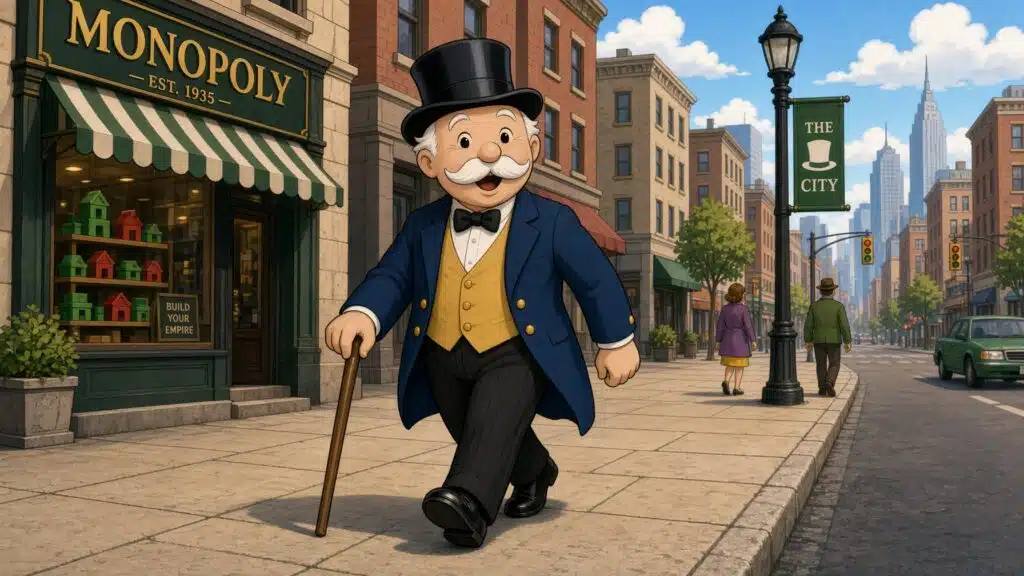
The best players of the capture game today are not the cartoon capitalists in top hats. They’re the billionaires who speak your language. The ones who talk about inequality, fund the causes you march for, sign every pledge, sponsor every summit. Bill Gates wrote in 1991 that Microsoft should patent everything so future startups would have to pay the giants. Three decades later, his company was in Washington asking for a license to build AI. Same instinct, new costume.
They fund the foundations that fund the NGOs that write the reports that become the rules. And then they sell you the anger. “Capitalism is the problem.” “We need more regulation.” And you ask for more rules, more agencies, more licenses. Who writes them? They do.
That’s the masterstroke. They made you hate the ladder and love the wall.
So here’s my ask.
Don’t burn the market. Burn the toll booths. Don’t ask for a bigger state. Ask for a state that can’t be bought. Every time someone proposes a new rule “to protect you,” ask one question: who wrote it, and who does it protect from competition?
And then build. Because for the first time in generations, the tools are on your side. A 20-year-old with a laptop and AI can now compete with a company worth a trillion dollars. That’s exactly why they want a license on it.
You were never anti-capitalist. You were anti-cheating.
Now you know who’s cheating.