Making Air Forces Resilient, Scalable and Large
Today’s air forces are designed around highly sophisticated, technically impressive combat aircraft and this is their Achillies heel. Such aircraft take years to build and if lost cannot quickly be replaced. Now, as geostrategic concerns rise, countries are becoming increasingly worried about major wars involving peer adversaries. In these, aircraft losses in combat are more likely than not. Modern air forces fighting in such wars might have short lives.
In the last major air war of 1939-1945, many tens of thousands of aircraft were built and lost, air forces expanded hugely in size and air battles often involved thousands of aircraft. Such numbers are unimaginable today. This experience brings into sharp focus the striking disconnect between the present air force model and the demands a major war might make. Three essential characteristics that air forces needed in that last major air war were arguably resilience, scalability, and mass. If fighting another major air war, air forces will need those attributes again.
Unexpectedly, a new model air force that could offer resilience, scalability and mass is emerging. An extraordinary diversity of rocket, missile and drone systems have been used in conflicts by Ukraine, Russia, India, Pakistan, Israel, Iran, Hezbollah and the Houthis over the last few years. Equally striking is this employment at times is well-coordinated, large-scale, persistent, and intense. Consequently, as the recent USAF Vice Chief General James Slife observed, there is a growing realization that “[we cannot] only [see] the future fight through the lens of our past platforms. If it operates in the air domain, it is airpower.”
Air power no longer needs to, or should, be centred around manned aircraft. Instead, a different model is emerging that integrates manned aircraft, rockets, cruise and ballistic missiles, and drones. Manned aircraft would be one means of air warfare amongst several. Shifting from the traditional homogenous force structure model to a new heterogenous one can make modern air forces resilient, scalable, and large.
Resilience
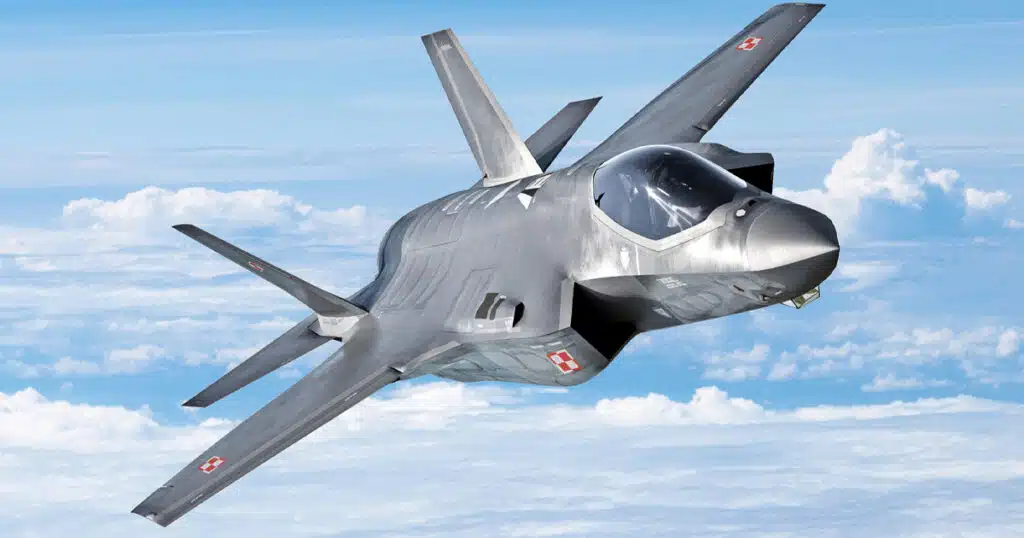
Resilience involves the speed of recovery from attacks and reducing the impact of these attacks. For air forces, timely recovery from combat losses is difficult given the low production rates of modern manned aircraft. The highest rate is the F-35 line making 13 new aircraft per month; a single F-35 takes 18 months to build. The F-15EX production line is expected to be producing two aircraft a month in FY 2027.
Europe’s highest production rate is the Dassault Rafale which is approaching three aircraft a month; building a single Rafale takes about 24 months. The Typhoon rate is less at just over one aircraft each month, achieving 14 a year; a single Typhoon takes 36 months to build with an extra 12 months if the parts supply chain needs restarting.
The apparently simple solution of increasing production rates by opening more production lines would also take years. In World War Two, the average time between starting building an airframe plant and full rate production was 31 months; for aeroengines it was 23 months. Modern aircraft and engines are much more complicated suggesting even longer times today. Any new aircraft and engine factories set up during a major war would be unlikely to be making useful quantities until after the war was decided.
Combat aircraft attrition rates in a major war when set against their low production rates means an air force’s aircraft fleets might not recover until post-war. Changes would need to be made to keep the air force in the fight.
Russia’s invasion of Ukraine in February 2022 is an instructive real-world illustration of such a scenario. Both Russian and Ukrainian air forces suffered high attrition rates at the start of the war. In response, both quickly moved to carefully husbanding their remaining manned aircraft while embracing the heterogenous air power model where rockets, missiles and drones took on significant roles.
Being technologically simpler, the production rate of rockets, missiles and drones is considerably higher than for manned aircraft. An example of the relative differences is that in early 2025 when Russia each month made about 2 combat aircraft, some 50 Iskander ballistic rockets, 100 cruise missiles, 500 Shahed drones and 300,000 First Person View (FPV) drones.
The counter argument is that manned aircraft are reusable. Rockets, missiles, and drones are generally one-use items. In a major war however, production rates make up this difference. Manned aircraft, rockets, missiles, and drones will all be consumed in a war but only rockets, missiles and drones have a production rate able to keep up with usage rates. A force structure including rockets, missiles and drones is resilient in being able to recover losses. A force structure composed solely of modern manned aircraft is not.
Resilience also involves includes reducing the impact of attacks. Manned aircraft and their airbases are difficult to protect, as the recent adoption of agile basing concepts highlights. By comparison, attacks on rocket, missile and drone forces are likely to have less impact as there can be much large numbers of them to engage, they can be mobile, and widespread dispersal is easier.
Scalability
The higher production rates of rockets, missiles and drones allow a much quicker force expansion than is possible with manned aircraft. An extreme example is FPV drones; one Ukrainian manufacturer is producing 4,000 a day with the country overall making 5 million annually. Such extraordinary rates are possible using digital technology, fourth industrial revolution techniques and production being distributed across some 150 companies.
Moreover, combat aircrew typically take years to train so that even if large numbers of appropriate aircraft suddenly arrived, they might be unusable. Learning to operate and maintain rockets, missiles and drones is shorter with FPVs again an extreme example: courses run by accredited commercial operators train Ukrainians to use combat FPVs in 35-37 days.
A heterogeneous force structure would though have highly differential levels of expansion given the production rates of manned aircraft, rockets, missiles and drones vary considerably. Such a force gains scalability but at the cost of constant change in what that force materially comprises. The balance across such a force would vary almost daily.
Amplifying such ongoing change is that a heterogenous air force can readily exploit innovation. Innovations in unmanned systems are inherently simpler to achieve and generally more affordable than for manned aircraft. Innovations in unmanned systems can be frequent and ongoing. In the Ukraine war, there is now a three-month innovation cycle of prototyping, experimenting, testing, mass producing and then fielding drones. In contrast, it takes many years to introduce innovations into modern aircraft; the long-drawn out F-35 Block 4 upgrade is an exemplar.
Mass
A heterogeneous air force can employ mass, that is large numbers of individual elements. Just in the first two weeks of February 2025 alone, Russia deployed over 7,500 FPV drones to the frontline and on one day used over 1,000. Away from the battlefield, Russia’s strategic air campaign against Ukraine also shows the possibilities. On the night of July 8/9 Russia used some 740 attack drones, decoy drones, cruise missiles and ballistic missiles. Just this year, by September Russia had already launched 34,000 attack and decoy drones in its strategic air campaign. Mirroring World War Two’s allied bomber raids into Germany, Russia will shortly be able to routinely launch some 1,000 attack drones per strike package.
These numbers would be impossible today using only modern manned combat aircraft. Significantly, the mass employed is not necessarily all of one kind or type of element. A heterogeneous air force can include multiple diverse constituent elements, each optimised for specific tasks.
Moreover, such large heterogeneous air attacks use relatively little infrastructure compared to what an all-manned aircraft attack would need. Modern air combat aircraft require airbases and airfields of varying sizes. In contrast, drones and missiles require much smaller launch systems and these can be dispersed widely. A heterogeneous force structure imposes much less demand for specialised infrastructure than traditional manned aircraft air power.
Future inbound
Most future air wars are now likely to be designed to combine the capabilities of various manned aircraft, rockets, missiles and drones so as to most effectively overcome hostile air defences and inflict the requisite damage. Expressed as combat power, 25 percent might come from manned aircraft, 30 percent from expendable autonomous systems such as rockets and cruise missiles, and the remaining 45 percent from reusable assets, including electronic warfare and surveillance drones.
An important concern would be managing the manned aircraft rate of loss given that replacing these would be doubtful. Stiving to avoid any manned aircraft losses, Israel extensively used air-launched ballistic missiles, cruise missiles, short-range drones, long range/high endurance drones and glide bombs in its 12 day air war against Iran.
Air forces need to become resilient, scalable and large to be able to remain operationally viable throughout a major war. To gain these characteristics, air forces can no longer stay defined by a single piece of equipment: the manned combat aircraft. Heterogenous airpower is the way of the future.
Dr. Peter Layton is a visiting fellow at Griffith University, Australia, and a RUSI (London) Associate Fellow. He is the author of Grand Strategy and the co-author of Warfare in the Robotic Age.
This article was originally published by RealClearDefense and made available via RealClearWire.