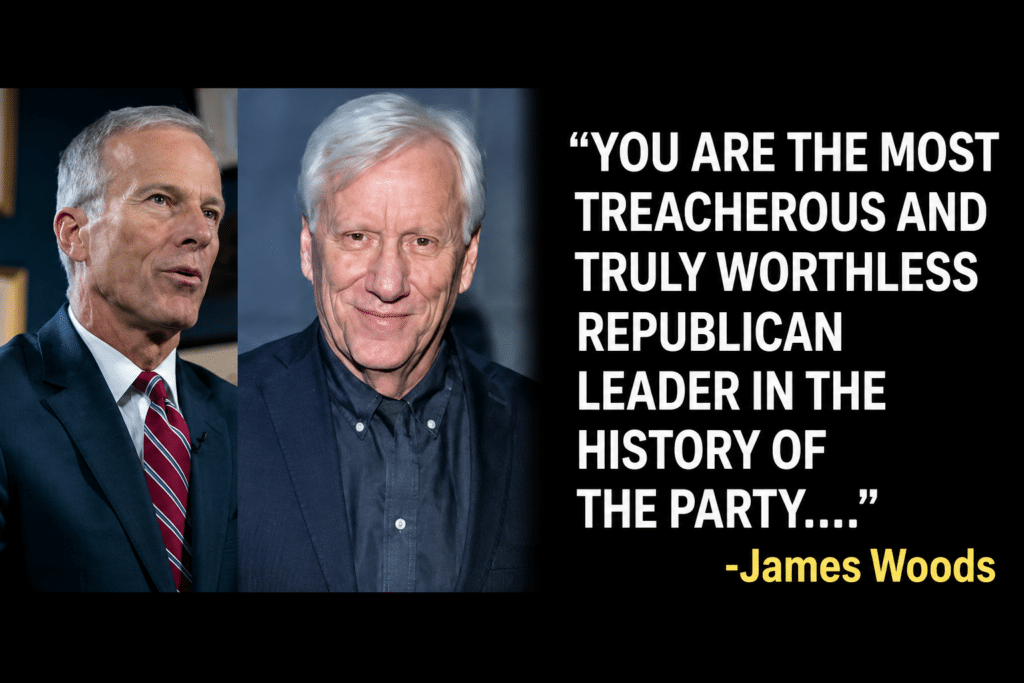
Senate Majority Leader Becoming A Major “Thune” In The Side Of Republicans
John Thune is the typical example of a so-called leader who keeps reciting the problem but makes no attempt to correct it.
The standoff over the Safeguard American Voter Eligibility (SAVE) Act has put significant pressure on the U.S. Senate, turning the legislative battle into a crucial test of Majority Leader John Thune’s leadership, or lack thereof.
A growing number of Americans view the snail-paced progress on this important election-security bill as a calculated surrender, a clear failure of resolve by a leader increasingly seen as an obstacle to the populist agenda. Nationwide, the animosity directed at Thune is reaching a pressure point, driven by the belief that his deliberate inaction is a betrayal of the citizens who elected him. There are no valid institutional excuses for his conduct; his management of the SAVE Act is a compelling reason for him to consider resigning.
Thune’s reluctance to support the SAVE Act, he claims, is due to a lack of sufficient votes to navigate Senate procedural challenges. He has declined requests from President Trump and conservative allies to eliminate the filibuster, explaining that there are not enough votes to change the rules.
To understand the intense controversy surrounding John Thune’s leadership, one must first examine the bill at the center of the debate. The SAVE Act proposes a significant change in how federal elections are conducted in the United States. Its primary requirement is straightforward yet far-reaching: it would mandate that all Americans provide formal documentation of citizenship—such as a U.S. passport or a certified birth certificate—alongside photo identification in order to register to vote in federal elections.
Let’s look at the bottom line. The only reason Democrats will not willingly approve this bill is for the selfish reason that it will limit their ability to manipulate elections. Last week, Karen Bass, the inept Democrat mayor of Los Angeles, said during an interview that “we need to explore non-citizens voting in city elections.”
That is an absurd suggestion and more proof that Democrats should not be voted into any positions of power. There is not a single country in the world that allows non-citizens to vote. The idea is beyond absurd, and yet Democrats cling to this stupidity like grim death and expect us to accept it as logic.
Thune has consistently stated that Republicans lack the simple majority required to eliminate the filibuster or uphold a “talking filibuster.” He has cautioned that advocating for drastic rule changes could have negative consequences, potentially paralyzing the Senate for months without producing any meaningful results.
You mean like the paralysis surrounding this bill?
This legislation is a crucial and sensible measure designed to protect the integrity of the ballot box and ensure that only American citizens determine the outcomes of American elections. From this perspective, any delay in passing the bill is not a result of careful consideration but rather a deliberate obstruction by the establishment. Every day, Americans are angered that a Republican-led Senate isn’t acting with unwavering urgency to pass what is undoubtedly one of the most important pieces of election security legislation in history. Thune’s refusal to prioritize this issue is perceived as a sign of gutless, ineffective leadership that undermines his own party while catering to the Democrats’ stupidity.
The common excuse for Thune’s failure is that the bill faces significant opposition from Democrats and progressive voting-rights groups. Critics argue that the measure is overly restrictive and addresses a problem that is nearly non-existent. They claim it could disenfranchise millions of voters who lack immediate access to birth certificates or passports.
Of course, Democrats will say that. That’s what they always use as an excuse. They are passively-aggressively calling American voters stupid by insinuating they don’t have the intelligence to gather the things they need to vote. Democrats can call this restrictive, but if they had allowed fair and transparent elections to take place, these additional requirements may not have been necessary.
For the millions of Americans seeking change, these arguments are seen as mere smokescreens meant to protect a broken status quo. A true leader would actively challenge these talking points and advocate for the rule of law.
Instead, Thune stands by idly and allows these objections to stall the Senate; his leadership has proven to be a joke, leaving his position in the Senate and the nation’s voting security vulnerable and alienating the very people who put his party in power.
This frustration highlights a significant disconnect between legitimate grassroots expectations and institutional limitations. Activists in the field are acting with urgency; they demand immediate, sweeping legislative victories and view the majority leader’s role as necessary to advance essential priorities.
When Thune chooses a deliberate approach, those advocating rapid action see it not as strategic patience but as a betrayal of fundamental promises. For a base ready for uncompromising confrontation, procedural caution appears to be a deliberate obstruction of the reforms that were promised during the campaign.
This situation highlights a clash between political alignment and governance style. Thune’s traditional, establishment viewpoint—rooted in a long-standing commitment to preserving Senate norms and the filibuster—places him in direct conflict with a populist movement that has little patience for institutional decorum.
Tradition is important, traditions like fair and equitable elections. A large part of Thune’s position is for him to be persuasive and to demonstrate the ability to negotiate. If need be, he can be as relentless as the Democrats are with his constituents and the MSM to bring this issue to a close.
The truth is, Thune is avoiding confrontation. Even though he has truth and justice on his side, he hides in the corner, offering excuses that a growing number of Americans are tired of.
The intense public anger directed at Thune is more than just typical political noise; it reflects a widespread rejection of his entire approach to governance. When voters see a key piece of legislation stalled by procedural delays, their frustration naturally turns on the person in charge. To his strongest critics, Thune’s cautious approach appears as indecisiveness and an outright unwillingness to fight for the core principles of his party.
The gridlock surrounding the SAVE Act has shown a significant lack of leadership at the top of the Senate. As calls for his resignation grow louder, Thune finds himself caught between a rock and a hard place. For an increasing majority of the American electorate, his continual delays in legislation are now seen not as a defense of institutional norms but as a severe failure to protect the American vote.
Thune’s dilemma is self-imposed. He knows that at this time, quick action is necessary. He should also know that using traditional norms as an excuse no longer conceals the truth: that he is desperately afraid of confrontation, and that he no longer deserves to remain in his position.