U.S. Supreme Court Hands Down Historic Ruling in Louisiana Redistricting Case
I return to this topic given the historic nature of the ruling and its novelty involving a Louisiana case, Callais v. Louisiana.
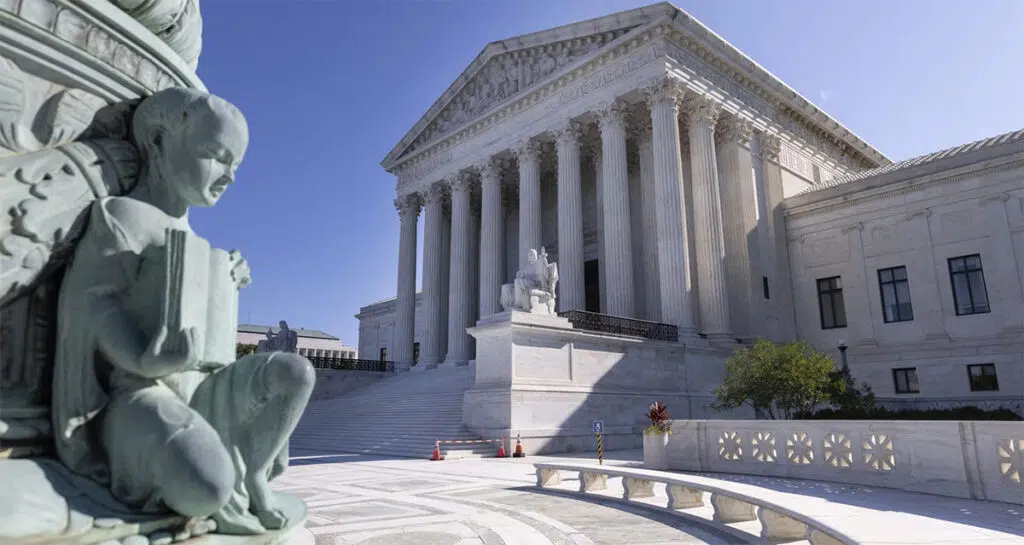
This past week the Supreme Court invalidated on constitutional grounds the Louisiana 6th Congressional District, currently held by Congressman Cleo Fields. The Court specifically held that the Fields’ district constituted an illegal racial gerrymander in violation of the Equal Protection Clause of the 14th Amendment.
This case involved a “collision” of Section 2 of the Voting Rights Act (VRA), which prohibits the dilution or weakening of minority voting rights, and the Equal Protection Clause, which prohibits drawing a congressional district strictly based upon race, which the Supreme Court determined the 6th District had been.
It’s not difficult to understand the Court’s analysis given the map itself which starts outside of Baton Rouge, meanders over to Lafayette, up to Alexandria and then into Shreveport, encompassing a predominantly black population.
I am also not surprised our Louisiana legislature felt pressured to create this district in light of the mandate of the VRA, which has for several decades been in conflict with the Equal Protection Clause.
Louisiana, and many other states, were in this predicament. “So, U.S. Supreme Court, you tell us we must adhere to the VRA and not dilute minority voting strength but, at the same time, tell us we are not allowed to draw districts based upon race to avoid diluting minority voting strength!”
I think it was in response to that exasperation by several states that prompted the Court to hold:
The VRA “imposes liability only when circumstances give rise to a strong inference that the State intentionally drew its districts to afford minority voters less opportunity because of their race.” (In fact, the opposite occurred here). However, “the VRA does not intrude on States’ prerogative to draw districts based on nonracial factors, including to achieve partisan advantage.” Well, the Court did not conclude that Louisiana tried to intentionally discriminate against anyone with the map, thus the VRA had no role to play.
In fact, as Chief Justice John Roberts has stated “the way to stop discrimination on the basis of race is to stop discriminating on the basis of race.” So, if a strict racial classification was not the sole basis for the district there is no constitutional violation even if a Legislature drew a map purely for partisan political advantage.
Partisan politics are a constant, permanent part of our democracy. However, the Court considers those issues to be “political questions” regarding which courts have no competence.
If voters don’t like how their elected officials draw election districts and maps, they can vote them out of office. So, in “blue” states, partisan districting will favor Democrats. In “red” states, it will favor Republicans. None of that is the province of the courts.
It is only when the drawing of those maps directly infringes upon a constitutional right—such as equal protection regarding a racial classification of the kind at issue here—is it appropriate for the courts to become involved in an otherwise political issue like this redistricting dispute.
But that’s really the rub.
Critics of this decision want the Court to not only address constitutional violations they also want the courts to guarantee political outcomes as well. However, that is simply not the role of the judicial branch. It is exclusively the role of the political branches.
What the Court’s ruling really means is that while protecting minority voting rights is a legally compelling interest, it cannot be met at the expense of racial classifications.
In so ruling, the Court has again clarified that America is a nation of laws that derive from our U.S. Constitution which contains the fundamental guarantee of equal protection for ALL of us. That principle of unanimous and intrinsic equality cannot be preserved if we continue to classify Americans strictly by race.
I believe this decision is the correct one. Our 250 years of history and tradition bears this out.
There is no more fundamentally American principle than genuine equality: from Thomas Jefferson’s immortal words in the Declaration that “we hold these truths to be self-evident that all men are created equal” to the thundering echo of that truth decades later by Rev. Martin Luther King, Jr. who dreamed that “one day my children will be judged not by the color of their skin but by the content of their character.” The Supreme Court has reaffirmed that here.