Elon May Have Saved Us From Gramscian Hell
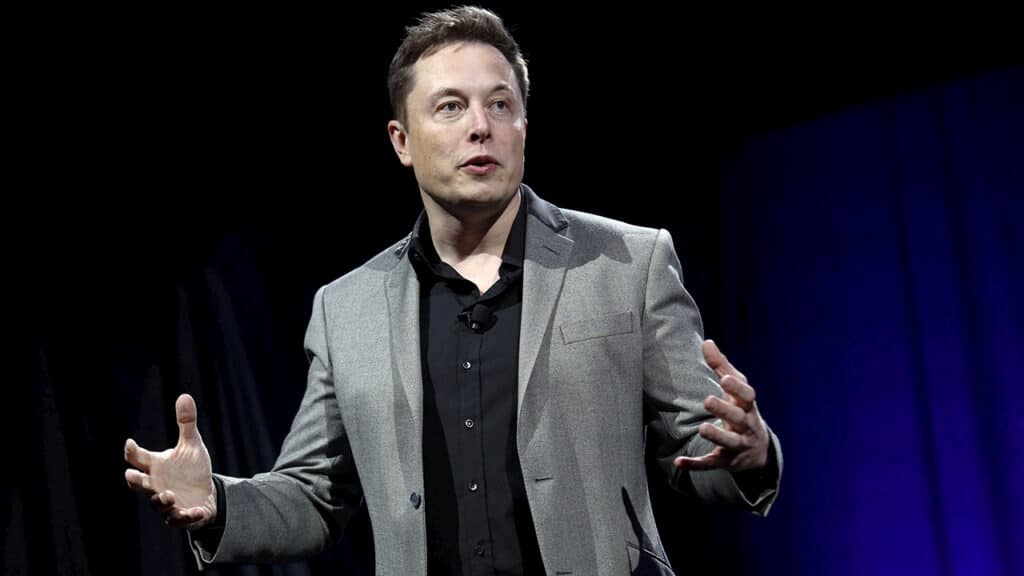
In 50 years, history books will say that Elon Musk won a war that no one even knew we were losing.
A war that began 100 years ago, in an Italian prison cell.
In 1926, Mussolini had a 35-year-old Sardinian intellectual arrested. At the trial, the prosecutor reportedly said: “We must stop this brain from working for twenty years.”
His name was Antonio Gramsci.
His brain never stopped working. In prison, he filled thousands of pages that became one of the most influential political texts of the 20th century. I think we’re living through the moment when his theory is collapsing.
Let me explain.
Gramsci asked a simple question. Why did the communist revolution succeed in Russia but fail everywhere in the West?
His answer: In the West, power isn’t held just by the state, the police, and the army. It’s held by culture. By what people find normal, obvious, “common sense.” He called it cultural hegemony.
So, to seize power, you don’t first take the palace. You first take the minds. The schools. The universities. The newspapers. The theater. Publishing. The courts. That’s the “war of position”: a slow conquest, institution by institution. When the culture has flipped, the politics follows on its own.
Forty years later, the German activist Rudi Dutschke would turn it into a slogan: the long march through the institutions.
For decades, we’ve lived with a puzzle that no one could really explain.
Why are almost all artists on the left? The actors, the singers, the teachers, the journalists, a good chunk of the judiciary. Why could a country vote right election after election and still see its culture speaking with one voice?
We were told: “It’s because educated people are on the left.”
I think the answer is simpler. Gramsci had written the recipe, and it was applied. When you control who gets the grant, the job, the good review, the prize, the invitation on the set, you control what becomes “the culture.”
The same puzzle existed on a global scale.
Why did so many developing countries, especially in Latin America, keep voting again and again for socialist or radical left governments? Venezuela, Bolivia, Nicaragua, the Argentina of the Kirchners, Petro’s Colombia. The economy was collapsing, the cartels were thriving, chaos was setting in. And yet the same vote kept coming back.
My conviction: Poverty wasn’t an accident of the system. It was an electorate. And around it, there was a whole ecosystem of NGOs, “independent” media, and “civil society” programs, funded largely by Western money.
Then, in early 2025, something happened that no one had ever dared to do.
Elon and DOGE opened up USAID’s books. An agency that’s been virtually untouchable since 1961, tens of billions of dollars a year. The vast majority of programs were cut, and the agency was absorbed into the State Department.
The faucet was turned off.
And look at what’s happened since.
Bolivia: MAS loses power after nearly twenty years. Ecuador: Noboa reelected. Honduras: The right takes back the country. Chile: Kast elected. Argentina: Milei wins the midterm elections by a landslide.
And two days ago, Brazil.
Jair Bolsonaro is ineligible, sentenced to 27 years in prison. The left thought they’d closed the chapter. Lula, 80 years old, was running for a fourth term against a country that was said to be in the bag.
On Sunday, his son Flávio came in first in the first round. Over 47% against nearly 45% for Lula. Lula himself acknowledged an “unexpected” result.
The largest country in Latin America is one runoff away from flipping.
The biggest rightward turn on the continent in decades.
Coincidence? I don’t think so. When the funding dries up, the narrative loses its megaphones.
There’s one last real stronghold left. Europe.
Brussels funds its own networks of NGOs, with an opacity that even the European Court of Auditors has pointed out. The big foundations like Soros’s Open Society. The supranational entities that produce norms without ever facing a voter.
It’s the last fortress of cultural hegemony. And it’s starting to crack.
I’m convinced all of this is going to collapse, and faster than we think.
Gramsci was right on one essential point: Culture precedes politics. But he forgot that it works both ways. When an artificial culture loses its IV drip, what’s real underneath rises to the surface.
What comes next, I believe, is a renaissance. A culture that starts loving beauty, ambition, science, the civilization that gave it birth again.
And in the history books, we’ll remember that it all started when one man decided to look at the accounts.
It took someone rich enough not to depend on anyone, crazy enough to take it on, and free enough to weather the hate that would follow.
Thanks, Elon.
See the original post, and its reactions, here.