Dating is Not in a Recession, It Just Needs Direction
My friends at the Institute for Family Studies recently published a commentary by Andrea Gurney on a report about what IFS calls a “dating recession” that is occurring among young adults.
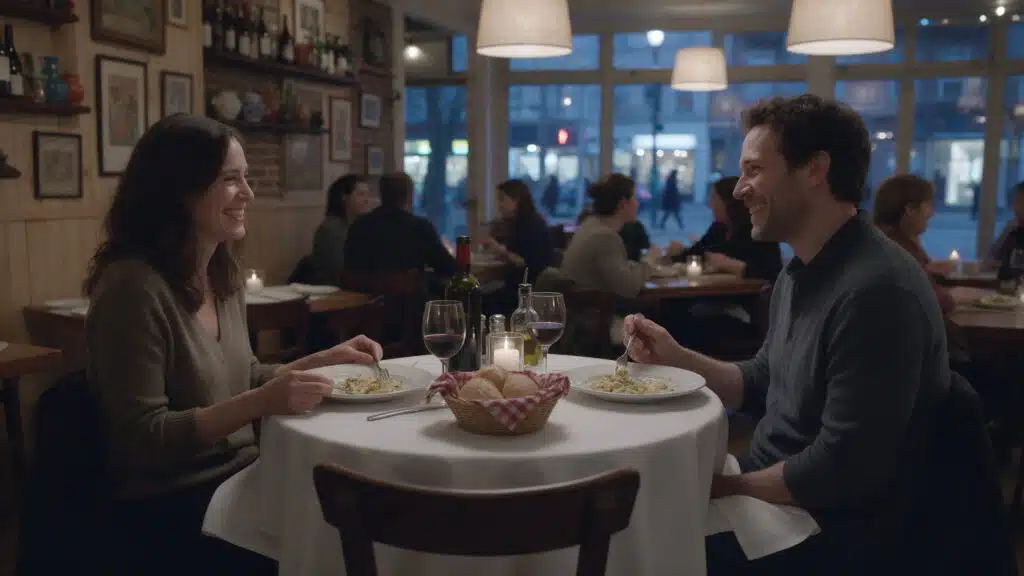
Yet, as she points out, the issue is not that young adults don’t want to date. The issue is that young adults don’t know how to date or what to look for in a potential spouse.
For example, instead of meeting potential dating partners and eventual spouses through traditional means such as churches, colleges, and other social outlets, dating has become nothing more than perusing a catalog via dating apps, looking for the latest and flashiest model to purchase.
Thus, dating becomes more of a consumer rather than relational choice–much like buying a new shirt or blouse that eventually ends up hung in a closet with endless others and never worn.
As Gurney writes, “Their digital culture brains have trained young adults to discard an imperfect product rather than do the hard work of building a genuine connection.”
Yet young adults are yearning for that genuine connection. As IFS points out in their report, while only 30% of young adults say they are actively dating, 83% of women and 74% of men wanting to form a committed relationship, with 83% of women and 76% of men wanted to create a strong emotional connection with a partner.
Besides the usual issues cited, such as financial and career uncertainty, the main reasons mentioned by young adults are a lack of confidence in dating or a tendency to wait until the “perfect” person comes into their lives.
For instance, 94% of never-married singles in their 20s say the person they will marry must be their “soulmate” and 88% believe there is only one person perfect for them.
Thus, many young adults keep waiting for the perfect “prince” or “princess” who may never arrive. For those in their 30s, they now face a “shrinking pond” of prospects and feel increasingly despairing that they may never find “Mr. Right” or “Miss Right.”
A friend of mine, who, along with his wife, spends significant time counseling male and female young adults, attests to the unhappiness and despair, along with uncertainty and lack of confidence many young adults experience when it comes to dating. Several have expressed their wish that things would return to a simpler time, free from dating apps, when they could naturally form relationships via traditional means.
Some have also prioritized careers over marriage, but in some ways, that is a cover-up for their lack of confidence when it comes to dating. Others have fallen into the trap of waiting for the “perfect soulmate” or “most attractive person” before they consider marriage.
Gurney comments, “The longing for intimacy is as strong as it has ever been, but a gap has opened between aspiration and action. Young adults are trapped in the stands, eager to get onto the field, but uncertain how to navigate the modern path to connection, dating, and life-long love.”
Thus, because they have no idea of what dating, let alone marriage, looks like–the merging of two imperfect rather than “perfect” human beings into one and the modeling of self-sacrifice–many young adults never get onto the playing field, as Gurney writes.
That is why older married couples need to step in and provide wisdom, guidance, and opportunities for young people to form healthy and realistic dating relationships. That is what my friend and his wife do, and they have seen several young men and women now make good decisions that have resulted in lifelong marital relationships.
Our churches also need to provide practical, spiritual guidance, and opportunities–without making singles feel ostracized or overly pressured–for learning how to form these relationships. This can be done sensitively through just listening to what single young adults are facing and feeling, providing gentle encouragement, and not trying to force relationships to happen, or making them feel inadequate, because they lack self-confidence when it comes to dating and marriage.
My friend mentioned earlier has a saying, “You can’t be held responsible for what you don’t know.” Many young adults don’t know how to date and form healthy relationships, so it is our job to point them in the right direction, rather than heap criticism upon them for something they don’t know.
That is how we can change the so-called “dating recession” into a relational cultural economy of healthy relationships, strong marriages, and flourishing families.