How Much Evil Is Sufferable?
The reason I truly admire Thomas Jefferson is that he had a way of embedding universal truths in his writing.
Many claim that Jefferson really wasn’t Christian, but even if you believe that, it is undeniable that there is a significant amount of Christian religious tenets imbedded in his language.
I know it is generally thought that the Declaration is just about the reasons for creating a a new form of governance, and it is about that, but there is so much more contained within it. I have come to realize it approaches almost a theological treatise because it speaks more broadly to the eternal challenges of liberty and the human condition.
Lately I have been thinking about how important this small snippet of the Declaration of Independence truly is:
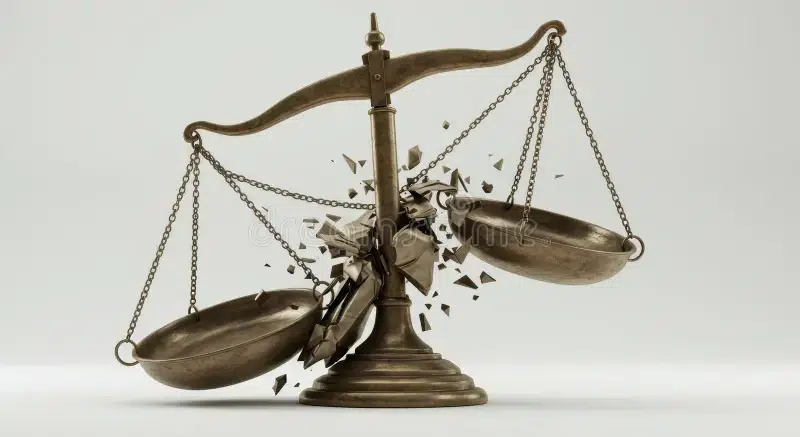
“…and accordingly all experience hath shewn that mankind are more disposed to suffer, while evils are sufferable than to right themselves by abolishing the forms to which they are accustomed.”
When I broaden my perspectives of this statement, it becomes clear to me that prosperity wrought by Western Civilization in general, and our American successes in specific, have made many evils (and evils of greater strength and persistance), those of both human origin (the things we do to each other) and demonic origin (the reasons we do them), easier to ignore – even as they intensify over time.
And as Jefferson points out, eventually these evils rise to such a level we must decide if it is more acceptable for us to continue tolerating increasing levels of evil or to take up arms and change our way of life.
Sort of a very early version of Herb Stein’s law – if something cannot go on forever, it will stop.
I guess that brings me to the important question of “What is the level at which we decide to make that change?”
And do think that is the important, relevant, and segregating question of our times – and of and for, our future.
Defining that tipping point is where I see the most glaring separation between the political and ideological right and left.
As a general rule, the right sees our principles as 1) transcendental and unchanging because they are true and 2) shared by people on the right, which are the two reason why I think is why right wing politics and policies marry well with Judeo and Christian religions and concepts of morality.
When we witness people who fail to live up to their principles, we assign the failure to the individual, not the principle and encourage that person to work harder to live their principles because we do believe those principles are the bedrock the foundations of our society, culture, institutions and civilization are built upon.
From what I have observed of the left, they see their principles as 1) situational and 2) malleable enough to accommodate behaviors that run counter to their current individual beliefs.
That is sort of how the “pronoun” thing works, the individual decides they are no longer a he or she, but are a “they/them” (or some other invention), so it is fine to throw biological reality out the window because no principle is real, it’s just all a social construct. that term, “social construct” has to do a lot of heavy lifting because they don’t really get the fallacy of denying a reality because it is allegedly a “social construct” by creating another social construct that they prefer and just demanding everyone else bow to their preferences.
Since their principles are somewhat flexible, when a member of the left fails the current version, rather than changing perspectives and behaviors, they simply change their principles to allow whatever the violation was. There you go, done and dusted – let’s just move on – because constantly changing the limits makes more and different “evils” easier to suffer.
The left’s belief in situational principles morality serve to compound the variability that creates an unstable environment because members never know that the rules of today will be the same rules tomorrow.
And that is no basis for a civilization or even a civil society.
That is why we find it so difficult to maintain either.