Iran: The Art of the Deal Requires a Counterparty
If you want a deal in the worst way, that’s exactly how you’re going to get it.
Wall Street traders use this adage to warn against negotiating from desperation — when closing the deal matters more than the terms. Three decades of American diplomacy with the Islamic Republic has been dealmaking in the worst way. We have negotiated with counterparties whose goals no agreement can satisfy, offered concessions to parties who view compliance as optional, and confused tactical pauses in Iranian aggression for strategic accommodation. The result is a more capable Iran, a more entrenched Revolutionary Guard, and a region measurably less stable than when the engagement began.
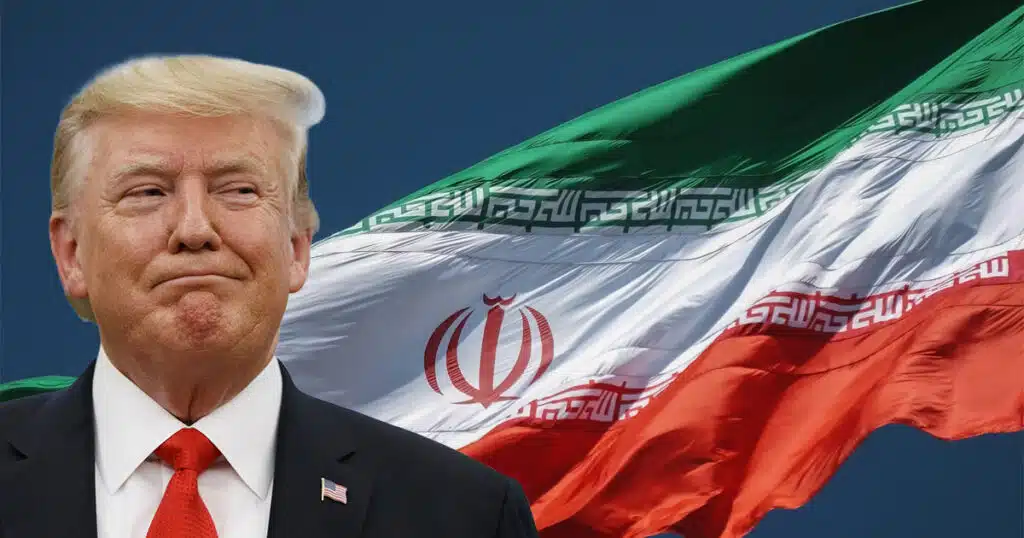
President Trump wrote the book on dealmaking — literally. Before we negotiate with Tehran again, it is worth applying his own framework to the question his administration is now wrestling with: are the Islamic Revolutionary Guard Corps and the ruling Mullahs counterparties with whom a viable deal is even possible?
By Trump’s own rules, the answer is no. But his framework also tells us what to do instead.
Knowing What the Other Side Wants
The first discipline in The Art of the Deal is deceptively simple: know what the other side actually wants. Not their stated positions — their fundamental interests. Trump is emphatic on this point. Preparation means understanding the counterparty’s real goals, their pressures, their vulnerabilities.
Applied to Iran, this discipline is disqualifying.
The IRGC is not a military institution in the conventional sense. It is the armed custodian of the Khomeinist revolution — its fundamental interest is the perpetuation of that revolution as a transnational project. Territorial control, proxy networks, ballistic missile capability — these are not negotiating chips. They are the revolution made manifest. An IRGC commander does not trade away revolutionary infrastructure for sanctions relief any more than a true believer trades away his faith for a tax abatement.
The Mullahs present a parallel problem at the theological level. The Islamic Republic’s political legitimacy rests on velayat-e faqih — guardianship of the Islamic jurist — a doctrine that fuses political authority with divine mandate. For the senior clerical leadership, accommodation with the American Great Satan is not merely strategically unwise. It is theologically corrosive. Their fundamental interest is eschatological, not transactional.
Trump’s own preparation principle reaches an uncomfortable conclusion: you cannot structure a deal around interests that no deal can satisfy.
Leverage Requires Someone Who Wants What You’re Offering
Trump’s leverage principle is equally direct: leverage means having something the other side desperately wants. It is the key to the kingdom. But leverage only functions when the counterparty values what you are offering more than what they are protecting.
Thirty years of engagement have tested every instrument in the American toolkit — sanctions relief, diplomatic recognition, security guarantees, frozen asset releases. None has produced durable behavioral change because none addresses what the IRGC and the Mullahs actually want. You cannot leverage a revolutionary with commerce, or a theocrat with security guarantees, when the revolution and the theology are precisely what they will not trade.
The Joint Comprehensive Plan of Action demonstrated this with clarity. Iran accepted the economic concessions. It did not abandon its regional proxy network, its ballistic missile program, or its fundamental hostility to the American-led regional order. The deal’s downside was never protected because the counterparty’s goals were orthogonal to the agreement itself. In Trump’s terms: we gave them what they wanted, they kept what we needed them to surrender.
The Dealmaker’s Move: Counterparty Substitution
Here is where Trump’s framework becomes genuinely useful rather than merely diagnostic. His maximize options principle operates at the strategic level: when the counterparty across the table cannot deliver what you need, you find a different counterparty. You do not abandon the negotiation. You rebuild the table.
The question for American strategy is not what deal we can offer the regime. It is who inside Iran’s political and economic structure has genuinely transactional interests — interests that concessions, support, and engagement can actually satisfy. Those counterparties exist. They have been neglected in favor of negotiations with the two actors least capable of making or keeping a meaningful deal.
Four counterparty tracks merit serious development.
Four Counterparties Worth Developing
Provincial Army Commanders
The Iranian regular army — the Artesh — and the IRGC have existed in structural tension since 1979. Khomeini created the Revolutionary Guard specifically because he did not trust the Shah’s officer corps. That institutional rivalry never disappeared; it was suppressed. Provincial Artesh commanders have career interests, territorial equities, and institutional grievances that are genuinely transactional. They want professional legitimacy, resources, and survival — interests that a sufficiently degraded IRGC creates space to address. American airpower is the offer: it provides what provincial commanders cannot generate themselves against a weakened Revolutionary Guard. The deal does not yet exist. The conditions for the deal must be created first, through sustained pressure that degrades IRGC capacity until the Artesh’s latent interests surface.
The Labor Movement
Iran has a historically active, repeatedly suppressed labor movement — teachers, oil workers, truckers — that has mounted sustained strikes against the regime at significant personal risk to its organizers. Their interests are entirely material: wages, workplace safety, legal recognition, freedom from imprisonment for collective action. There is no eschatology here, no revolutionary mandate. These are transactional interests the United States can engage through capital support, organizational assistance, and international labor solidarity. Their strategic function is not governance replacement but economic attrition — denying the regime functional control of critical industrial sectors from within.
Rule-of-Law Infrastructure
Iran’s judiciary is constitutionally subordinate to the Supreme Leader. There is no independent court system to reform or engage. The viable alternative is investment in the institutional skeleton of a post-regime legal order: support for diaspora legal networks, documentation of regime crimes for future accountability, legal aid for political prisoners’ families. This is not naïve institution-building. It is a signal to Iranians inside the country that an alternative architecture is being prepared — that there are counterparties outside the regime who are building toward something, not merely protesting against it.
Regime-Opposed Capital
The IRGC controls an estimated thirty to fifty percent of the Iranian economy through its construction and business conglomerate Khatam al-Anbiya. Bazaari merchants, diaspora investors, and private sector actors whose enterprises have been systematically displaced by IRGC economic expansion are natural counterparties — their interests in property rights, contract enforcement, and open capital markets are directly opposed to the regime’s economic model. Capital market support to these actors is simultaneously economic development and strategic attrition: it builds a stakeholder class aligned toward stability and rule of law while shrinking the financial base that sustains Revolutionary Guard power.
Why This Is Not Boots on the Ground
The historical record of Iraq, Afghanistan, and Libya delivers a consistent verdict: externally imposed regime change without indigenous counterparties produces power vacuums, not stable outcomes. Each intervention followed the same logic — remove the regime, assume the population will fill the space constructively. Each produced the opposite.
The counterparty substitution strategy inverts this logic entirely. You do not remove the regime and then search for partners. You develop the partners first, degrade the regime’s capacity across its military, economic, labor, and legal subsystems, and create the conditions under which indigenous actors with legitimate institutional standing can determine their own political outcome. American airpower in support of provincial Artesh commanders is not occupation. It is an enabler — the same logic that drove successful by-with-and-through operations across multiple theaters, applied to a target set that has resisted every previous approach.
This is the competitive space the United States has historically underutilized against Iran: above the threshold of mere diplomatic pressure, below the threshold of direct military intervention, operating across the political-economy subsystems where the regime is most vulnerable and where transactional counterparties actually exist. No American boots required.
The Real Art of the Deal
The Art of the Deal is not a mandate to negotiate with everyone. It is a discipline for identifying when and with whom a deal is possible — and for walking away when the counterparty cannot deliver what you need.
Applied rigorously to Iran, Trump’s own framework leads to a single conclusion: the Islamic Revolutionary Guard Corps and the ruling Mullahs are not viable counterparties. Their goals are transcendent. No deal addresses what they fundamentally want, and no leverage compels them to trade what they will not surrender.
But the dealmaker’s instinct is not wrong. A deal with Iran — or more precisely, with the Iran that emerges on the other side of this regime — is worth pursuing. The task is building the counterparties that make it possible: provincial commanders with something to gain, workers with something to protect, lawyers building toward accountability, merchants who want their economy back.
That is dealmaking with a future. Everything else is dealmaking in the worst way.
David Katz is the founder and principal of DaraCom LLC, a strategic competition consultancy. He served as a senior analyst at U.S. Special Operations Command, where he designed Operation JADE SPEAR, and is a C4ADS Fellow. He has published in Parameters on sanctions, financial warfare, and multidimensional power projection.
This article was originally published by RealClearDefense and made available via RealClearWire.