Ruling: Texas public schools can post 10 Commandments in classrooms
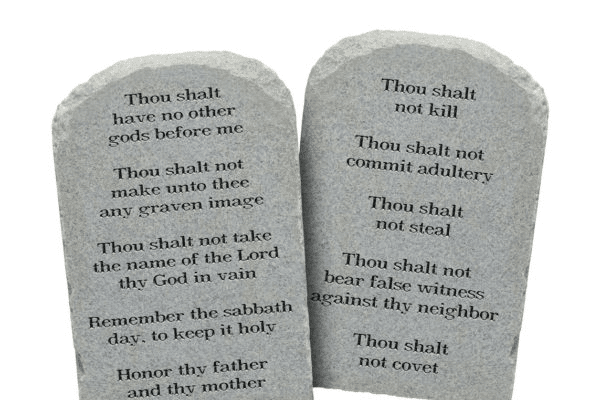
The full Fifth Circuit Court of Appeals ruled Tuesday that Texas public schools may post the Ten Commandments in classrooms. The ruling came three months after the court upheld a similar law in Louisiana.
The full court overturned a lower court’s ruling on the Texas law, vacated its preliminary injunction, and dismissed the plaintiffs’ Establishment and Free Exercise claim.
In response, Gov. Greg Abbott said in a statement the ruling was a “HUGE WIN,” adding that the Ten Commandments are the” foundation of Western law and morality,” which “belongs in our classrooms. Texas stands for faith, freedom, and the values that founded our great state.”
The state legislature passed SB 10 last May requiring every public-school classroom to post a copy of the Ten Commandments. After signing it into law, and after the state was sued, Abbott said the law was constitutional and would be upheld, The Center Square reported.
Circuit Judge Stuart Kyle Duncan wrote the opinion for the majority joined by Chief Judge Jennifer Walker Elrod, and circuit judges Edith Jones, Jerry Smith, Don Willett, James Ho, Kurt Engelhardt, Andrew Oldham and Cory Wilson.
Duncan said the full court heard both the Louisiana and Texas cases and first dismissed the Louisiana case because it was “unripe. Because of differences between the statutes, however, the Texas case is ripe and we can decide it.”
“We conclude the Texas law does not violate either the Establishment Clause or the Free Exercise Clause,” he said, pointing to flaws in the plaintiffs’ arguments. “Because the plaintiffs failed to show that SB 10 substantially burdens their right to religious exercise, their Free Exercise claims must be dismissed,” he wrote.
He also explained why SB 10 “looks nothing like a historical religious establishment. It does not tell churches or synagogues or mosques what to believe or how to worship or whom to employ as priests, rabbis, or imams. It punishes no one who rejects the Ten Commandments, no matter the reason. It levies no taxes to support any clergy. It does not co-opt churches to perform civic functions. These are the kinds of things “establishments of religion” did at the founding. S.B. 10 does none of them.”
In response to the plaintiffs arguing SB 10 is coercive, he said the law isn’t because students “are neither catechized on the Commandments nor taught to adopt them. Nor are teachers commanded to proselytize students who ask about the displays or contradict students who disagree with them. Most importantly, the ‘coercion’ characteristic of religious establishments was government pressure to engage in religious worship. That’s why establishments prescribed liturgies and punished those who skipped them.
“S.B. 10 is far from that. It puts a poster on a classroom wall. Yes, Plaintiffs have sincere religious disagreements with its content. But that does not transform the poster into a summons to prayer. Because the Texas law has none of the elements of a founding-era establishment of religion, the district court erred in ruling that the law violates the Establishment Clause.”
Ho issued a separate concurring opinion stating neither the Texas nor the Louisiana law “comes close to imposing either an establishment of religion or a prohibition on the free exercise thereof, as originally understood by the Founders or articulated by any governing Supreme Court precedent.”
He also said America’s founders “didn’t just permit religion in education – they presumed that there would be religion in education. Indeed, they firmly believed that our Constitution wouldn’t work without a religious people,” citing President George Washington.
Oldham issued a separate concurring opinion in part joined by Willett. He expressed “reservations about justiciability” stating, “It is not obvious to me that these plaintiffs have standing. Their claims hinge on the mistaken premise that individuals can sue because they are offended – a proposition that is wrong as a matter of Constitutional structure and Supreme Court precedent.”
Judges Irma Carrillo Ramirez wrote the dissent, joined by Judges Carl Stewart, Priscilla Richman, Catharina Haynes, James Graves, Stephen Higginson and Dana Douglas. She argues the law requires a permanent fixture of religious rules in public-school classrooms, with no “‘educational function,’ violates the most basic First Amendment principles.”
She also argues the Supreme Court has already ruled on the matter, saying it “long ago held that a statute nearly identical to S.B. 10 violates the Establishment Clause. But apart from that established precedent, which only it can overrule, the Supreme Court has long emphasized ‘the heightened concerns with protecting freedom of conscience from subtle coercive pressure’ in public schools, where classroom requirements that threaten to coerce students ‘to support or participate in religion’ implicate a ‘foremost hallmark of religious establishment.’ It has also held that the Free Exercise Clause protects against classroom requirements that threaten to ‘impose upon children a set of values and beliefs that are hostile to their parents’ religious beliefs’ and ‘pressure’ children to ‘conform.’”
The American Civil Liberties Union and organizations representing 15 Texas families who sued said they were “extremely disappointed” in the ruling. It “goes against fundamental First Amendment principles and binding U.S. Supreme Court authority. The First Amendment safeguards the separation of church and state, and the freedom of families to choose how, when and if to provide their children with religious instruction. This decision tramples those rights.”
They said they plan to appeal to the Supreme Court “to reverse this decision and uphold the religious-freedom rights of children and parents.”