Supreme Court Strikes Down State Race-Based Map — Breakthrough or Mere Breadcrumbs?
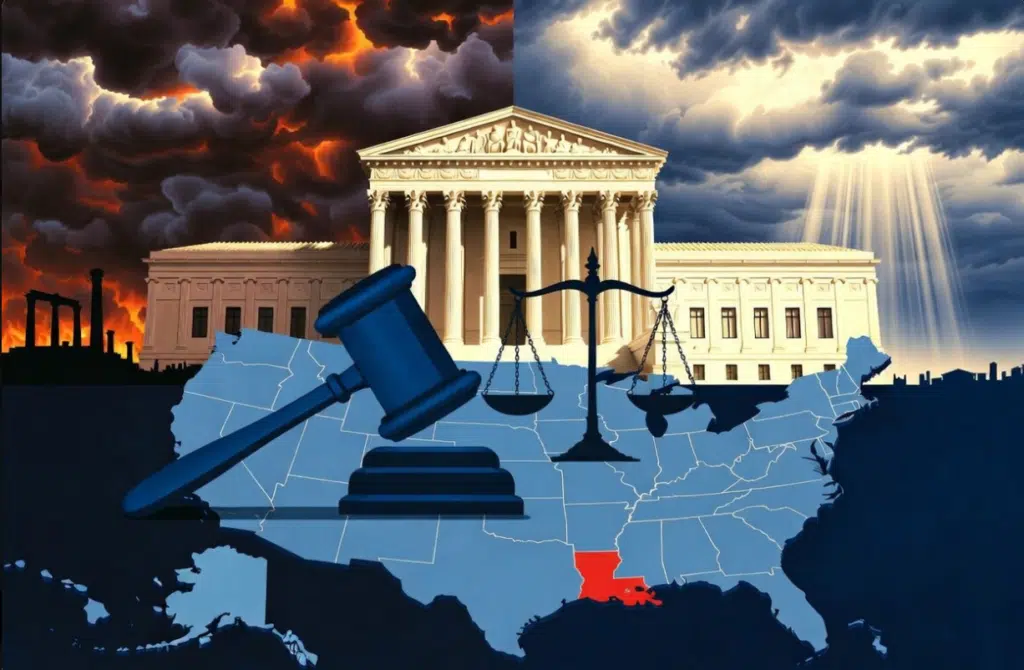
The Supreme Court’s decision to strike down Louisiana’s race-based congressional map may feel like a long-overdue and common-sense correction, perhaps even a symbol of more far-reaching victories to come.
But the question, as always, at the risk of sounding overly skeptical, is what kind of victory a correction that should not have been necessary in the first place actually represents.
Here is the overview, via Melissa Quinn at CBS News:
The high court upheld a lower court ruling that found Louisiana mapmakers relied too heavily on race when they redrew the state’s voting boundaries to comply with Section 2 of the Voting Rights Act. In a 6-3 decision authored by Justice Samuel Alito, the Supreme Court’s conservative majority found that compliance with Section 2 could not justify the state’s use of race in redrawing its House district lines.
“Because the Voting Rights Act did not require Louisiana to create an additional majority-minority district, no compelling interest justified the state’s use of race in creating SB8,” Alito wrote, referring to the map. “That map is an unconstitutional gerrymander, and its use would violate the plaintiffs’ constitutional rights.”
The decision has implications far beyond political representation in Louisiana. The Voting Rights Act’s protections have been key for voters seeking to challenge redistricting plans that they argue are racially discriminatory. The ruling will likely make it more difficult for minority voters and voting rights groups to successfully challenge voting maps under Section 2.
Sounds like a win for Republicans, for good ol’ common sense.
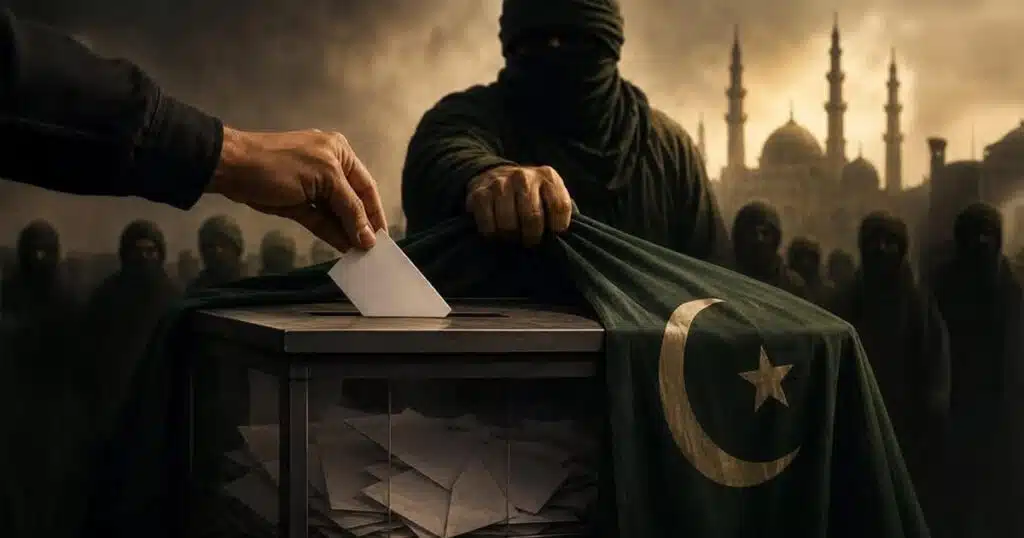
Yet still, I cannot help but consider the concept of the Hegelian Dialectic, a strategy likely unleashed on us in sinister measure for a long time now, in both culture and politics–and the media tentacles that curl the lie into our collective mind. Read this with that in mind—with a skeptical smile. After all, consider if either political officials or the media has earned any of our trust at all.
After years of watching race deployed as a primary tool in drawing electoral boundaries—not as a matter of justice but of political engineering—the ruling suggests that at least one lever of manipulation has lost its legal footing. In that sense, particularly for those respectable commentators who have followed this story since its genesis (wherever that is), it is not unreasonable to view this as a milestone. A line has been drawn, however imperfectly, against the idea that outcomes must be shaped explicitly by race.
That matters–and it matters because the narrative sweeping through a people matters. In a political and cultural environment where so many trends have seemed to move in only one abysmal direction for so long, even a partial reversal invites attention. It gives well-meaning and hard-working people, at the very least, a reason to speak up again and to have confidence that they are not the only ones going crazy in this upside-down world.
But partial reversal can also mean breadcrumbs at the dinner table when we were created for so much more.
The Skeptical Smile
While one head of the hydra may seem to have cut in common sense’s favor, the broader ecosystem in which it has taken root remains unchanged. District lines may no longer be drawn as explicitly along racial lines, on paper, yet they are still drawn—often in more impactful ways. Power is still mapped out in a manner that benefits those who draw the lines. Incentives for those select few still exist. And the political class—on both or all sides—retains both the motive and the means to curate outcomes with the sharp lines of a museum exhibit within whatever rules remain in place even after a ruling such as this one.
The game and players adapt. Or if you’re even more skeptical, you see them orchestrating it this way even beforehand to shut up the peasants–when in reality this ruling has absolutely zero bearing on the broader endgame of vipers. What appears to be a meaningful correction can just as easily function as a recalibration–and we know this from seemingly disconnected stories, both cultural and political, that never go the way a good man would expect. One head of the hydra is removed; another was already growing somewhere else we weren’t watching. The language shifts while we enjoy our breadcrumbs. The justification evolves while they feast on the loaf.
And the underlying dynamic—the management of electoral outcomes within a controlled framework—persists.
We continue to see this pattern even now.
Since 2020, the American public has been pulled through an unending cycle of claims and counterclaims regarding election integrity. Investigations have been promised, pursued, and abandoned. Evidence has been asserted, contested, and buried under competing narratives in a media that manages algorithms and our reactions. Each development arrives with seeming urgency, perhaps even getting the attention of Trump, or a very important task force committee, or a pretty girl named Anna, or something. Then each resolution dissolves into ambiguity within the weeks-long time frame that we momentarily forgot the issue was even there and we got going to the next and the next and the next must-see activity on the screen. And through it all, the central questions—about fair process, just accountability, and virtuous finality—remain obstinate and out of reach.
It is a system that sustains reactions and engagement through an electronic screen without delivering closure and real moral improvement, one that offers moments of perceived progress without actually altering anything in the underlying structure. And within such a system, even legitimate developments—such as a ruling limiting race-based redistricting—risk being interpreted as more transformative than they actually are.
The result of all of this from one perspective is victory. The result of all of this from another is…
Apathy.
Is anything ever really clear?
Nations have seen moments like this before—some that bent toward repentance, and others that did not.
The Larger Verdict
The suggestion here is that none of this is accidental. That has been a personal hypothesis for a long time now, but it has shifted in the last year to include other players I once hoped could provide that clarity, that accountability, that justice.
Which makes the Ninive-Sodom contrast even more pressing.
And so we find ourselves in a position that would have seemed strange not long ago: cautiously optimistic about the removal of one obvious distortion, while largely resigned to the persistence of others. Grateful, even, for what amounts to a narrowing of one avenue of manipulation, while the larger structure remains unquestioned.
The ruling is not nothing.
But it is also not everything.
That is true because a morally functioning nation does not require its citizens to celebrate the reduction of manipulation as though it were the restoration of integrity. It does not depend on periodic rulings to reassure the public that the system is still capable of self-correction. It operates on a presumption of transparency, accountability, and meaningful participation—conditions that, increasingly, feel more theoretical than actual.
And until those conditions are addressed, each apparent victory will carry with it an unavoidable question.
Not whether something changed.
But whether it was ever meant to.