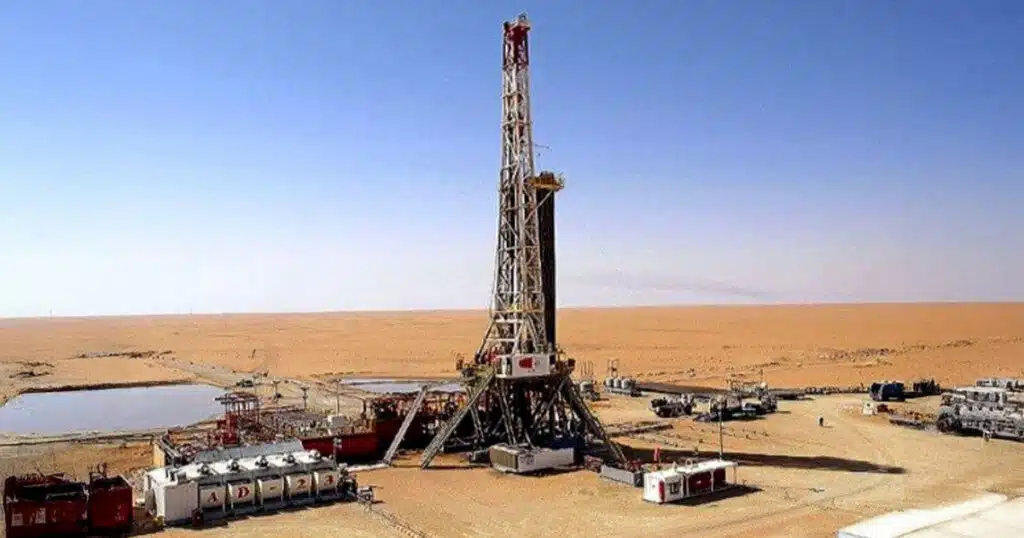
Trump’s Ace In The Hole
Restarting a shut-in oil well is one of those operations that sounds routine on paper but can become complicated, expensive, and even dangerous if not handled correctly. When people outside the industry think of “shutting in”, they think it is like twisting a spigot to shut off your garden hose and twisting it again to start it.
It is not.
Some wells are even judged too dangerous or damaging to restart or they are at such a level of production, they work as long as they are kept flowing, but depending on how long they are shut in, are not economically feasible to crank back up.
That is the ticking time bomb that Iran faces—and the Trump administration knows it is their ace in the hole.
A well that has been idle for days, months, or years does not simply “pick up where it left off.” Conditions downhole change, fluids redistribute, asphalt begins to separate and solidify, and mechanical systems degrade.
Bringing it back online is as much about managing uncertainty as it is about restoring flow.
When production stops, the well begins to move toward equilibrium. Reservoir pressure may partially rebuild near the wellbore, but inside the well, gravity takes over. Heavier fluids such as water settle lower in the column, while oil and gas separate above. Gas can migrate upward and form caps, while wax, asphaltenes, or scale may precipitate out and accumulate along tubing and perforations. Temperature drops, and in many crude systems, that cooling leads to increased viscosity or even solidification of paraffin.
In gas wells or high-pressure oil systems, hydrates can form if water is present. Hydrates can turn into flammable “ice” that can completely block flow.
Just as rust never sleeps, neither does corrosion. Over time, corrosion can attack tubing, casing, and downhole equipment, especially if protective chemical systems were not maintained during the shut-in period.
All of this means that the well you are restarting is physically and chemically different from the one you shut in.
The first step is evaluation. Operators review historical production data, shut-in duration, reservoir characteristics, and any known mechanical issues. Pressure data, if available, is critical. If the well has been shut in long enough, a pressure buildup analysis may help estimate reservoir condition and skin damage.
Next comes surface and well integrity checks. Valves, flowlines, separators, and safety systems are inspected and tested. You do not want to discover a failed valve or compromised line under pressure and if the well is equipped with artificial lift, that system must be assessed. Electric submersible pumps may have degraded insulation, rod pumps may have stuck rods or parted tubing, and gas lift systems may have lost injection pressure or integrity. In many cases, the well cannot simply be turned back on without intervention.
Before opening the well, operators often “condition” it. This can include circulating fluids, injecting chemicals to dissolve wax or scale, or even performing a cleanout using coiled tubing. In some wells, especially offshore or subsea, this step alone can be a significant operation.
The actual restart is typically gradual. The well is brought online slowly to manage pressure changes and avoid shocking the formation or equipment. Chokes are opened incrementally, allowing fluids to begin moving while monitoring pressures, temperatures, and flow rates closely. In some cases, the well will not flow naturally. It may need to be “kicked off” using gas lift, swabbing, or nitrogen injection to lighten the fluid column and initiate flow. Once flow begins, it can be unstable for hours or days as the well clears accumulated fluids and debris.
Mechanical risk is significant. Equipment that has been idle may fail under load. Seals dry out, elastomers degrade, and corrosion weakens metal. A tubing failure or valve leak during restart can escalate quickly, especially under high pressure. Flow assurance problems are common. Wax, scale, or hydrates can restrict or completely block flow. If not properly managed, these can lead to sudden pressure spikes or complete loss of production. Clearing such blockages after the fact is far more difficult than preventing them.
Reservoir damage is a more subtle but equally important risk. If the well is opened too aggressively, it can cause fines (small particles) migration, water coning, or gas coning. In some formations, this can permanently reduce productivity. A poorly managed restart can turn a temporarily idle well into a marginal or uneconomic one.
Then there is the safety risk. Restarting a well involves pressure, hydrocarbons, and often uncertain conditions. Gas releases, equipment failure, or uncontrolled flow can pose serious hazards to personnel and the environment. In extreme cases, improper restart procedures can contribute to well control incidents.
Restarting a shut-in oil well is not a simple switch-flipping exercise. It is a controlled reintroduction of energy into a system that has changed while sitting idle. The longer the well has been shut in, the greater the uncertainty and the higher the risk. Done properly, it restores production efficiently and safely. Done poorly, it can damage the well, endanger people, and create problems far more costly than the production it was meant to recover.
If Iran has to shut in wells for any length of time, it won’t be without damage and is it is possible any recovery could take decades.