Propaganda: Paid for by You
Democratic government’s greatest strength is its greatest vulnerability. We are referring to the government’s extraordinary power to communicate. And this weekend we had a vivid lesson in what can go wrong.
We citizens don’t think about it much, but the government supplies citizens with an untold array of information. Federal government agencies tell us what the weather may be, how well our students are learning mathematics and English, and whether inflation is rising or falling. Government-created geological and survey data power the map apps we rely on when driving.
No one has come close to measuring the amount of information the government generates. It isn’t possible. We do know the federal government spent $1.5 billion on advertising last year.
Advertising is a fraction of the government expenditure for information, however, and much of the government’s communications expenses are nowhere listed in the federal budget. We have no clue, for example, how much is paid to federal employees to produce communications nor do we know how much the president and executive agencies are spending on their YouTube channels.
Think, for instance, how the communication aspects of government jobs have exploded. Bureaucrats who tweet and send out other social media messages serve in jobs that are not classified as “publicity” and don’t list any form of “communication” duties in their job descriptions.
The sheer amount of information is not, by itself, a problem. It is a plus. Government communications help keep government honest. We need to know, for instance through the Federal Register, what contracts the Pentagon has signed for new fighter jets or the National Park Service for the construction of new visitor centers. The Government Accountability Office’s nonpartisan reports help us see which federal programs are working and which are wasting our tax dollars.
But the powerful communication apparatus can also be used to propagandize us. That is to say, the government can use our tax dollars to try to tell us what to think and how to feel about government and its officials.
That is what happened this weekend. Americans who tuned into their favorite college and pro football teams – as all-American a pastime as there is – were also fed something that is not wholesome. During commercial breaks, the televisions flickered with slick ads that promoted President Trump’s record in office while suggesting that his political opponents should be destroyed.
Neither special interest groups nor Republican Party campaign operations paid for these ads. The tagline on them said “Paid for by the U.S. Government.” This notice is meant to suggest that the messages carried the weight of the government. In fact, they were the president’s personal opinions, and the tagline should be read, “Paid for by You.” That they were aired less than two months before an election at a time the public is souring on the president and his party is all the more problematic.
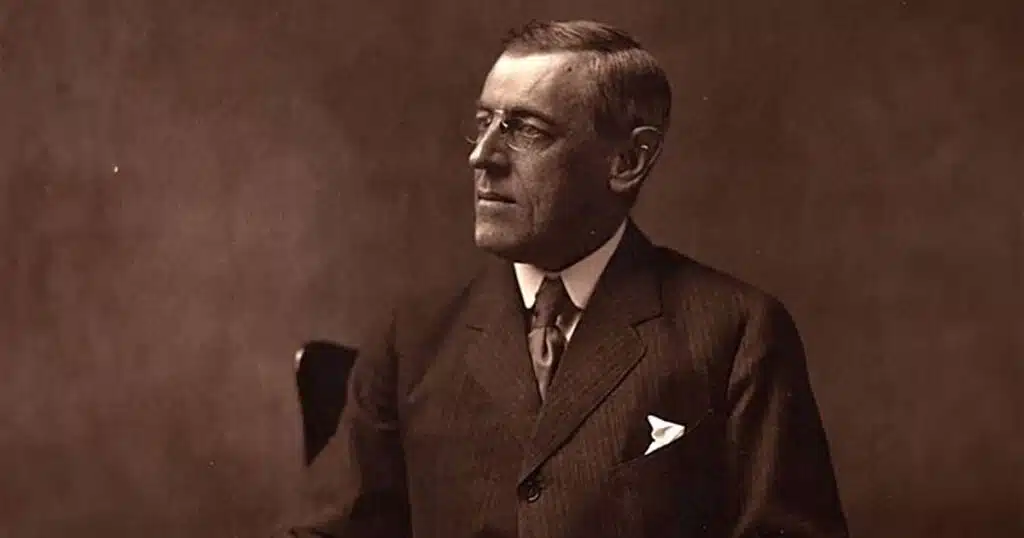
Government propaganda is not a new feature. It began with Woodrow Wilson, during World War I. Wilson created our nation’s only ministry of propaganda, the Committee on Public Information. The CPI’s goal was to build support for the war effort (such as military enlistment and fuel conservation) and President Wilson’s policies (such as pursuing the war to the bitter end instead of seeking negotiated settlement).
The CPI made press releases a ubiquitous feature of government. It placed advertisements in magazines and newspapers and along highways; filmed movies; published pamphlets and books; and syndicated columns that attacked “spy talk,” by which the CPI meant talk that criticized the government’s performance of the war or Wilson’s objectives. Spectacularly, 74,500 “Four Minute Men” spoke to audiences who came to movie theaters to be entertained, not to have their views changed. This exercise in nonconsensual, citizen-funded opinion molding was akin to what happened this past weekend.
American officials who employ strenuous propaganda typically believe in the urgency of their cause. But this zeal undermines what it is meant to save. In a remarkable admission at the end of the war, George Creel, head of the CPI, said, “With the existence of democracy itself at stake, there was no time to think of the details of democracy.”
This was the highwater mark of government propaganda. Nothing as extreme as the CPI was again created, even in wartime. This does not mean, however, that presidents have not used the extraordinary propaganda powers at their fingertips to press home points they want to make. Every president has been guilty of using its propaganda power.
Barack Obama’s Departments of Labor and Health and Human Services used their communication apparatus to goad Congress and the public to support a higher minimum wage and enact Obamacare. The GAO, an arm of Congress, found that the Biden administration violated anti-propaganda laws in its advertisements for Medicare.
Propaganda is not simply the act of providing tendentious information. It is also the act of depriving citizens of information that contradicts government messages. In 2022, the Biden administration treaded into this nebulous area. Its idea was to create a new body called the Disinformation Governance Board, whose job would be to monitor and call out information it deemed as misinformation.
While disinformation has become an enormous problem, it is a fool’s errand to give the government the ability to decide what is true and what is not, as we wrote when the proposal was first made. In the face of criticism from many quarters, the Biden administration deep-sixed its terrible plan.
The ads this weekend deserve the same condemnation and concern. They are not a small step in the direction of Wilson’s CPI. They are a giant leap in which the government takes pride in giving a government endorsement, as well as government funds, to a partisan campaign message.
Given the burgeoning power of communications, driven by artificial intelligence, it is time to pay concerted attention to government propaganda. This should have bipartisan support, for whatever types of government propaganda are accorded legitimacy today will be available to the opposition party when it occupies the White House.
One first step is for Democratic and Republican leaders of Congress to ask the GAO to review executive branch propaganda. It should not focus merely on the Trump administration. It should assess how federal communications powers have expanded and can be abused. It should also scrutinize the laws that are supposed to curb propaganda and recommend ways to strengthen them.
The next Congress, whichever party is in power, should hold bipartisan hearings on the subject. Perhaps a special committee needs to be formed with legislators who are fair-minded and not eager to turn the inquiry into a forum for bashing the other side.
These are small first steps. But they are better than no steps. The Biden administration’s willingness to consider a censorship board and the Trump administration’s willingness to use the airwaves and our money to tell us what to think are clarion calls for thoughtful action.
If we are not careful, we will be paying not only for propaganda, but also for a weaker democracy.
This article was originally published by RealClearPolitics and made available via RealClearWire.