How To Credibly Define Victory in the Middle East War
Defining war objectives is not only the conceptual bedrock of effective war planning and execution. It is also part of the strategic equation itself. If victory conditions are clearly defined and met, the government that established them can credibly declare success when hostilities cease. Likewise, clear definitions prevent leaders from tailoring their alleged war aims to their achievements ex post, which makes them “victorious by definition.” This rhetorical exercise lacks and further erodes government credibility at home and abroad while derailing any opportunity for a sincere strategic postmortem. Finally, a too-flexible definition of war objectives gives adversaries the opportunity to argue that, in practice, they are the victorious party, incurring costs on the opposing side’s prestige and future deterrence.
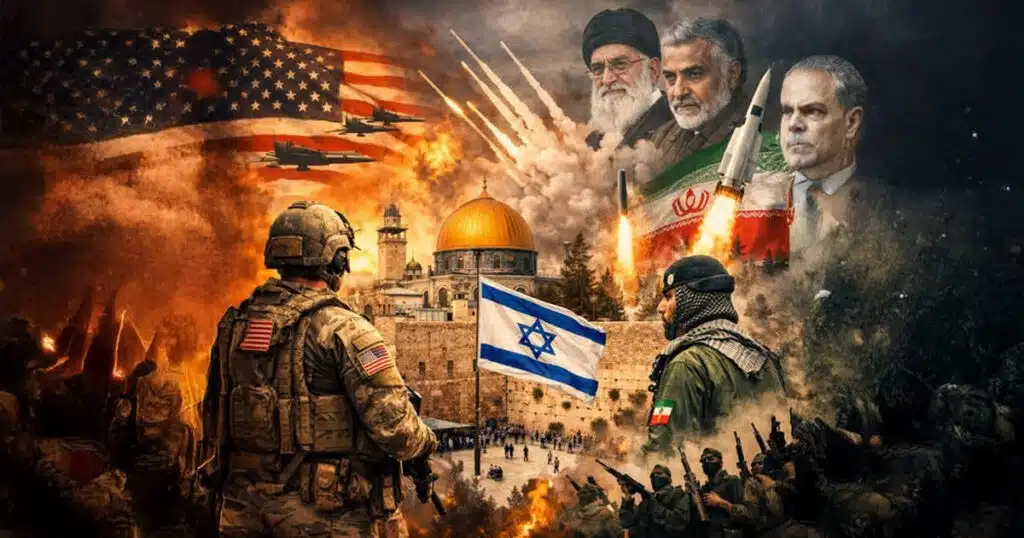
These reasons make clear why many news reports expressed agitation when both U.S. and Israeli officials were reluctant to present a coherent set of war objectives following the start of their combined air campaign against the Islamic Republic of Iran. Some themes, however, seem more persistent than others in public statements made since the war started, and more closely align with the military decisions made by the U.S. and Israel throughout the conflict. It appears at this point that while the Trump administration was hoping and still hopes Iranians opposing the Islamic regime will rise against it, Washington did not undertake sufficient planning to maximize the chances that such a contingency would materialize. Israel’s Prime Minister, Binyamin Netanyahu, has said on several occasions since the war started that the U.S.-Israeli operation can create supportive conditions but that it is up to the Iranian people to rebel against the regime and topple it. Taken together, official statements and actions on the ground suggest that Trump and Netanyahu realize that defining regime change as their war aim would create too ambitious and open-ended a commitment, one that is also extremely hard to guarantee. Therefore, both leaders, and especially Netanyahu, have avoided doing so explicitly so far.
The path to an attainable and clear public definition of war objectives is, however, still open. The rewards for doing so are immense, even now, as the war nears the end of its second week. Even if there are sound reasons not to define regime change as the war’s ultimate end, the Trump administration can clarify that victory against Iran means the dismantling of the Islamic Republic’s ability to regenerate its ballistic missile and nuclear programs over the next decade. Trump has already hinted that he wants to continue the war because he does not want the Iranians to be able to recover their military capacity within a few years, citing the possibility that the next U.S. president might not be as willing as he is to conduct repeated operations in Iran every time Tehran rebuilds its ballistic and nuclear assets. That statement has been Trump’s closest to a strategic vision regarding the war since its onset.
To make this the actual war objective, all administration officials – and preferably Israeli officials as well – should be consistent in delivering the same message regarding the war aims going forward, without fluctuations or changes in narrative. The dismantling of Iran’s military production infrastructure and capacity, rather than existing missile stocks or launchers, should then be used as the benchmark for assessing the war’s progress, and for defining its termination conditions from Washington’s perspective. Lastly, the rationale for this objective should be stated clearly: if Iran can rapidly regenerate its ballistic and nuclear programs after the war, as occurred after the conflict in June 2025, the U.S., Israel and Iran are potentially doomed to a series of repeated conflicts. U.S. military efforts are now focused on preventing just that.
The payoffs from such an approach for the U.S. are potentially immense. First, giving the campaign a clear rationale could soften public opposition to the war and alleviate fears that it may evolve into an open-ended commitment. Second, it could help U.S. allies and partners, particularly in Europe, accept the war’s underlying logic. Third, it would mitigate the “propaganda problem” created by Tehran’s narrative, which always presents the Islamic Republic as victorious, and would claim that the war ceased because of a U.S. “surrender” and due to the costs inflicted to it by Iran’s response. If the U.S. defines clear goals and then meets them, in full or in part, this brand of Iranian propaganda might still appeal to die-hard regime supporters, but it would be less persuasive to U.S. allies in the Middle East and beyond, as well as to its great power competitors, Russia and China. Lastly, a stated war objective would serve as an azimuth for U.S. military planners and operators, connecting military means with aims.
A possible rebuttal to this approach is that defining clear goals would limit the president’s flexibility. Without declared war aims, Trump can opt out of the conflict at any point and claim victory. One problem with that tactic is that since Iran has been able to incur tangible costs on U.S. interests, primarily by attacking the Gulf states and disrupting shipping through the strait of Hormuz, the Islamic Republic could credibly claim that if Trump suddenly decides to end the conflict, he is doing so in response to Iranian pressure. This narrative entrenches wrong conclusions among senior regime figures regarding U.S. resolve, and, in its own right, could paradoxically limit Trump’s options in determining the timing of ending hostilities. A second challenge to declaring that dismantling Iran’s regeneration capacities is the U.S.’ goal is that doing so would necessarily come at the expense of other important objectives, most notably, creating conditions that support regime change. However, as recent reports suggest, U.S. intelligence does not ascribe a high likelihood to the regime change contingency in the near future, anyway. Moreover, the U.S. and Israel could still allocate some of their military activity to regime change-related objectives while maintaining narrative and focus on missile and nuclear production infrastructure.
Even though the definition of clear and defensible war objectives now would be seen as belated, the advantages of such an approach – even from the perspective of the Trump administration, which often favors flexibility and deniability – largely outweigh the costs. The most attainable and strategically important goal for the war at this point is the neutralization of Iran’s ability to regenerate its most dangerous military capabilities. Without neglecting opportunities to advance regime change, the U.S. and Israel should clarify their rationale, even if regime change is not likely in the short-term.
Jonathan Roll
This article was originally published by RealClearDefense and made available via RealClearWire.