Two Leos, Agenda 2030, and the St Michael Warning Catholics Never Knew
This is not the whole case, nor could it be. It is one doorway into a much larger Catholic question—whether the Church’s older memory of the papacy, spiritual warfare, and lawful succession should still govern us, or whether God really has ordained that Catholicism change to fit the times.
If you cannot yet bring yourself to believe that Hildebrand is pope, if you think such a canonical question is “absurd,” as one Bishop Sanborn recently stated, if the whole thing makes your codified understanding of Catholicism flinch, then ask a simpler question the modern world actually understands, one that deals with one of our most cherished virtues—democracy.
Given what you’ll see in the footnotes, would you vote for this man?
Hypothetically speaking, if Catholics were electing someone to repair the wreckage, would you choose the man calling for Fatima, the Mass of Pius V, the binding force of Tradition, real penance, fasting, episcopal reform, the condemnation of freemasonry, a war against Agenda 2030, the restoration of Christendom, and the true social reign of Christ?
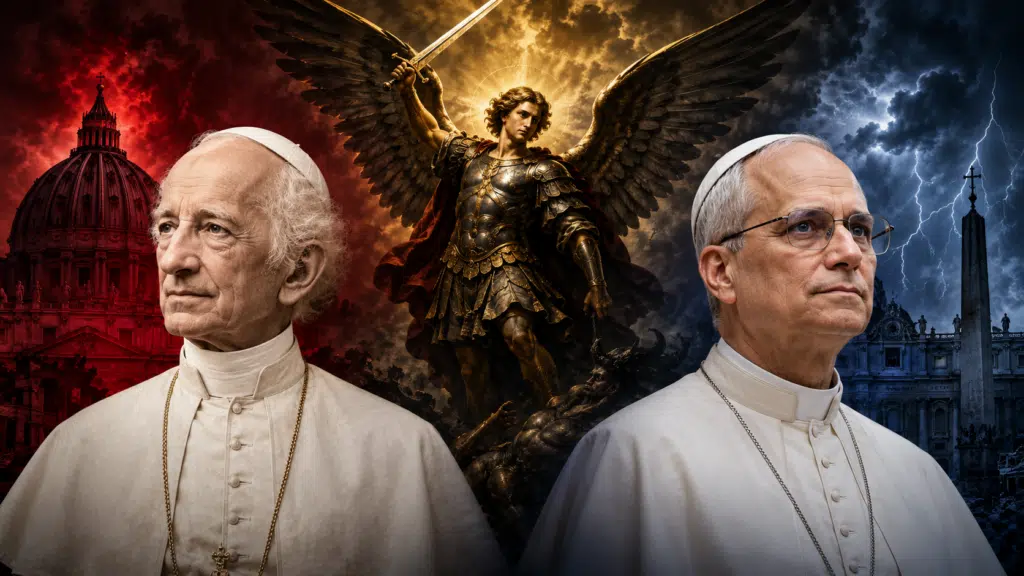
Or would you choose another in the line of Leo?
The cognitive dissonance is real, I realize. For me to write all of that and still say I cannot bring myself to kiss the ring just yet may prove just how deep in the cave I was for so very long.
The Name Leo and the Story Catholics Weren’t Taught
Let’s take a step back. One year ago today, May 8th, American and White Sox fan Robert Prevost emerged under the name Leo XIV.
That name alone should have stopped Catholics in their tracks.
It should have given us pause not because names are superstitious, or because every papal name automatically reveals the interior soul of the man who chooses it, but because names carry memory, and in the Catholic Church, memory is not the dead weight our history classes trained us to think it is. It is intrinsically hierarchical. It binds one age to another, one office to another, one crisis to another, one warning to another. It is why popes through the centuries worked so hard to guard the faith among the numerous political attacks and pitfalls plaguing the Church, including, yes, those sometimes of their own making.
The name Leo should have rung the bell, and if it didn’t, that should alert us to exactly how uneducated we are on Church history.
It echoes Leo XIII, the pope of Humanum Genus—the encyclical against freemasonry, the pope of warnings against secret societies, the pope whose long pontificate was marked by teaching after teaching on spiritual warfare that now feels almost foreign to the ungainly therapeutic chair that so often writes and speaks in Rome’s name.
It also echoes the St Michael prayer—the mostly unknown one.
Most faithful Catholics know the shorter prayer by heart, sure:
“St Michael the Archangel, defend us in battle. Be our protection against the wickedness and snares of the devil. May God rebuke him, we humbly pray. And do thou, oh prince of the Heavenly Host, by the power of God, cast into Hell Satan and all the evil spirits who prowl about the world seeking the ruin of souls.”
The prayer is common knowledge and practice for many Catholics, usually recited at the end of Mass or printed on prayer cards. But its origin story is not merely devotional.
It is apocalyptic.
We learn in the Book of the Apocalypse that it was St Michael who led the charge against Satan and the rebel angels after their revolt against God. He is not merely a mascot for Confirmation gifts. He is the prince of the heavenly host, the commander of angelic battle, and the great figure of spiritual combat set before a Church that too often pretends peace can be obtained through polite language and therapeutic double-mindedness.
According to historical accounts from those close to Pope Leo XIII, the pope experienced something terrifying after Mass. The details have been passed down in different forms, and some of the story may have gathered legendary mist around it, as old stories often do. But the prayer exists for a reason. Something happened. Leo XIII heard or saw enough to respond not with a synod, not with a ready-for-social-media-interview, not with another day of pastoral ambiguity, but with a weapon.
He gave the Church the St Michael prayer.
The account traditionally associated with that moment says Leo XIII perceived a conversation between God and Satan. The devil boasted that he could destroy the Church if given more power and time. God, echoing the permission granted to Satan in the Book of Job, allowed the test.
This was not some little fairy tale to be discarded by a Catholic world embarrassed by its own supernatural inheritance. It was a divinely ordered permission slip that would make any lukewarm Catholic scoff.
The century of trial would test the true Church’s fidelity, its leadership, and its laity—while something infernal was allowed enthronement within. And remember I am not some Protestant preacher speaking here. If the twentieth century can be read in any coherent way, it can certainly be read as a century of temporal and spiritual carnage: two world wars, cultural Marxism, Zionism, genocide, the rise of false dialectics, the sexual revolution, the destruction of the Mass and sacraments, clerical debauchery, financial scandal, theological sabotage, and an anti-Christian agenda that spread through media, education, art, government, and law like smoke through seams in the floorboards.
It all has become a menagerie of the Revelation of the Method.
Even many Catholics who do know the Leo XIII story tend to imagine Satan’s greatest weapons in obvious issues like abortion, pornography, atheism, wokeness, communism, and the overall sick deterioration of morals in the modern world. Of course those things matter. Of course they are infernal weapons. Of course the woke left is an enemy.
But we have contended for years—using the physics of the Hegelian Dialectic as a backbone—that the attack goes well beyond the obvious enemies outside the walls. We have contended that wokeness was created by a deeper enemy to keep us off the scent, to dupe well-meaning Catholics into believing that as long as I’m not like them, I’m good in God’s eyes, I’m good with my faith, I’m good.
The attack, however, as pagan history and sacred history both teach in their different ways, often comes from within the gates. Homer understood the danger of the horse dragged inside the city; Our Lord exposed the danger of religious men whose outward authority concealed inward corruption, as with the Pharisees and Herodians.
That is what makes the massive changes to the Faith in the mid-twentieth century all the more curious. That is what makes the collapse of liturgical memory so serious. That is what makes the sudden embarrassment over and rejection of older Catholic doctrine, older Catholic worship, older Catholic certainties, and older Catholic militancy so suspicious.
Leo XIII responded the only way a pope steeped in real spiritual warfare could. He wrote the St Michael prayer and ordered it to be recited after Low Mass, the quieter form of the Traditional Latin Mass without the fuller ceremony and chant of the High Mass. Leo’s instruction was a wartime memo.
And it came in the wake of a century-long increase in papal warnings about secret societies, revolutionary movements, and powers seeking to infiltrate and destroy Catholic civilization. The popes were not speaking of abstractions or possibilities, even as their writings regrettably were entirely too indirect. They were watching France, as we’ve explored with Pius VII. They were watching the masonic spirit, as we see in the Alta Vendita. They were watching the revolutionary stone-throw ransack all of Christendom, and how the false religion of Americanism and its false shepherds were helping lead the way. They were watching the modern world re-form itself against Christ as King.
Some of this should sound familiar to us, if not all of it. But alas, too many Catholics will take the inevitable cognitive dissonance and not bring it to discipline, prayer, study, and fasting, but carry it back out to the ball yards for another weekend of amnesia.
The Prayer Catholics Weren’t Taught
All of that said, the shorter St Michael prayer is not the whole story. Leo XIII also gave the Church a longer prayer, and one line in it should make every serious Catholic tremble:
“In the Holy Place itself, where the See of Holy Peter and the Chair of Truth has been set up as the light of the world, they have raised the throne of their abominable impiety, with the iniquitous design that when the Pastor has been struck, the sheep may be scattered?”
My work going back a long way, but especially in the last several months, has been about tilling the soil to show the difference in past popes’ teachings and those of the last seventy years. The reason? To illustrate beyond common sense that there was an infiltration into the Church that goes beyond just a few bad shepherds here and there.
That sentence Leo specifically included makes the suggestion difficult to dismiss. Perhaps the only question is whether he was writing it about himself and his predecessors inside some providential confessional moment.
We won’t go there with it today. Just take the teaching at face value.
His words do not say merely that enemies were circling the Church from the outside. They do not speak only of wickedness in the world, hostility in politics, or open persecution from anti-Catholic forces. They speak of the Holy Place itself. They speak of the See of Peter and the Chair of Truth. They speak of a throne of abominable impiety raised where light was meant to shine.
And they speak as if something had already happened.
The grammar of the line “they have raised” matters. Leo XIII does not say they may one day raise it. He does not merely warn that, under certain unfortunate conditions, wicked men might eventually attempt something dangerous near the Church. He says they have raised it.
If that language does not make Catholics pause, and even Protestants wonder, maybe for the first time, if indeed the true papacy is indeed God-ordained as apostolic succession to St Peter, then something has happened not only to our memory, but to our instincts. Perhaps even to our intelligence.
It seems to me that the popes did not have the kind of power we tend to imagine they’ve had, particularly the ones of the last several centuries after the Protestant and French Revolutions, especially since we’ve lived in the age of immediate media in the last seventy years, with the pope placed so constantly at the front and center of the Church. It wasn’t always like that, and from what I’ve seen, it wasn’t supposed to be. The papacy was never meant to become a celebrity engine like JPII made it, rife with permanent global air travel. It is not a religious personality cult where we yearn for the days of our favorite but feel Leo is at least much better than Francis. The pope is not to be evaluated in such a way; he is the guardian of the deposit, period, not the pumpkin spice flavor of the autumn season and certainly not the creator of Revelation.
That is why Pope Nicholas II matters.
That is why Pope Paul IV matters.
Comb my recent work for context.
Nicholas II guarded the papacy against simony, secular manipulation, and political corruption. Paul IV guarded the Church against similar corruption, compromise, and the terrible possibility of false shepherds occupying sacred offices—including the papacy. Leo XIII, in his own way, gave Catholics a prayer that acknowledged spiritual warfare as a direct line from these two popes, direct battle involving the Church and the Chair of Peter itself.
These men were watchmen—true bishops of Rome as it was intended to mean.
And if the possibility we’ve been investigating surrounding Pope Hildebrand is legitimate, we obviously must start having the conversation. Catholics should be mature enough to admit that the question is not automatically “absurd” simply because it doesn’t make sense only after we have completely and sinfully ignored our Catholic duty to learn Church history. Nicholas II, Paul IV, and Leo XIII all understood that corruption invading the papal office was not an impossibility. And if such corruption has touched our own time and our own “pope,” then pretending not to see it would not be humility. Doubling down just because some smug Protestants would mock us is not strength. It would be cowardice of the worst kind, under the most inconvenient disguise of obedience.
I am not asking the reader to settle the Hildebrand claim in one sitting. I am asking why the old Catholic standards for papal legitimacy, papal duty, and papal corruption sound so much more like his teaching than they do the religion of the men supposedly leading us.
Thus, the next question might be simple: Do we obey the Catholicism implied by Leo XIV’s ever-dialoguing synodal church, or do we obey the militant Catholicism that built Christendom and now seems to be remembered by Hildebrand’s declaration—regardless of titles?dal church, or do we obey the militant Catholicism that built Christendom and now seems to be remembered by Hildebrand’s declaration—regardless of titles?
May 8th and the Legal Question of Leo XIV
All of that said about Leo XIII and the history behind the St Michael prayer, allow your mind to see the seemingly providential in a convergence of facts.
While the 1969 calendar mashed all the archangels into one feast day, the traditional calendar spotlighted the unique duties of each by celebrating them on different days. St Gabriel is March 24, the day before the Annunciation to Mary. Raphael is October 24.
And St Michael is September 29.
We once celebrated something called Michaelmas, considered the Catholic thanksgiving, but that’s been lost too.
That older Catholic memory matters because the name Leo does not float in Catholic history without power. It brings with it Pope Leo XIII, the St Michael prayer, the warnings against secret societies, and, as we’ve seen, one of the most haunting sentences ever attached to Catholic devotion.
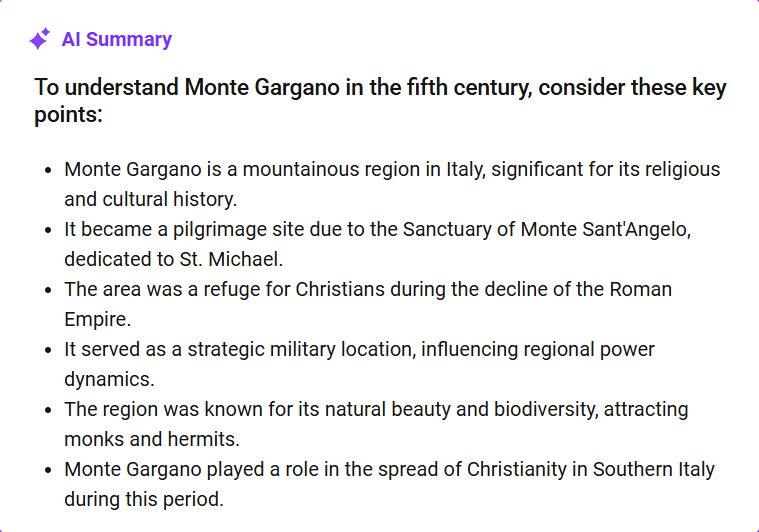
May 8th, the one-year anniversary of Leo’s apparent election, is not an ordinary date in Catholic memory. On the older calendar, it is the Feast of the Apparition of St Michael the Archangel, commemorating his miraculous appearance on Monte Gargano in the fifth century.
That does not prove anything by itself—
But Catholics should not be content with noticing nothing.
The modern mind looks at dates, names, feasts, symbols, repetitions, and reversals, and then calls all of them coincidences because it has been catechized by randomness. But the Catholic imagination—if it will just read the Pentateuch in order, if it will just read the Old Testament with Christ in mind and then see the New Testament for the answer to prophecy it is—does not end or even begin there. It knows that God writes in patterns. It knows that Providence often speaks in types and echoes. It knows that history is not a stage of accidents, but a cyclical battlefield of grace, judgment, mercy, rebellion, repentance, and return.
So after one year, when a pope took the name Leo on the Feast of the Apparition of St Michael, after the Church had already long been battered by confusion, scandal, and liturgical civil war and expectant of anything but clarity, Catholics are not wrong to ask what it could mean.
They are wrong only if they pretend the question is forbidden or “absurd.”
And now, because of Hildebrand, regardless of his title, based solely on what he is proposing for the Catholic Church, the question has teeth.
The argument raised by recent legal analysis is not merely that one dislikes Leo XIV, or finds him uninspiring, or suspects that the same old synodal machinery is producing the same old synodal outcome under a different name. It doesn’t even have to do with heretical idol worship of Pachamama.
The argument is juridical. It concerns the alleged number of cardinal electors and the law governing conclaves.
Under Universi Dominici Gregis, the number of cardinal electors is limited to 120. Yet the conclave of May 7–8, 2025 allegedly counted 133 votes. If that is true, and if no valid juridical remedy existed to authorize such a conclave, the argument is not emotional. It is foundational—and it is legal. It asks whether an act performed outside the law governing the act can produce the legal effect the act claims to produce.
The same legal frame also points to Universi Dominici Gregis n. 4, which forbids the cardinal electors from altering or dispensing from the law governing the election. If the law says 120, and if 133 electors participated, and if the electors themselves had no authority to dispense from that limit, then the question is obvious even to non-lawyers.
This is not a small problem. This is not “online trad drama.” Controlled and compromised Trad Inc isn’t even touching this one.
This is the sort of question Catholics should want answered with pinpoint clarity.
Final Words
Older papal memory is unavoidable. Nicholas II’s In Nomine Domini addressed the question of papal elections and Paul IV’s Cum ex apostolatus Officio warned with severe force against the possibility of corrupted claims to the papacy. Leo XIII warned the Church about spiritual warfare, secret societies, and the powers that sought to dethrone Christ in society and deform the Church from within.
There have been many others not illustrated in this piece.
They understood that the Church is not preserved by dialogue or democracy, diplomatic ambiguity, or pastoral synodality. She is preserved by fidelity, strict and true. She is preserved by doctrine, perennial and pure. She is preserved by worship, sacramental and solemn. She is preserved by shepherds who know that the flock is only in their temporary keeping, that Christ the Good Shepherd is always watching.
That is also why the difficult question surrounding Hildebrand cannot be treated as an absurdity to be dismissed if the evidence continues to develop in a very legal and historical direction. The possibility, even if not real in my cognitively dissonant mind on the matter just yet, belongs to the same category of questions raised by Nicholas II and Paul IV: Who may rightly hold the highest office in the Church? What corrupts a claim? What happens when invalidity or hidden treachery invades the visible structure of the Church—just as Christ said it would?
These are terrible questions.
But terrible questions are not always faithless questions. Sometimes they are the only faithful questions left.
Catholics need not panic. But they need not apathy or the assumption that “I’m in the correct camp” either.
What they need is memory—and prayer and discipline.
And if May 8th, Leo XIII, St Michael, Nicholas II, Paul IV, and the disputed Leo XIV election are all converging on the same uncomfortable question while the nefarious Agenda 2030 is steamrolling forward as we speak to crush us, then perhaps the first act of fidelity and sanity is not to flinch from it.
Perhaps it is to have the courage to simply ask it in the first place.
—
FURTHER READING (and the point of the Agenda 2030 reference–#32)
What follows here is a Notice from the Secretariate of State published May 7th, 2026 regarding the pastoral goals of Pope Hildebrand, for the Catholic and Roman Church. This space has broached at least 14 of these items directly in recent months, and nearly all (if not all) indirectly. Please peruse for invaluable context–all of this has been brewing for some time now:
Promote Vocations to the priesthood and religious life and restore the preaching of dogma and morals according to the model of the Roman Catechism.
Consecrate Russia to the Immaculate Heart of Mary
Declare the non binding nature of the documents of Vatican II
Restore the Roman Rite according to the Missale Romanum of St. Pius V
Declare that the Declaratio of Pope Benedict XVI had no juridical effect
Declare that the Conclaves of 2013 and 2025 were uncanonical and thus had no legal effect, and that thus, all the acts of Pope Francis and Pope Leo XIV and the Roman Curia under him were null and void de jure
Order the restoration of the Catholic Hierarchy and establish procedures for this as regards the reconsecration of Bishops and Priests
Define the Dogmatic and Disciplinary obligation of Sacred and Apostolic Tradition
Define dogmatically the salvific necessity of observing Church Law
Reform the rules and regulations for the Election of the Roman Pontiff
Restore Minor Orders and establish the offices of Archdeacon and Archpriest.
Define dogmatically the vocation of men and women in Christ
Convene Ecumenical Councils to end the Schism with the Miaphysites, the Orthodox and the Apostolic Churches.
Abolish communion in the hand for all but Bishops and Priests.
Restore the Sanctuaries of the Churches and the use of Liturgical Vestments.
Republish the Apostolic Constitution of Pope Paul IV, Cum Ex Apostolatus Officio
Reform the Code of Canon Law
Reform the Sacrament of Penance and publish an Enchiridion of obligatory Penances for most common sins.
Dogmatically define and restore fasting and abstinence in the Church.
Restore and promote the Religious Orders and Monasteries founded by the Saints.
Reform the process for canonizations and order a review of all cases since the pontificate of Paul VI
Reform the procedures for the Sacrament of Matrimony
Call apostate priests, religious and divorced to repentance.
In the Vatican City State restore capital punishment laws and establish new ones for sexual assault and abuse, heresy and sacrilege.
Reform the procedures for the nomination of Bishops in the Latin Rite.
Establish laws to protect the Church during the time of the Antichrist
Restore the Military Orders and establish rules for the participation in just wars and avoidance of participation in unjust wars
Restore Christendom, through the restoration of Catholic nobility and the establishment of Catholic political parties in each nation.
Visit all the Parishes of the Diocese of Rome.
Prepare for the 2000th anniversary of the Redemption of the World
Write an Apostolic Letter on Islam and its false claims
Write an Apostolic Letter on the Promise of Abraham in Christ and the errors of the Synagogue of Satan, Dogmatically defining “extra ecclesiam nulla salus”.
32. Denounce Freemasonry, Agenda 2030 and order Catholics to take practical and political steps to overthrow them.
Promote Vocations to the priesthood and religious life and restore the preaching of dogma and morals according to the model of the Roman Catechism.